
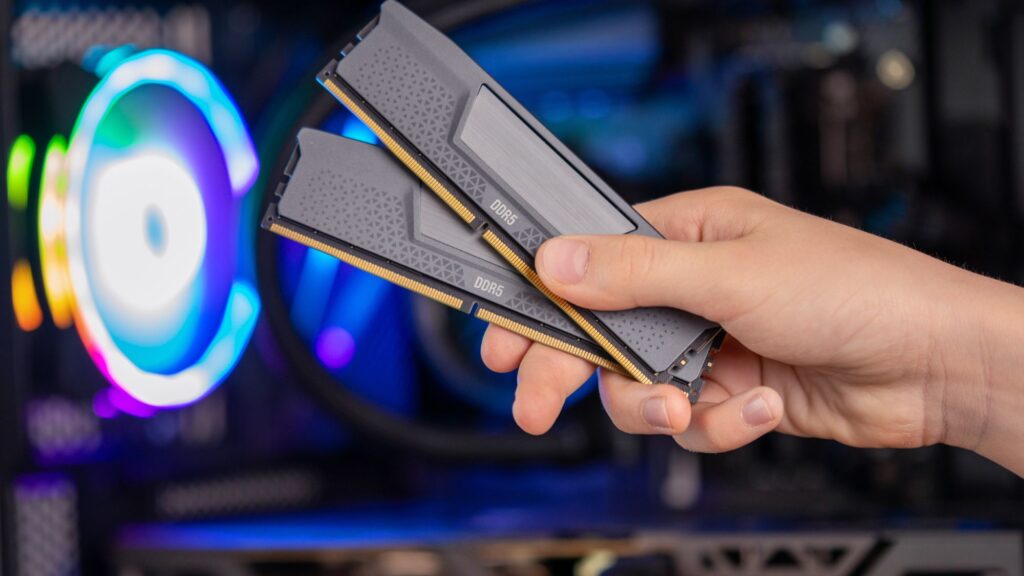
- RAM prices in Germany have suddenly become much steeper
- The price of DDR5 memory is now 448% more expensive than a year ago
- On top of that, TSMC is reportedly set to increase its chip manufacturing prices by up to 10% next year, which will mean more expensive CPUs
The RAM crisis seems to be getting significantly worse right now, based on memory prices in one country anyway – and we’ve also got some bad news from a major chipmaker.
First, RAM prices in Germany are what’s been under scrutiny courtesy of 3D Center (via Wccftech), which regularly measures the temperature of the market in the country, noting that July has seen a notable price increase.
This is for DDR5 RAM at retailers in Germany, and prices are now an incredible 448% more expensive than a year ago (before the memory crisis started). Pricing had been at 440% at the start of 2026, but then fell to 408% in March and remained at that level in April before rising back to 419% in June.

But this latest move to 448% represents a bigger jump and a record high for the German market.
As for the grim chipmaker news, it’s TSMC, which will raise the cost of its chip production by up to 10% next year, according to a report from Nikkei Asia (as flagged by PC Gamer).
The reason TSMC has to raise prices is said to be the rising cost of materials and equipment to make chips, as well as the need to fund expansion plans for more fabrication facilities (or fabs as they are known).
Larger premiums will be lumped on those who order high-end chips (high-performance computing or HPC silicon) from TSMC off-the-cuff (in addition to existing orders), and in these cases there could be up to a 15% increase.
Analysis: walking misery
The good news here, as it is, is that TSMC is reportedly waiting until 2027 before implementing these price increases. They could have come earlier given the climate we are currently facing, although we must remember, this is not official and is only based on what Nikkei Asia has heard from its sources. But it is all too believable, and in fact inevitable, that there will be further increases in the chip price.
What this means is that processors like processors – or anything with a CPU in them – are likely to become more expensive next year, because manufacturers that get their chips from TSMC will naturally pass on any cost increase (or most of it) to the consumer. And TSMC supplies a lot of the tech industry’s needs, including Apple and Nvidia (as well as AMD and Qualcomm).
Regarding the RAM situation in Germany, of course this is only one country, but it generally reflects what a lot of talk is saying – that the second half of 2026 will bring further price increases, and that next year will likely be even worse. This is the broad theory that analysts and chip manufacturers themselves put forward in many cases, and the German market simply supports this view.
Of course, there isn’t much that can be done about this, except perhaps to consider buying now rather than next year. Or at this point, you might be looking at Black Friday as a good upcoming opportunity to splurge on a hardware purchase like a PC or laptop, and that’s the other thing to keep in mind here: How you proceed depends on what hardware you’re looking to buy. I’ve discussed this recently in some depth after Nvidia’s CEO commented on the RAM crisis and how it won’t be over until maybe 2030.

Follow TechRadar on Google News and add us as a preferred source to get our expert news, reviews and opinions in your feeds.
The best laptops for all budgets


