
ISLAMIC BATH:
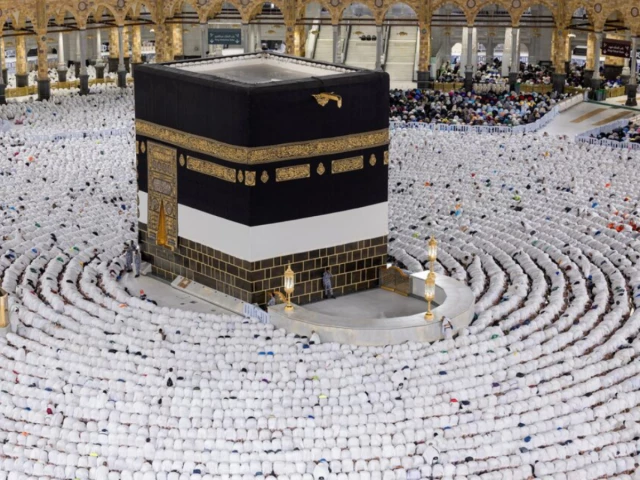
In a historic first, Pakistan’s Ministry of Religious Affairs and Interfaith Harmony has launched a comprehensive 16-page multi-year Hajj Policy and Plan covering 2027 to 2030.
Designed to bring long-term stability and cost-effectiveness to Hajj operations, the strategy is based on securing three to four-year contracts in Saudi Arabia for flights, accommodation, transport, catering and baggage handling.
Under this new framework, 60% of the total quota is designated for the public scheme, while 40% goes to private operators. Additionally, all paper cash transactions have been eliminated, routing all financial operations exclusively through the State Bank of Pakistan and integrated digital portals.
To help citizens plan their pilgrimage without stress, the ministry is introducing a multi-year registration list along with a “Hajj Savings Scheme”. By paying 10% of the estimated total cost, applicants can lock in a priority seat on a first-come, first-served basis for their intended year of travel.
Government pilgrims will have the choice of a 38-to-42-day standard long package and a 20-to-25-day short package. To maintain financial transparency, any operating profit remaining at the end of the season will be refunded directly back to the Pilgrims.
Major social and legislative reforms form a central pillar of the new policy. Women are now permitted to perform Hajj without a male guardian (Mahram), provided they make an official vow. Meanwhile, strict anti-monopoly measures have been put in place for private operators to dismantle industrial cartels; the purchase, sale or subletting of Hajj quotas is strictly prohibited.
Private companies must register with the Securities and Exchange Commission of Pakistan (SECP), process all data through the official Private Hajj Management Portal and maintain specified capital reserves along with a 5% performance bond to secure a three-year license. Any operator that does not meet a minimum quota of 2,000 pilgrims will be disabled, losing half of its security deposit while its pilgrims are redistributed.
Pilgrim welfare, security and operational readiness are also high priorities in the four-part plan. Mandatory training will cover rituals, Saudi laws, health hygiene and relevant mobile applications, while welfare assistants (Moawineen) will be recruited purely on merit according to guidelines set by the Cabinet Committee on Private Hajj Policy.
Financial protection is integrated through the Takaful-based Hujjaj Muhafiz scheme, funded by a Rs1,000 non-refundable fee, offering Rs2 million to families of pilgrims who die during Hajj and Rs250,000 for emergency evacuations.
Finally, an Emergency Response Team has been formed under the Director General of Hajj to deal with crisis situations, and the Federal Minister retains the power to adapt policies as needed by amending Saudi directives.


