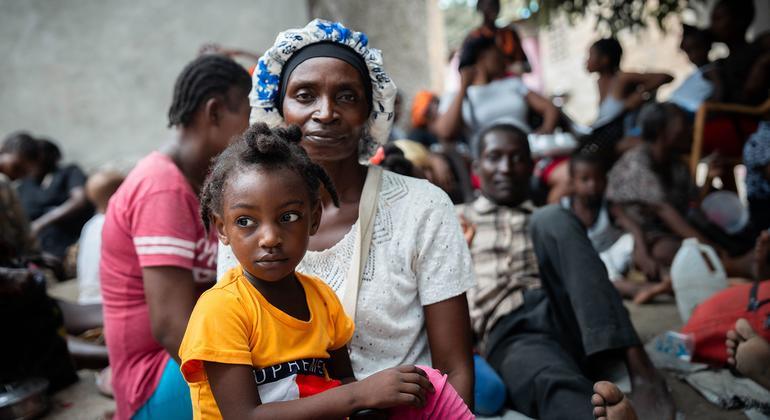
Between January 1 and May 30, at least 2,680 people – including 54 children – were killed, 957 injured, 316 kidnapped for ransom and many more exposed to sexual violence and recruiting children.
“Alarming as they are, the number cannot express the horrors that Haitians are forced to endure daily,” said Mr. Türk.
Conflicts on all sides
In recent months, gangs have attacked MIrrebalais in the center of the country, looting of police stations, destroyed property and release of over 500 inmates from the local prison.
Meanwhile, so-called self-defense groups have targeted people they suspect that gang attachment. On May 20, at least 25 people were killed and 10 wounded by a group accused them of supporting gangs.
Law enforcement has increased operations against them. Since January, police have killed at least 1,448 people, including 65 under outdoor executions.
Mr. Türk called on the international community to take crucial actions to end the violence, including renewed support for the Security Council’s supported multinational security support (MSS) mission and full enforcement of the Council’s weapons embargo.
He also reiterated his call for states to return to anyone to Haiti.
“In the coming months will be crucial and will test the ability of the international community to take stronger, more coordinated action – action that will help determine the future stability in Haiti and the wider region,” Türk added.
Outlook for food trade ‘relatively optimistic’, says FAO
Food and Agriculture Organization (FAO) released their annual food Outlook report on Thursday, which gives a “relatively optimistic” look at international food markets.
According to the report, production is expected to rise above almost all categories where grain production is expected to reach record levels. And while prices remain higher this year than last, between April and May there was a total fall of almost one percent.
However, the report noted that global trends – including rising geopolitical tensions, climate and trade uncertainties – may still have an impact on production negatively.
“While agricultural production trends appear solid, the drivers are increasing that may have a negative impact on global food security negatively,” said FAO chief economist Máximo Torero.
Fowl, fish fraud and fertilizer currents
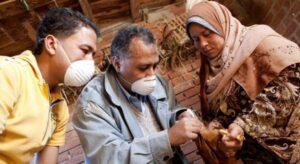
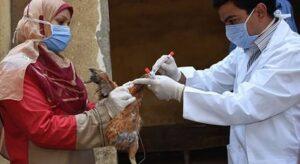
The report noted that outbreaks of Aviær influenza have become more persistent and constitutes “one of the most significant biological threats to the global poultry sector.” Nevertheless, poultry exports have largely remained largely resistant so far.
The question of fish fraud – the erroneous representation of the location or way of the catch – was also discussed, with FAO warning that risks are growing.
In addition, the report investigated fertilizer streams and noticed Russia’s growing exports and fallen in fertilizer prices since the covid pandemic.
Overall, the report noted that the cost of imports around the world has increased by 3.6 percent or nearly $ 2.1 trillion.
Eastern Chad ‘When a Break Point’ As Sudan War Fugees Continue to Arrive
Auxiliary teams in eastern Tchad warn on Friday that host communities reach the breaking point due to climate cost and the pressure from hosting war refugees from neighboring Sudan.
In a warning, the UN’s chief assistant officer in Chad, François Battalingaya, warned that a humanitarian disaster is almost unnoticed by the world’s media.
“Right now, almost 300,000 people are stranded at the border waiting to be moved inland,” he noted.
“Tens of thousands, mostly women and children, sleep in the open air without shelter, clean water and health care. This is the survivor of war. They arrive traumatized, hungry and without anything. They tell stories of mass murder, sexual violence and whole communities destroyed.”
Major Exodus
Since the outbreak of war in Sudan in April 2023, more than 850,000 Sudanese refugees have crossed into Tchad. They have joined the 400,000 existing Sudanese refugees who have arrived in the last 15 years.
The UN helpman explained that even before the latest Sudanese arrivals, almost a million people in eastern tchad were in an urgent need for help.
Today, “They share the little one they have – food, water and space – with those who flee the war,” Mr. Batalingaya.
In an appeal about international assistance, he warned that clinics are overwhelmed, malnutrition rising, and basic services buckle.