“As a female coach, the girls trust me,” she said. “They tell me things they can’t tell others, about pressure to undergo female genital mutilation (FGM), about being asked to drop out of school, about conditions that make them feel unsafe.”
In parts of rural and hard-to-reach Uganda, female genital mutilation remains a serious human rights violation and a public health concern. For girls in Sebei communities, it is tied to deeply rooted gender norms that also increase the risk of child marriage, school dropout and violence.
Still, changes are beginning to take hold on the school grounds and the running tracks.
A trainer, a track and a safe space
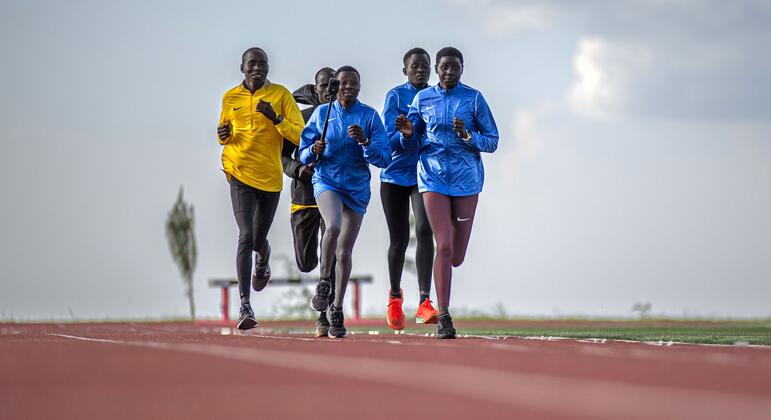
Mrs. Cheptoek works with the Joshua Cheptegei Development Foundation, in partnership with the United Nations Reproductive Health Agency (UNFPA) and the United Nations Children’s Fund (UNICEF) Joint Programme, to eliminate FGM by using sport as an entry point to reach young people – especially girls – who are often excluded from opportunities.
“This mindset underestimates their social, intellectual and cultural potential,” she said. “Sports help us challenge that.”
For many girls, resisting harmful practices comes at a high personal cost. Those who refuse FGM can face pressure, ostracism and even violence for being perceived as rejecting tradition.
Female genital mutilation – alteration or damage to genitalia for non-medical reasons – is often followed by child marriage and early schooling. All are closely linked to poverty, which both drives these harms and is reinforced by them.
From community runs to classrooms
Every year, a Christmas run brings together boys and girls from all over Sebei. But the event is about more than competition. From these races, 12 girls are selected for educational sponsorships that help them enroll in junior high school.
“Most of these girls come from communities where FGM is still practiced,” Cheptoek said. “Without sports and education, many of them would already be married or dropped out of school.”
As girls begin to thrive in athletics and in the classroom, attitudes slowly change.
“Some parents are now seeing that athletics can transform not just an individual girl, but the whole community,” she said. “When these girls run, they run away from harmful practices and toward a future they select for themselves.”
To learn safety, rights and self-esteem
Mrs Cheptoek also offers age-appropriate counseling on sexual and reproductive health, along with guidance on personal safety and psychosocial support.
She helps girls navigate the pressures that can come with visibility and success in societies where female independence is still contested.
“Girls who become successful athletes are often told, ‘You should stop running and get married,'” she said. “But financial independence and education gives them choice.”
These discussions became even more urgent after the killing of Ugandan long-distance runner Rebecca Cheptegei, who died in 2024 after being attacked by her former partner following a dispute over land.
“We’re talking about safety because we don’t want to lose more women,” said Ms. Cheptoek. “Female athletes become more vulnerable because they challenge traditional gender roles, but no woman should be penalized for pursuing her potential.”
“Female athletes are becoming more independent financially and socially, and that can trigger violence in a society that still believes a woman should stay in the kitchen, cook and take care of children,” she said.
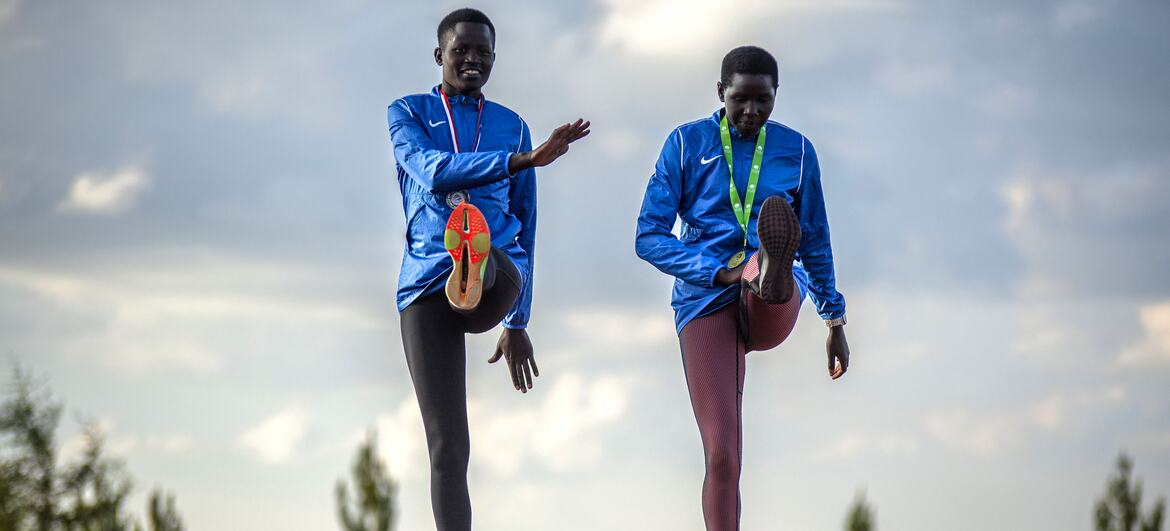
By supporting survivor-centred, community-driven approaches, UNFPA and partners ensure that girls and women can live free from violence.
Sport for freedom
For Mrs. Cheptoek, the goal is clear.
“Sports should give girls freedom, not put their lives on the line.”
Through these efforts, hundreds of young people, parents and local leaders in Uganda are reached with messages to end FGM, promote sexual and reproductive health and rights, and promote gender equality.
UNFPA and partners support survivor-centered, community-driven efforts that help girls and women live free from violence, access accurate health information and services, make informed choices about their bodies, and realize their full potential.