

- Micron and Anthropic announce four-part strategic agreement
- Micron will use Claude models as both a daily driver and an assistant to monitor parts of its infrastructure stack
- Despite being billed as a full-stack collaboration, the deal is silent on computational storage and in-memory processing
Anthropic and Micron Technology have announced a new strategic agreement that will see the latter use Claude AI models to better monitor parts of its infrastructure stack.
But the move has an odd aspect to it compared to most other deals: Generally, buyers tend to invest in their suppliers to support them financially while also benefiting from the business they bring in.
We often see capital flow the other way here, with Micron essentially investing in one of its biggest customers for the foreseeable future.

AI to optimize memory and storage for AI consumption needs?
Anthropic runs some of the largest and most memory-intensive inference fleets in existence, and its telemetry about how HBM bandwidth, DRAM capacity, and SSD latency actually bottleneck real frontier model serving is data that Micron can’t generate internally, but it could learn to work around those limitations while leveraging Claude to process said data to generate actionable optimizations across its organization.
Anthropic painted this as a solution to their scaling needs, noting that the deal allowed it to work more closely with Micron across two main segments: memory and storage.
“Our compute strategy depends on getting all layers of the stack right, and memory and storage are central to how efficiently we can train and operate Claude. Partnering with Micron means we work closely to optimize these systems for our workloads and secure the supply we need. As demand for Claude grows, this is how we scale our compute for the long term,” noted Tom Brown, co-founder at Anthropic.
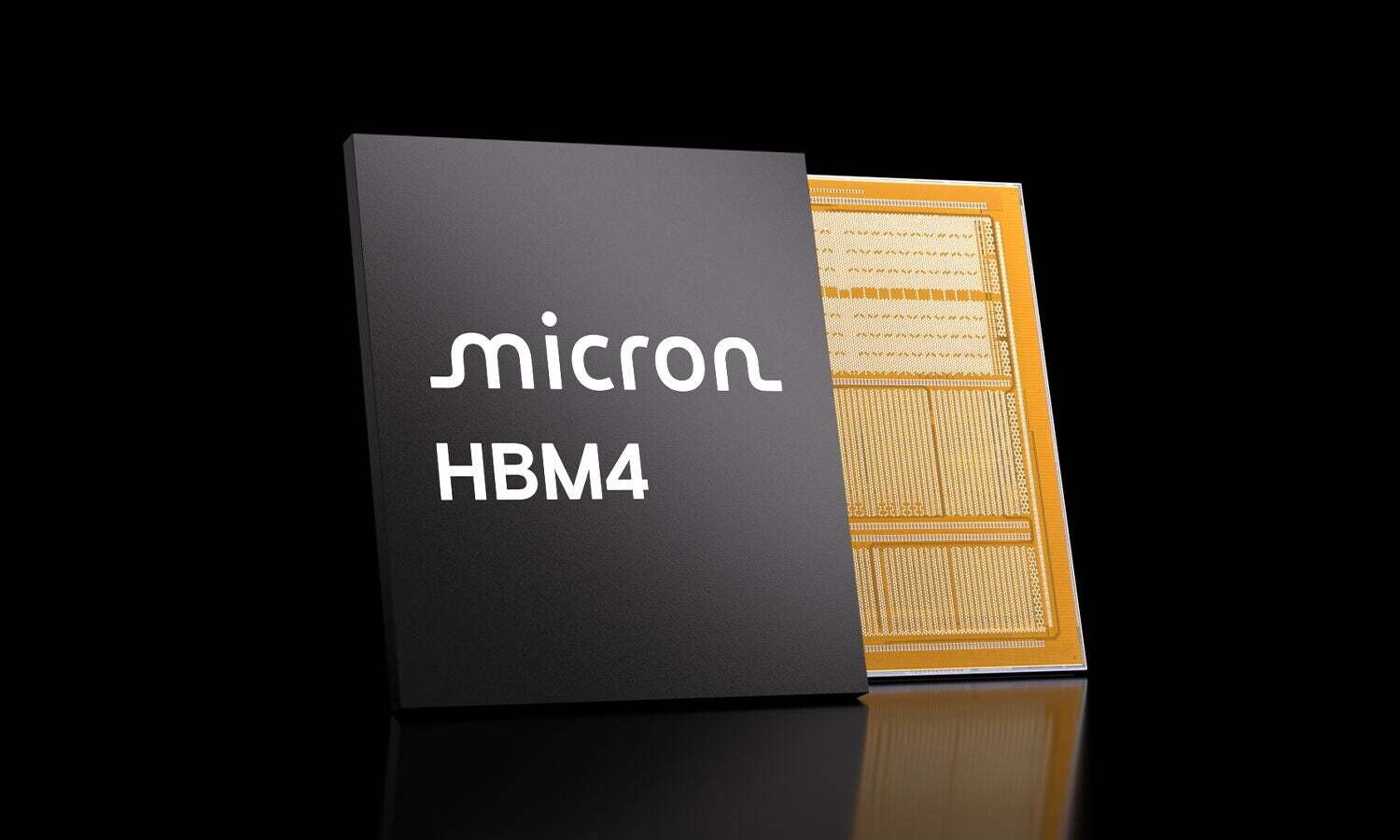
Arguably the more interesting part of this deal is not what Micron already mentions, but what it chooses to blurt out. Not only do both companies fail to elaborate on the financial terms of their multifaceted deal, but they also choose to skip mentioning what is increasingly becoming a core theme in AI inference workloads: Computational storage.
A growing share of Anthropic’s needs is inference-based, and that share is increasingly bound by memory bandwidth rather than computing power. Nvidia is already a few steps ahead in this department: at CES 2026, it announced the Inference Context Memory Storage Platform, which uses BlueField-4 DPUs to extend GPU KV cache to NVMe SSDs, a solution it calls CMX.
Other solutions are also emerging, some led by storage manufacturers and others by chip designers looking to take a slice of an increasingly lucrative AI data center market in the coming years.
Micron’s (and by proxy, Anthropic’s) silence on the matter feels deliberate: the former benefits significantly by selling HBM to the highest bidder, and such solutions directly undercut or invite unfavorable comparisons with its most lucrative product line.
The latter simply has far too many options to tie to one particular supplier for all its end-to-end needs; Anthropic currently has agreements with AWS, Google, SpaceX, Broadcom, Microsoft and CoreWeave to guarantee its data processing and proxy, memory and storage needs, although it has made strategic commitments with Nvidia to ensure it has access to its solutions.
With Anthropic’s most ambitious consumer-grade AI model, the Fable 5, now back on the table, its route seems clear: securing as much of Micron’s memory and storage supply as possible while making it a stakeholder in its success.
This is even as it caters to a mix of data center companies to meet their short-term computing needs for a growing and increasingly capable suite of AI models that it offers to a wide range of consumers, including governments. Its deal with Micron is simply one of the strategic stepping stones the AI juggernaut had to take, even as it could look sideways to its computational storage needs.
The multi-faceted deal has been well received by investors, boosting the stock by about 6% following the announcement, with many positive about Micron’s stake in one of the world’s most prolific AI companies.
Neither company mentioned the financial core of Micron’s investment or the supply agreement between the two, although they outlined how they planned to collaborate in the future.
However, this kind of deal is not unique in the AI space, with Microsoft providing computers and cash to OpenAI in exchange for a stake in the company, and Nvidia making similar commitments with Anthropic’s rival, in addition to a mix of data center and infrastructure companies, many of which are also direct customers of the world’s largest AI hardware company.

Follow TechRadar on Google News and add us as a preferred source to get our expert news, reviews and opinions in your feeds.


