
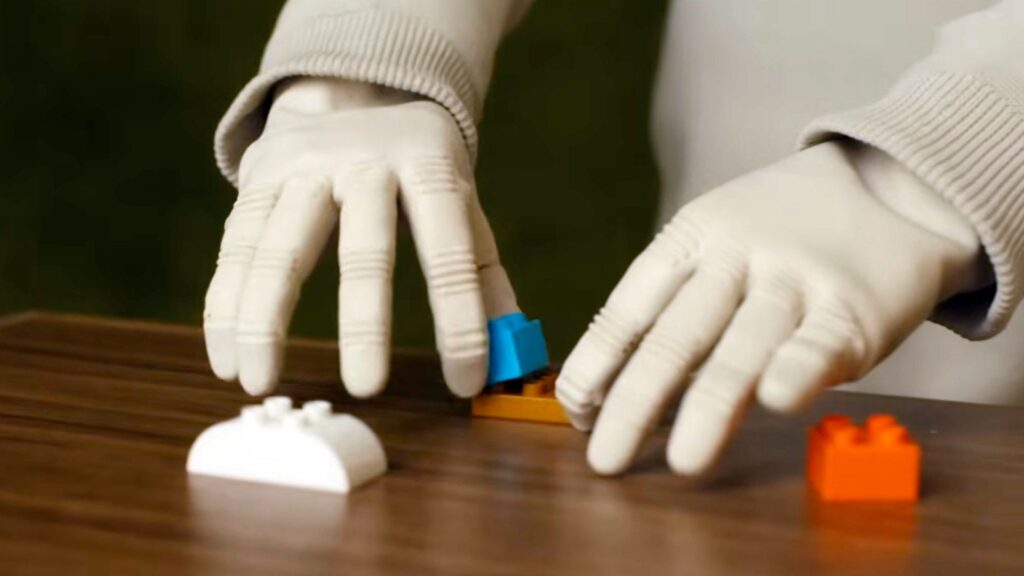
- Neo Beta robotic hands have human-level dexterity
- They use tendon-like controls instead of hand motors
- They are waterproof and can perform many skills normally reserved for human hands
Neo’s new robotic hands are so good and lifelike that you might assume they’re gloved human hands, and then you might wonder why someone is swinging a hammer at them.
In a new demo video recently released on YouTube by Neo Beta robot parent company 1X, you can see a pair of Neo Hands screw in a light bulb and pull the chain switch (before someone inexplicably smashes the bulb with a hammer), pluck grapes from a bunch and drop each one into a container, gently pick up a screw, and even open a small jacket (and even open a small jacket). call snacks.
In the final piece, someone swings a hammer in their hands as they work, which they don’t mind until the bag is sealed.

It even expertly builds a small Lego stack. Okay, okay, they’re the bigger Duplo blocks, but it still does as good a job as your average preschooler.
The hands move slowly, but also with a grace and ease you might mistake for humanity. This appears to be due to the underlying technology.
As 1X described it, the rubber-coated, waterproof hands use a “closed tendon-driven system.” This means that the 1X moves the motors or servos out of the hand and back along the arm, keeping the hand smaller and more agile. These motors are then connected to an intricate system of tendon-like connections that are pulled and released to enable movement and manipulation of the robotic hands. That style of control is more reminiscent of our own hands, which, while they include muscles, are also filled with tendons that pull inside the forearm.
1X says the fingers, palm and thumb have 25 degrees of freedom, but as the video shows, they can also extend too far back in a rather unnatural or certainly more than human way.
The robotic hands also have some impressive strength, lifting a 20 lb. dumbbell and then, with just one finger, curls a smaller pulley weight.
The fingers naturally include sensors so that the hands and the robot know when it is grasping something and how much force is or must be applied. That’s how the Neo robot hand avoids breaking that bulb (unlike that hammer).
Next level grace
I know, last week we heard about a couple of robots performing gallbladder surgery on a pig. One would think that human hands must have been far more graceful. However, these robots each grasped a pair of laparoscopic controls, so the finer control where the cutting and suturing was done happened at the end of these devices. No robotic hand directly manipulated the scalpels.
While the Neo’s robotic hands will be useful for all kinds of home-help tasks when the $20,000 Neo finally arrives in consumers’ homes (early adopters may receive them now), the hands are also useful for helping themselves: In the video, a Neo Beta robot uses its hands to pick up its MagSafe-like charging puck, which it carefully attaches the robot to.
1X writes that these hands will provide new real-world training data to its robot development, and one would assume that this will ultimately make the Neo robots even better home helpers, companions and enablers (all those Funyuns).

Follow TechRadar on Google News and add us as a preferred source to get our expert news, reviews and opinions in your feeds.


