
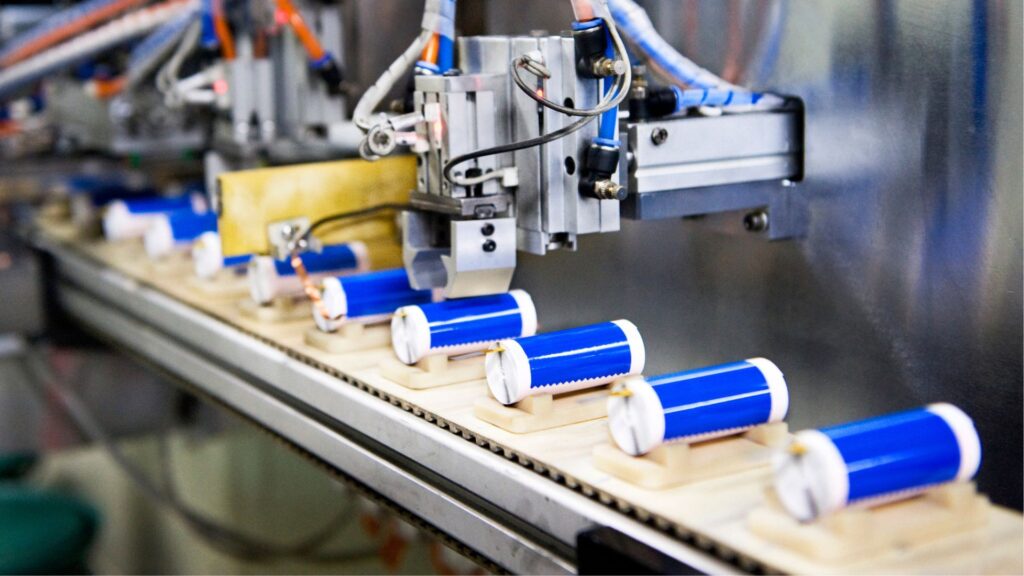
- Chinese scientists developed a water battery capable of reliably surviving 120,000 charge cycles
- Neutral electrolytes prevented corrosion that usually destroys aqueous batteries over time
- The battery reportedly lasts for centuries under normal operating conditions for grid storage
Researchers from the City University of Hong Kong and the Southern University of Science and Technology have developed a new type of water-based battery that can last for hundreds of years without losing its capacity over time.
Published in Nature communicationthe device uses synthesized covalent organic polymers as an anode for magnesium and calcium ions instead of traditional battery materials.
The researchers found a specific compound that combines high-density carbonyl with a rigid honeycomb-like structure that resists corrosion, and this design allows the battery to withstand up to 120,000 charge cycles, which is more than ten times longer than conventional lithium-ion grid storage batteries.

Water batteries are not easy to perfect
Aqueous batteries have always offered safety advantages over lithium-ion because they are non-flammable and have lower upfront costs.
However, they typically store less energy and degrade over time due to electrolyte breakdown that corrodes their metal components.
The water-based electrolyte in conventional designs often becomes either extremely acidic or alkaline, gradually destroying the battery from the inside.
Organic polymers rarely perform well under these conditions because they degrade rapidly when exposed to such harsh chemical environments.
The new design uses a neutral electrolyte with a pH of exactly 7.0, eliminating the extreme conditions that normally cause corrosion.
The specific compound used in the device, called hexaketone tetraaminodibenzo-p-dioxin, maintains a stable flat honeycomb-like structure throughout the life of the battery.
This structural stability prevents the gradual reduction in capacity that smartphone users know all too well from their aging devices.
The researchers calculated that at current grid storage usage of 1.1 cycles per day, their battery could operate for about 300 years before needing to be replaced.
More importantly, the electrolytes used in this new design are completely non-toxic and can be safely disposed of directly into the environment.
The research team even noted that the electrolyte solution is so harmless that it could be used as tofu stock for home cooking without any health risks.
Commercial hurdles remain
The battery still faces the same fundamental limitation as all aqueous devices, which is lower energy density than lithium-ion systems.
A battery that lasts three centuries but takes up twice as much space may still struggle to find commercial use in space-constrained environments.
Manufacturing costs for the specialized organic polymers also remain unclear, and large-scale production may reveal unexpected financial barriers.
Network storage operators care about cycle life and security, but they also care about dollars per kilowatt hours delivered during the lifetime of the installation.
A 300-year battery is only useful if the utility still exists in 300 years and the economy needs to work for the next decade, not just the century after.
The absence of toxic materials is a real breakthrough, but the market will decide whether the trade-off makes sense.
The researchers have most likely solved a chemistry problem, but the commercialization problem has just begun.

Follow TechRadar on Google News and add us as a preferred source to get our expert news, reviews and opinions in your feeds.


