
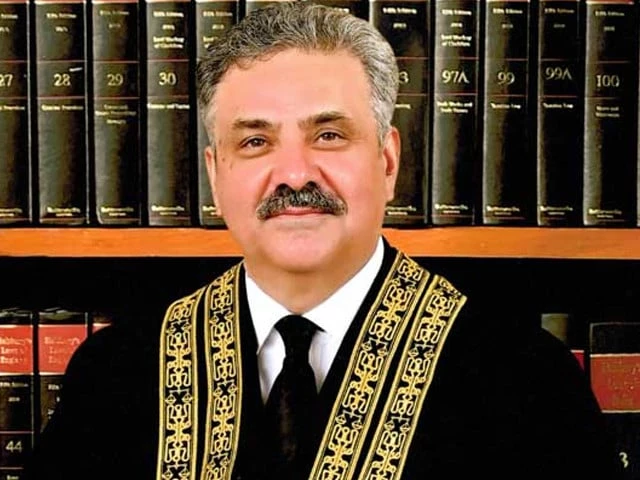
The LHC chief proposes five acting attorneys; interviews to be held according to amended rules
ISLAMABAD:
The chief justices of four high courts have submitted their nominations to the Judicial Commission of Pakistan (JCP) for the appointment of additional judges as the process of filling vacancies in the supreme judiciary progresses.
The JCP had invited nominations for 10 additional judges in Lahore High Court (LHC), five from Sindh High Court (SHC), five from Balochistan High Court (BHC) and three from Islamabad High Court (IHC).
Chief Justice of Pakistan Yahya Afridi, in consultation with the Chief Justices, had requested nominations from all JCP members by July 4. It has been learned that the three Chief Justices of the Supreme Court have now forwarded their nominations to the commission.
Out of 11 nominees for the LHC, Chief Justice Aalia Neelum has recommended the names of five practicing lawyers. Legal circles say this is perhaps the first time that a Supreme Court judge has recommended such a large number of practicing lawyers for appointment as additional judges.
The lawyers recommended by the LHC chief are Attorney General Punjab Amjad Pervez, Attorney General Punjab Syed Farhad Ali Shah, Attorney General Islamabad Capital Territory Ghulam Sarwar Nihung, Additional Attorney General Munawar Iqbal Dugal and Deputy Attorney General Asad Bajwa.
The remaining nominees are Shireen Imran, Muhammad Ajmal, Kashif Rajwana, Usman Ghani, Ameer Ajam Malik and Khalid Bin Aziz. Interestingly, the two opposition members of the JCP did not recommend any candidate for appointment to the LHC.
“We have sent names to the SHC but we could not find anyone willing to other courts,” JCP member Senator Ali Zafar told PTI. It is learned that many lawyers are reluctant to give their consent to opposition members because they believe their nominations are unlikely to secure approval from the commission.
After the 26th constitutional amendment, former SC Justice Syed Mansoor Ali Shah had recommended several lawyers with strong professional reputation, but they failed to get the required majority vote in the JCP.
Lawyers generally believe that without the backing of the executive, appointments to the higher judiciary are difficult to secure. Even nominees proposed by chief justices, they argue, cannot be approved unless they receive state aid in the commission.
For the SHC, Chief Justice Zafar Ahmed Rajput has recommended five names.
According to sources, the nominees are Sessions Judge Suresh Kumar, Advocate Humayun, Advocate Sara Malkani, Additional Solicitor General Zeeshan Adhi and former Additional Solicitor General Saulat Rizvi.
It is learned that the Chief Justice has again nominated a candidate belonging to a minority community for appointment to the SHC. Last year, however, the JCP missed an opportunity to appoint a judge from a minority community.
Since the 18th Constitutional Amendment in 2010, no member of a minority community has served as a judge of the Supreme Court or any of the country’s five highest courts.
For the BHC, Chief Justice Kamran Khan Mulakhail has recommended Saleem Lashari, Manzoor Shah and former president of the Supreme Court Bar Association Mian Rauf Atta. The names of Rehmat Barech, Amir Lehri and Mallag Dashti have also been forwarded for appointment as additional judges.
A senior lawyer described Mallag Dashti as one of the best criminal justice practitioners in Balochistan and Sindh, noting that he belongs to Makran Division. However, the Bar Council of Balochistan has strongly objected to two of the nominations.
For the IHC, Chief Justice Sardar Muhammad Sarfraz Dogar has recommended Umair Majeed Malik, former Advocate General ICT Ayyaz Shaukat and Special Judge Central Shahrukh Arjumand.
It is also learned that Bar Council of Pakistan representative in JCP Ahsan Bhoon has recommended Wajid Gilani for appointment as judge in IHC and Shan Gul for appointment in LHC.
Under the amended JCP rules, a committee of JCP members will conduct interviews of all nominees before the commission moves forward with the appointment process.


