
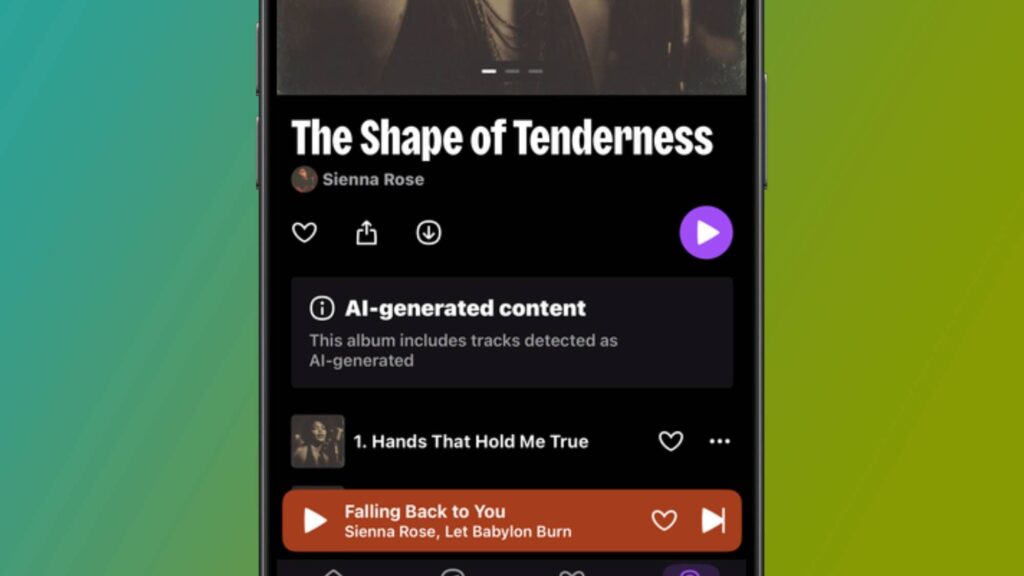
- Deezer says the number of AI-generated songs on its site is still growing
- Now 44% of all uploads have been registered as AI generated
- As part of its anti-AI plan, Deezer will no longer store high-resolution versions of AI tracks
There is one key feature that sets Deezer apart from the ranks of the other top music streaming services out there, and that is its transparency on AI-generated music.
The number of AI uploads is only going to increase, says the French platform, which has grown from just over 30% of all uploads in December 2025 to 44% now – and the company wants giants like Spotify to join in and do something about it.
Deezer is doubling down on its fight against AI slop and will no longer store high-res versions of these tracks. In a statement, CEO Alexis Lanternier said: “Thanks to our technology and the proactive measures we put in place more than a year ago, we have shown that it is possible to reduce AI-related fraud and payment dilution in streaming to a minimum”.
The article continues below
Lanternier then called on rival platforms to take similar action, adding “Since January, we’ve made our detection technology available for licensing, and we look forward to seeing industry peers of all stripes join us in the fight for justice in the age of AI”.
Deezer launched its own AI detection tool in January 2025 with the aim of flagging music that is completely AI-generated and increasing subscriber trust and transparency. It even went so far as to make its flagship technology available to its rivals earlier this year.
Stop the slop (can’t stop the slop)
To dig into the numbers a little more, Deezer said late last year that up to 34% of new music uploads were fully AI-generated, tagging over 13.4 million songs by 2025. Now that number has risen to a staggering 44%, which equates to around 75,000, every day, or more than 2 million AI uploads per day.
While that in itself is a pretty alarming stat, it’s probably more worrying that a large majority of users have stated that they can’t tell AI-generated music from human-made music, which is a testament to how quickly these technologies are evolving.
One of the driving factors behind the rise of AI-generated uploads is that it is an easy way to impersonate other artists and generate profit through fraudulent streams. With the increasing number of AI songs in Deezer, the streaming service has also cracked down on demonetisation, claiming that up to 85% of streams were detected as fraudulent when it released its AI detection tools. We contacted Deezer, who say this percentage is still the same today.
Deezer’s AI tagging system is just the beginning of a wider fight against the scourge of AI. While Spotify hasn’t vocally cracked down on AI detection in the way that Deezer or, say, Bandcamp have (which led to a growing migration from the big green streaming machine to hi-res competitor Qobuz late last year), Spotify recently rolled out a new system that allows artists to review and approve what music appears on their profile.
Apple Music is another rival that could join the battle against AI-generated music; the company is tipped to roll out Transparency Tags to help identify AI-generated and AI-assisted music – but again, the onus is on labels and distributors to indicate the use of AI in what you hear.
Follow TechRadar on Google News and add us as a preferred source to get our expert news, reviews and opinions in your feeds.


