“The world is no safer from pandemics”, experts from the Global Preparedness Monitoring Board (GPMB) said on Monday, who underlined how the world’s vulnerability was exposed by an Ebola outbreak ten years ago and then by the “global catastrophe” of COVID-19.
“As outbreaks of infectious diseases become more frequent they are also becoming more harmful, with increasing health, economic, political and social consequences and less capacity to recover from them“, the experts said in a new report.
Ebola update
Ebola disease is a serious, often fatal disease that affects humans and other primates.
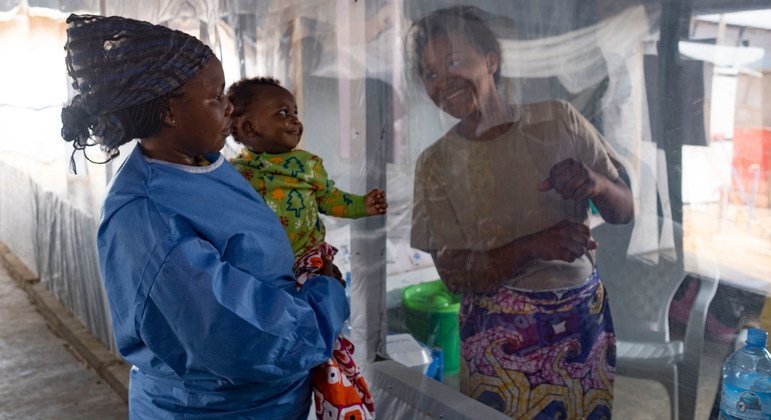
As of Saturday 16 May, the health authorities had registered eight laboratory-confirmed cases, 246 suspected cases and 80 suspected deaths in Ituri province in eastern DRC.
On Sunday, unconfirmed reports indicated that one person had tested positive for Ebola in the rebel-held city of Goma, the capital of North Kivu province and home to a million people.
The confirmed case is believed to be the wife of a man who died after contracting Ebola in Bunia, the capital of Ituri province. Another person who had traveled from Bunia to Beni in North Kivu also tested positive for Ebola.
Cases have also been confirmed in DR Congo’s capital, Kinshasa, and across the border in Uganda, where two infected people traveled from the DRC and were admitted to intensive care. Uganda’s capital, Kampala, is also affected, the WHO said.
The agency supports the government-led response with 42 health personnel on site and supplies already deployed.
The agency has warned that the outbreak is likely larger than currently recognized, pointing to clusters of unexplained deaths, a high positivity rate among tested samples and limited understanding of transmission patterns. At least four deaths among healthcare workers have raised concerns about infection prevention measures in healthcare facilities.
In a statement, the UN agency noted that there is no approved therapy or vaccine to treat the Bundibugyo virus, which is responsible for the current outbreak.
“The ongoing insecurity, humanitarian crisis, high population mobility, the urban or semi-urban nature of the current hotspot and the large network of informal health facilities further amplify the risk of spread, as seen during the large Ebola virus disease epidemic in North Kivu and Ituri provinces in 2018-19,” WHO said.
‘We know how to control Ebola’
“Ebola is a very serious disease, but it is one we know how to control,” Mohamed Janabi, the WHO’s director for Africa, told Pakinomist.
Dr. Janabi, a cardiologist, explained that the United Nations Health Agency has classified it as a public health emergency of international concern, which helps to raise international awareness, mobilize resources more quickly and ensure that countries work together in a coordinated manner.
“But this does not mean that people should panic. It means that the global system is working as it should, detecting and reacting very decisively,” he added, urging the media to convey correct information
“Fear itself is an outbreak,” he concluded.
Listen to the full interview with Dr. Janabi:
AI boon or bust
The Global Preparedness Monitoring Board (GPMB) highlighted the potential for AI to improve preparedness and monitor pandemic threats, stressing that without effective governance and safeguards, technological innovations could actually reduce health security and widening disparities in health access that defined COVID-19.
The Global Preparedness Monitoring Board (GPMB) is an independent monitoring and accountability body established in 2018 by WHO and the World Bank – formally a specialized UN agency – to strengthen preparedness for global health crises.
The board highlights that national leadership will be tested this year as governments work to finalize the WHO Pandemic Agreement – working to agree “a meaningful UN policy statement on pandemic prevention, preparedness and response”.