
- Erin Brockovich launches public tracking site for controversial AI data center expansion
- Texas residents filed hundreds of complaints regarding nearby artificial intelligence infrastructure projects
- AI data centers consume huge amounts of electricity and water across fast-growing US markets
The environmental activist who took on Pacific Gas & Electric over poisoned groundwater now has a new target.
Made famous by the 2000 film starring Julia Roberts, Erin Brockovich turns her attention to the rapid expansion of AI data centers across America.
She has launched a public website that invites ordinary citizens to report concerns about facilities in their own neighbourhood.

A growing clash for resources
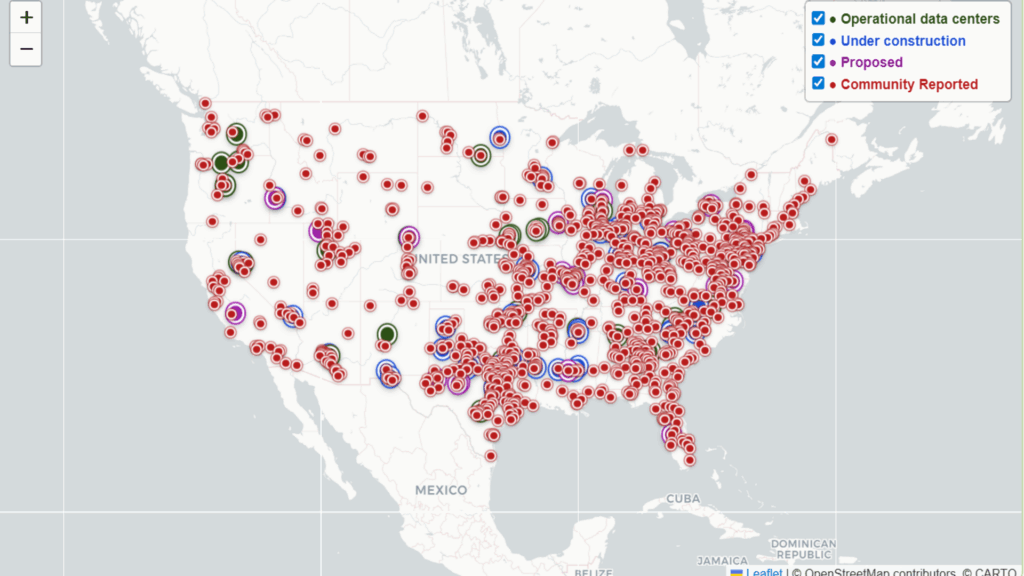
The map on the website shows both operational data centers and locations where community members have emailed complaints.
More than 4,200 data centers now operate across the United States to train and deliver artificial intelligence that consumes vast amounts of electricity and requires considerable water for their cooling systems.
Communities have reported more than 2,716 concerns through Brockovich’s website, with Texas leading the count with 612 submissions.
The main concerns among residents involve water shortages, electricity needs, public health effects and disturbance to local wildlife.
“These challenges highlight the need for sustainable, secure and efficient AI data center practices,” the site says.
“Self-reporting is the best way we can get this information out to the public!”
Certain states have become prime destinations for this new wave of industrial construction.
Virginia leads the nation with approximately 600 to 730 data centers, including the densest global cluster known as Data Center Alley, and Texas follows closely with about 400 to 470 facilities spread across its vast and deregulated energy market.
Ohio hosts an estimated 200 to 235 data centers, many of which are recycled from old industrial sites, and Arizona contains approximately 150 to 190 facilities that take advantage of dry climate conditions suitable for certain cooling technologies.
Georgia rounds out the top five with about 150 data centers anchored by Atlanta’s strong internet connection and tax incentives.
Why do companies choose these locations?
The choice of these locations follows several clear economic and regulatory factors working together as a system.
Cheap land across these states costs less than coastal markets, but affordable acreage alone does not drive the decision.
The cheap land must also sit on top of reliable power grids with renewable procurement options, as heavy AI workloads cannot tolerate frequent outages.
When both land and power are secured, state and local governments compete fiercely by offering tax breaks that protect long-term infrastructure investments from excessive taxation.
Finally, streamlined permits and fewer regulations tie all of these benefits together by allowing for shorter development timelines and reduced compliance burdens.
A delay in a single factor can scare a hyperscaler away to a competing state.
Brockovich notes that the race to build AI infrastructure is unfolding city by city across America, with widely varying local reactions — some communities welcome these facilities, while others delay, dispute or abandon them altogether.
The card captures real patterns of growth, conflict and uncertainty according to her own statement.
Whether her self-reporting model will generate meaningful pressure on an industry moving faster than regulation remains unclear.
The activist’s achievements suggest she understands how public testimony can ultimately force corporate accountability.

Follow TechRadar on Google News and add us as a preferred source to get our expert news, reviews and opinions in your feeds.


