
ISLAMABAD:
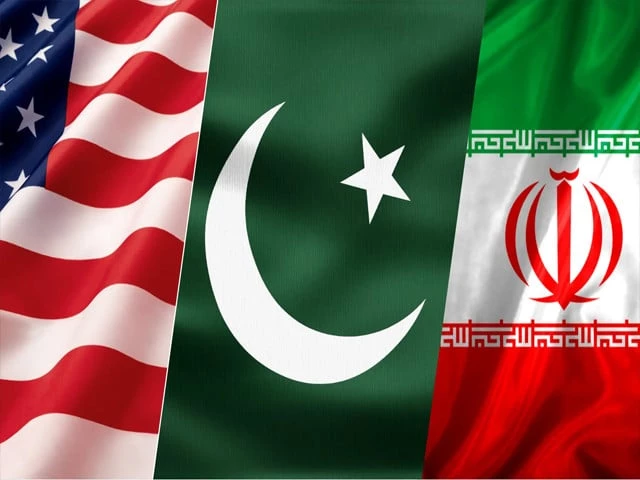
For months, Pakistan found itself in an unfamiliar but influential role: acting as one of the main mediators between Iran and the United States at a time when the two adversaries seemed dangerously close to a wider regional war.
Today, however, the diplomatic momentum has all but disappeared.
The renewed exchange of military strikes between Washington and Tehran has rendered the Islamabad Memorandum of Understanding (MoU), once hailed as the framework that could steer both sides back toward diplomacy, virtually irrelevant.
With missiles once again flying over the Gulf and no indication that either side is prepared to return to talks, Pakistan appears to have deliberately taken a step back, adopting what is being described as a “wait-and-see” approach.
The latest escalation is precisely the scenario Islamabad had hoped to avoid. Pakistan never expected the MoU to make an overnight breakthrough.
Officials involved in the mediation understood that decades of mistrust between Iran and the United States could not be erased through a single deal or a handful of meetings. The expectation was more modest: to create sufficient political space for sustained dialogue and prevent military confrontation from spiraling out of control.
Instead, the opposite has happened. The renewed hostilities are believed to have left Islamabad deeply disappointed.
The feeling within Pakistan’s foreign policy establishment is that months of careful diplomacy have been effectively undone within days.
Earlier, when tensions flared up after the signing of the Islamabad MoU, Pakistan and Qatar moved quickly to contain the situation.
After the talks in Switzerland, for example, Iran and the US carried out limited retaliatory strikes. These incidents threatened to derail the diplomatic process, but coordinated intervention by Islamabad and Doha succeeded in persuading both sides to restore the ceasefire. It eventually paved the way for another round of indirect negotiations in Doha.
These talks ended with an understanding that technical-level talks would resume after the funeral of Iran’s former Supreme Leader, Ayatollah Ali Khamenei.
But even before the funeral ceremonies ended, the fragile calm collapsed. Iran launched missile strikes against vessels attempting to pass through the Strait of Hormuz without what Tehran described as its permission. The US responded militarily, setting in motion a new cycle of retaliation that has steadily intensified.
Since then, there has been little sign that either side is seeking to slow the escalation. Instead, military exchanges have become more frequent, while the official rhetoric in both Washington and Tehran has become considerably tougher.
It is against this backdrop that Pakistan’s relative silence has become increasingly noticeable. Unlike previous rounds of escalation, Islamabad has refrained from publicly placing itself at the center of mediation efforts. Although senior Pakistani officials have engaged with Iran and other regional stakeholders, the proactive diplomacy that characterized Pakistan’s earlier role has largely disappeared.
Observers say the change reflects growing frustration rather than withdrawal. Pakistan believes it has invested significant diplomatic capital in creating the conditions for dialogue. The breakdown of this process, despite repeated efforts to preserve it, has convinced politicians that neither Washington nor Tehran is currently prepared to prioritize diplomacy.
The prevailing view in Islamabad is that if both capitals remain convinced that military pressure can yield strategic gains, outside mediation is unlikely to succeed.
As one diplomat from a key regional country put it privately, both sides appear determined to test whether force can achieve what negotiations could not.
Only after they conclude that military action cannot deliver a lasting solution, the diplomat believes, will meaningful diplomacy become possible again.
Until then, Pakistan sees little value in repeatedly stepping in only to see fragile understandings collapse after each fresh exchange of fire.
This does not mean that Islamabad has completely abandoned its mediating role. Iran’s Foreign Minister Abbas Araghchi’s visit to Doha, officially to condole the death of Qatar’s former Emir, has inevitably fueled speculation about possible diplomatic contacts.
Along with Pakistan, Qatar remains one of the few countries that maintains communication channels with both Tehran and Washington.
Still, the understanding here is that the conditions are not conducive to another mediation initiative. In their view, diplomacy cannot succeed unless both sides first show a genuine willingness to cease military operations.
For now, Pakistan seems content to remain on the sidelines.
The calculation is that diplomacy cannot be imposed on adversaries who continue to believe that battlefield successes will strengthen their negotiating positions.
Islamabad is therefore waiting for the inevitable moment when both Washington and Tehran conclude that the military escalation has reached its limits.
When that moment comes, Islamabad will again be ready to offer its good offices. Until then, the mediator has chosen patience over activism.


