NEWYou can now listen to Pakinomist articles!
NEW YORK — Spain has the chance to achieve something no nation has ever achieved.
If it defeats defending champions Argentina in Sunday’s World Cup final, both its men’s and women’s national teams will simultaneously hold the sport’s biggest trophy.
Germany’s men and women have each won two World Cups, but never at the same time. Similar feats have occurred in other sports, including the UConn men’s and women’s basketball teams winning national championships in 2004 and 2014, USA Basketball’s men’s and women’s winning gold at the 2024 Paris Olympics, and the U.S. men’s and women’s hockey teams winning gold at the 2026 Milan-Cortina Olympics.
Now Spain – where the women’s side won its first World Cup title in 2023 – has a chance to set a new standard for sustained dominance on football’s biggest stage.
Spain celebrates after winning the 2023 World Cup. (Photo by Li Yibo/Xinhua via Getty Images)
So how did Spain get here? What has allowed it to stand out from the rest of the world? What makes it better than everyone else?
“This is the only country that starts a philosophy and an identity at a young age, and they do all the same things from age 9 and up, both on the men’s and women’s sides,” U.S. women’s national team legend Carli Lloyd told me. Now a FOX Sports analyst, Lloyd played against Spain during his career and has seen firsthand how the program developed into a powerhouse.
“They focus first on technical excellence and their positional play, short passing, patience, development – all those different things. And I think for a number of years they weren’t incredibly successful, but have found ways to do that with the way they play.”
The World Cup is only part of the story. Spain’s superiority has extended to almost every major competition. The women’s national team won the European Championship in 2025, while Barcelona – the club that is essentially the backbone of the squad – has captured three of the last four women’s Champions League titles.
The men’s team enters Sunday’s final as reigning European champions and Olympic gold winners. Twenty of the 26 players on Spain’s World Cup roster were part of one or both of those triumphs, proving that this success has been building for years.
For many of these players, the foundations were laid years ago at La Masia, Barcelona’s famous academy, long regarded as one of the world’s best for developing young talent. This is where Lionel Messi arrived as a 13-year-old before becoming arguably the greatest player in history.
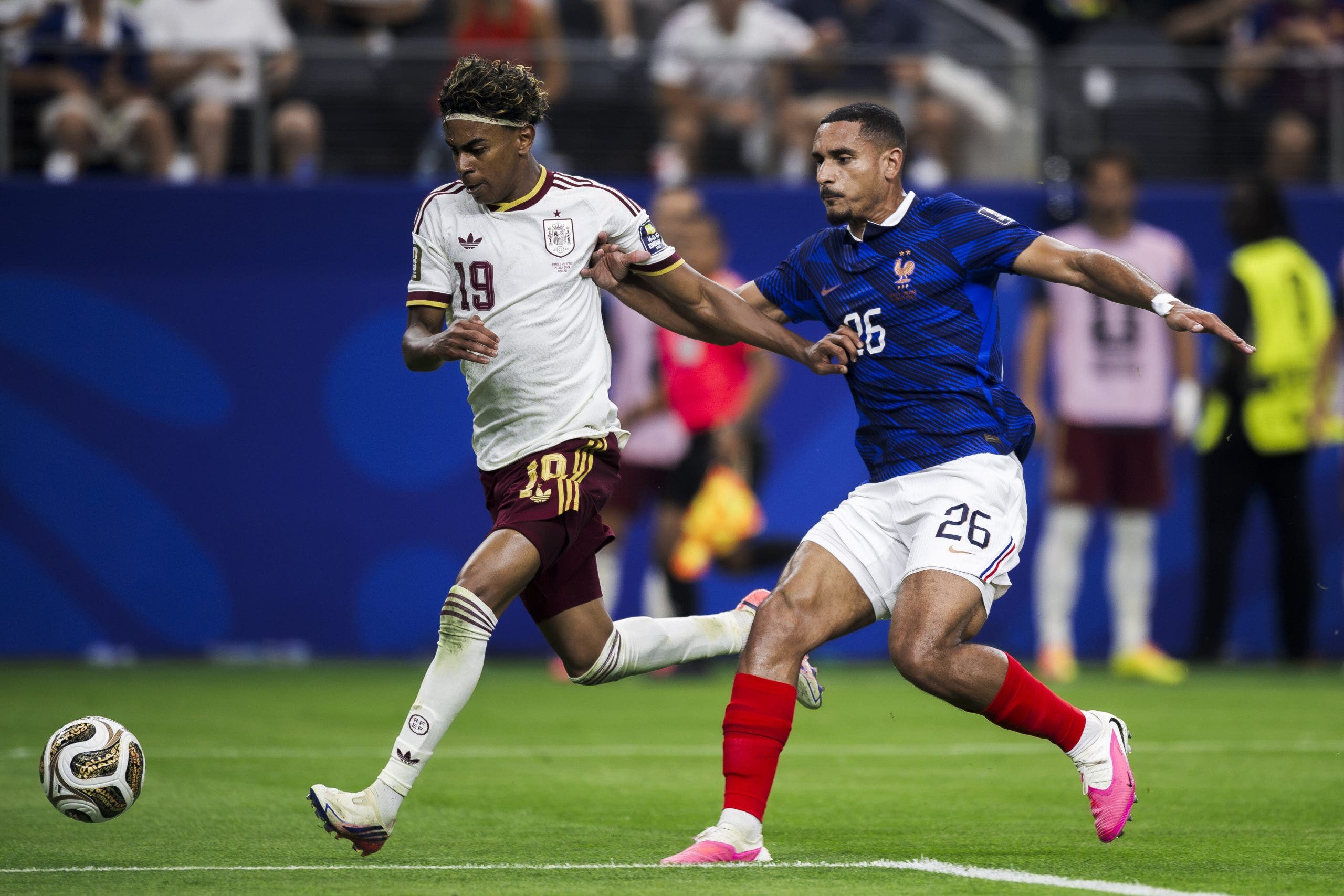
Lamine Yamal competes for the ball with France’s Maxence Lacroix during the 2026 World Cup semi-final. (Photo by Nicolò Campo/LightRocket via Getty Images)
However, the academy’s legacy extends beyond Messi. Nine alumni will be on the pitch for Sunday’s World Cup final: Messi for Argentina and Lamine Yamal, Gavi, Pau Cubarsí, Dani Olmo, Alejandro Grimaldo, Marc Cucurella and Víctor Muñoz for Spain. The viral image of Messi bathing baby Yamal has become a symbol of the passing of the torch, but a deeper connection is that both were shaped by the same development system.
The academy opened its doors to female residents in 2021 and its pipeline has already produced many of Spain’s biggest stars, including three-time Ballon d’Or winner Aitana Bonmatí, two-time winner Alexia Putellas, Clàudia Pina, Ona Batlle and more.
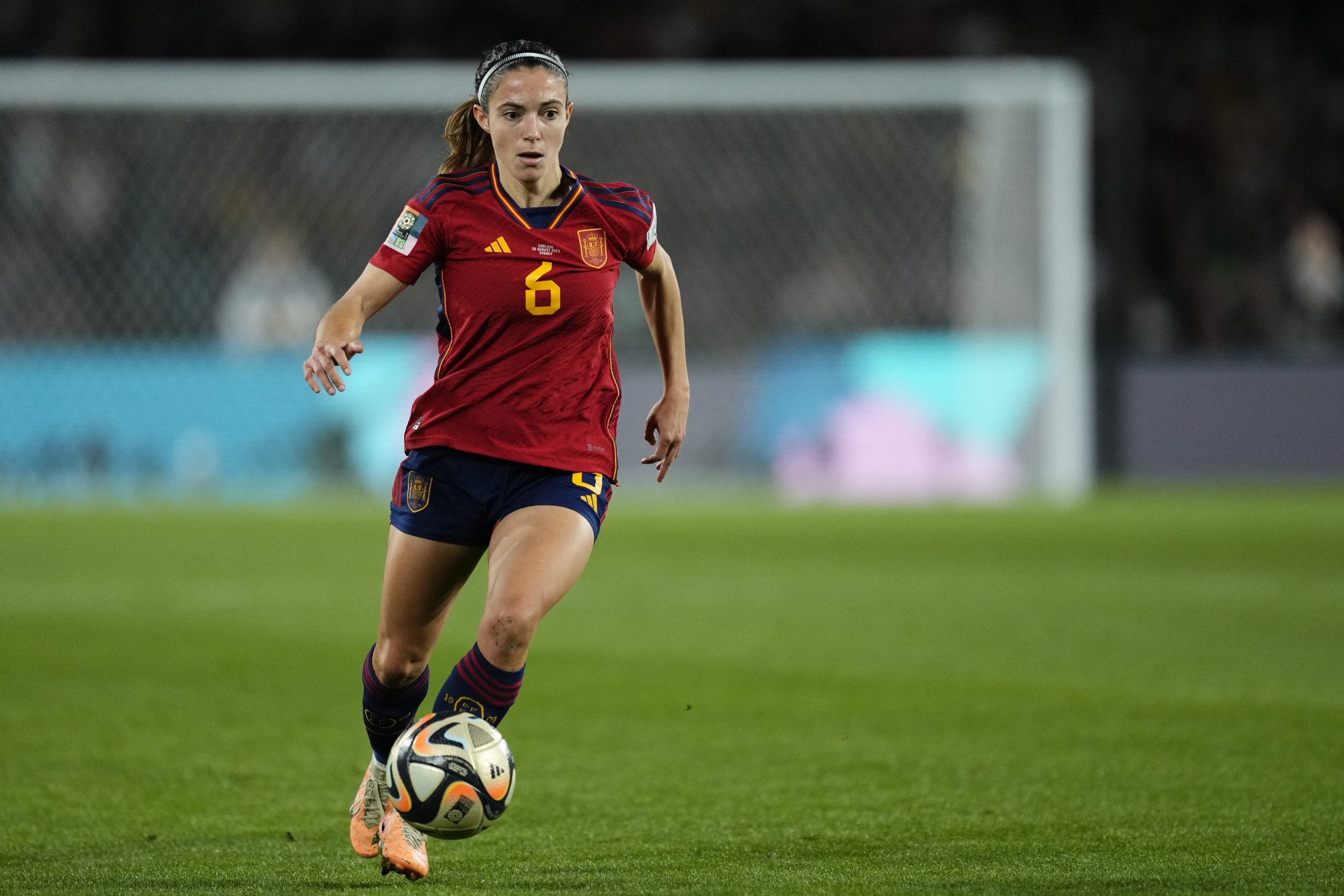
Aitana Bonmatí during the 2023 FIFA World Cup final against England in Sydney, Australia. (Photo by Jose Breton/Pics Action/NurPhoto via Getty Images)
The familiarity and continuity built through this path is in part what has made these teams so successful.
“We did it with discipline, being organized, with sacrifice, with commitment, with effort,” Spain manager Luis de la Fuente said when asked how his side were able to beat France in a third straight major semi-final last week. “I think that’s what we do best as Spanish footballers is to interpret and read the game. They know how to behave in defensive and offensive phases and in midfield.
“And that’s the fruits of our work in the academies – all the coaches in Spain, we really appreciate what we’re doing at that level. And this is another example that, despite being happy, we want more. And we want to take this World Cup and claim this title. It would be a really great achievement.”
And it’s not just about the players coming through the youth system, but also coaches. De la Fuente spent nearly a decade coaching and winning with Spain’s U-19, U-21 and U-23 programs before being named senior team manager in 2022. Even Jorge Vilda, who managed Spain at the 2023 Women’s World Cup, coached the senior team for eight years after winning titles at youth level. He was later fired in 2023 as part of the fallout from the Luis Rubiales scandal.
“There’s something to be said for even the coaches being educated in that philosophy and that identity and working themselves from youth level up,” Lloyd said. “You just keep getting better as a coach, just as you develop through the ranks as a player.
“I think there is a huge significance. I just don’t know anywhere else in the world if it could be replicated. It would be very interesting to see. I think we [the U.S.] don’t do it. Every coach I’ve had has had a slightly different flavor and finesse to their coaching. Sure, we’ve had the American mentality and DNA of being physical and brave and the will to win. But you can’t really look at our whole structure and say, ‘Oh, that’s exactly how America plays.'”
Back then, Spain was known for the “tiki taka” style and short intricate passes that many tried to emulate. It has evolved into more progressive passing, finding ways to be clinical and punish teams in front of goal, as well as playing more vertically and getting behind.
“They kill you with 1,000 passes in possession,” Lloyd said, before referencing Spain’s second goal against France in the World Cup semi-final. Pedro Porro and Olmo’s combination and quick passing sequence epitomized Spain before Porro found the back of the net to give his side a 2-0 lead.
“Their movement isn’t really about being in sync. It’s about where the next one or two passes are going to be and they all know what to do and it’s really incredible,” Lloyd continued. “I think they are probably the most complete team at this World Cup. The last game [against France] was an absolute masterclass.
“And the other goal, it’s just being taught from a system and a philosophy that has been developed for years. It doesn’t just happen when you get into the national team and you start making some passing patterns.”
Could this be the beginning of a dynasty? If the men win on Sunday and the women can go back-to-back at next summer’s 2027 World Cup in Brazil, the answer is a resounding yes.