
The opposition links prison restrictions to political crisis; the government cites legal, judicial frameworks
ISLAMABAD:
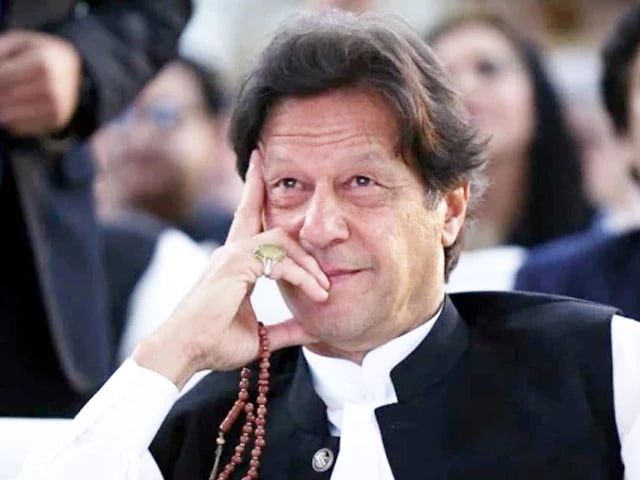
The issue of access to jailed PTI founder Imran Khan dominated proceedings in both houses of parliament on Friday, with the National Assembly witnessing opposition threats of protest from Monday, while the Senate saw demands for a parliamentary committee to visit political prisoners.
However, the government strongly rejected the demands, arguing that prison administration and meeting arrangements are strictly governed by existing legal and judicial frameworks.
In the National Assembly, Opposition Leader Mahmood Khan Achakzai demanded clarity on when the PTI founder’s family would be allowed to meet him and when he would receive treatment of his choice, warning that the opposition would launch protests from Monday if there was no response.
PTI Chairman Barrister Gohar Ali Khan said Imran Khan had been imprisoned for almost three years and the party was being denied equal treatment despite repeated legal remedies.
He further lamented that the agreed procedures and court directed SOPs were not implemented in practice.
“We have gone to the Supreme Court 15 times and to the Supreme Court 24 times, but we have not received justice from the courts,” he said, adding that even the agreements made with the Speaker were not followed. He supported the opposition’s demands and said the party was seeking justice for its leadership
Meanwhile, in the Senate, opposition lawmakers led by Raja Nasir Abbas, Azam Swati and others demanded that a bipartisan parliamentary committee visit Imran Khan and other political prisoners, arguing that denial of access and continued imprisonment exacerbated political tensions.
The government, represented by Rana Sanaullah, rejected the proposal, saying there was no constitutional or procedural basis for such a committee and that prison-related matters were already managed through judicial forums and established mechanisms.
The session, chaired by Senator Sherry Rehman, saw sharp exchanges between the treasury and opposition benches on Imran Khan’s health, prison conditions and restrictions on meetings in Adiala jail.
Opposition senators warned that continued imprisonment of political workers and denial of access was exacerbating the country’s political tensions, while the government defended the existing legal and judicial framework for prison cases.
Leader of the Opposition Senator Raja Nasir Abbas said political victimization and denial of rights pushed the country deeper into crisis.
“By imprisoning political workers, we are shooting ourselves in the foot,” he said, suggesting that a bipartisan Senate committee of government and opposition lawmakers be allowed to meet Imran Khan and other political prisoners before submitting a report to Parliament.
“Let everyone stand against whoever prevents us from visiting prisons,” he added, saying parliament should not tolerate abuses against politicians.
PTI Senator Azam Swati told Parliament that the PTI founder had “lost sight in one eye” and urged the state to ensure basic human rights for both Imran Khan and Bushra Bibi.
“We need to unite at this time. Inhumane treatment is never justified,” Swati said while urging the government to “change its decisions and try to improve the situation.”
Senator Faisal Javed also criticized restrictions on access to Adiala jail and questioned why medical treatment, including treatment abroad, had earlier been arranged for former prime minister Nawaz Sharif but not for Imran Khan.
He demanded that PTI leaders and family members be allowed to meet the jailed party founder.
Responding to opposition criticism, Adviser to the Prime Minister on Political Affairs Rana Sanaullah said the government had consistently tried to resolve issues through dialogue, but progress had been hindered by certain political positions.
He maintained that both Imran Khan and Bushra Bibi were receiving the best medical treatment available in the country and said meetings in the jail were regulated under a mechanism approved by a larger bench of the Islamabad High Court (IHC).
According to Rana Sanaullah, the arrangement allows meetings twice a week with separate schedules for lawyers and family members. He said PTI leaders, including general secretary Salman Akram Raja, had assured the court that meetings would not be used for political messages or media campaigns.
However, he claimed that the understanding had been repeatedly violated through press conferences and international campaigns targeting state institutions.
“Campaigns targeting state institutions and their leaders were carried out abroad. Evidence regarding such activities can be produced when necessary,” he said.
The adviser further stated that a five-member medical board, set up on the recommendation of PTI’s own doctors, had approved the treatment for the former prime minister.
Rana Sanaullah rejected the opposition’s proposal for a parliamentary committee, saying there was no provision in the rules of the Senate or the National Assembly allowing such interference in executive matters related to prison administration. He added that legal and judicial forums already existed for complaints about prison conditions or access.
Referring to the May 9 riots, he said attacks on state institutions could not be ignored and those responsible would face consequences.
Noting that an “action” that succeeds is called a revolution, he said that a failed attempt to create a revolution was treason and had consequences. He added that repeated attempts to march on Islamabad and confront the state had further strained the political atmosphere.
The Senate meeting was later adjourned until Monday evening.


