
KARACHI:
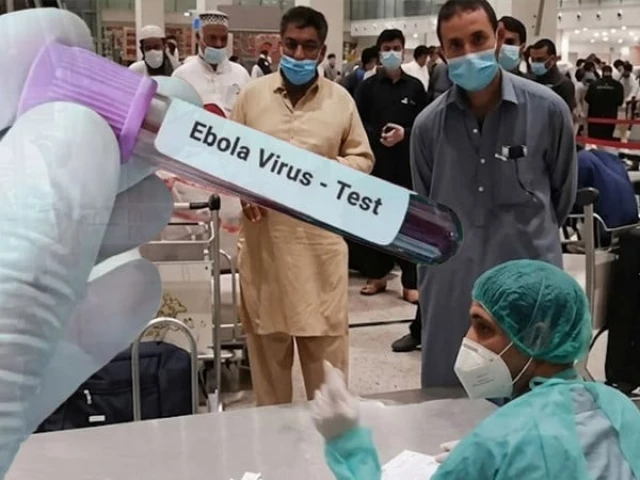
Authorities have begun strict screening and monitoring of international passengers at Karachi’s Jinnah International Airport amid concerns over the possible spread of the Ebola virus.
The move comes ahead of the return of Hajj pilgrims from Saudi Arabia, which is expected to begin from the third day of Eidul Azha.
Health officials said passengers arriving from abroad, especially African countries where Ebola outbreaks have been reported, as well as pilgrims returning from Jeddah, will undergo enhanced medical surveillance during the Hajj operation.
speaks to Express PakinomistSyed Zafar Mehdi said viruses can spread internationally through travelers, especially from countries currently facing Ebola outbreaks.
He said dedicated personnel had been deployed at the airport to screen incoming passengers using scanners and thermal guns.
According to Dr. Mehdi said passengers found with high fever or visible skin rashes, including red spots on the body, would be referred for further medical examination to the Sindh Government Infectious Diseases Hospital in NIPA.
Such suspected patients would remain in isolation at the facility until their test reports were received.
He added that health department personnel stationed at the airport had also been trained to identify symptoms of Ebola virus and carry out relevant screening procedures.
Dr. Mehdi said the Sindh Health Department had completed preventive and emergency measures at Jinnah International Airport following the recent international declaration of the spread of Ebola as a public health emergency of international concern.
Authorities have also arranged emergency ambulances at the airport to immediately transfer suspected passengers showing symptoms of infectious diseases to the designated hospital for isolation and treatment, he added.
Meanwhile, World Health Organization director-general Tedros Adhanom Ghebreyesus said on Monday that the ongoing Ebola outbreak had already resulted in 220 suspected deaths, and warned that delays in detecting infections had left health workers scrambling to contain the crisis.
“We are urgently scaling up operations, but at the moment the epidemic is outpacing us,” Tedros said.


