
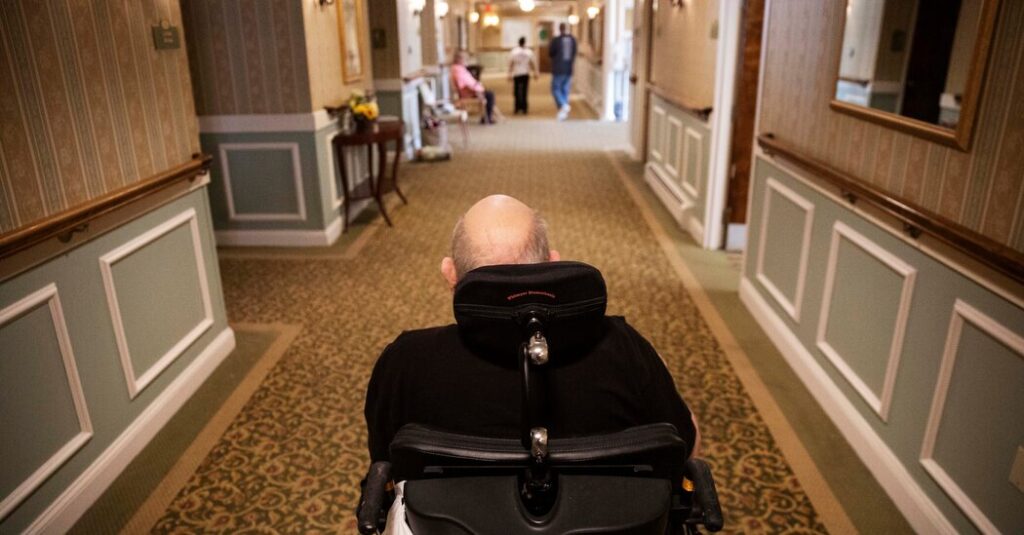
People enrolled in private Medicare Advantage plans have been inappropriately denied admission to a skilled nursing home when they leave the hospital, according to a new analysis by federal investigators.
These private plans, which cover about 35 million older Americans under the federal Medicare program, have drawn sharp criticism for delaying and denying medically necessary care. Federal investigators have previously raised similar concerns about the plans’ tactics.
Insurance companies that offer Medicare Advantage plans often require prior authorization before agreeing to cover treatment.
Plans are paid a fixed amount to care for patients, so they have a financial incentive to spend less on care. To achieve savings, these plans often deny people expensive specialized inpatient care, such as tailored rehabilitation or therapy, and may instead send them to outpatient clinics or back to their homes, according to the analysis.
Two new reports from the inspector general’s office at the Department of Health and Human Services focused on large insurance companies — UnitedHealth Group, Humana and CVS Health, the big for-profit companies whose plans cover the bulk of people enrolled in Medicare Advantage. The companies denied about 13 percent of patients’ requests to go to a skilled nursing facility to continue their recovery after surgery or a serious illness, according to the first report. The investigators also raised concerns about whether outside contractors used by insurers to decide whether a patient should receive more specialized care were adequately monitored.
“The dominance of a few large insurers in Medicare Advantage and the use of contractors to process prior authorization requests means that the policies and performance of just a few companies can affect the care of millions of people,” Rosemary Bartholomew, who led the government team, said in an interview.
Overall, about one in five patients appealed insurer denials, and nearly all were reversed, according to investigators’ review of denials from 19 companies in June 2024. UnitedHealth, which received the highest number of appeal requests, reversed 99.7 percent of its denials, according to the inspector general’s inquiry.
The high percentage of denials that were overturned suggests that some people’s care was unnecessarily delayed because of the insurers’ decision, and others may not have gotten the care they deserved because they never appealed.
Investigators also detailed the physical and mental toll of delays and denials for many patients who waited a week or more to enter a facility. Some were stuck in the hospital, causing unnecessary costs to the hospital and anxiety to the patients.
A lack of information or another hiccup could have triggered initial denials, but the high turnaround rate suggested a more systemic problem. “Obviously, it’s not the ideal outcome,” Ms. Bartholomew. “You want these requests to be approved on the first request as often as possible.”
The report also highlighted the role of a company owned by UnitedHealth, the former naviHealth, in reviewing patients’ requests.
The company is often hired by other plans, and investigators found it had higher denial rates than plans that made the decisions themselves or used other contractors. It also had high rates of denial for patients seeking inpatient rehabilitation services, according to another report by the investigators.
NaviHealth has been accused of using algorithms to deny claims, and UnitedHealth is the subject of a class action lawsuit. It has previously denied these allegations.
Nursing home patients, whose daily care is often paid for by federal-state Medicaid programs, sometimes qualify for short-term benefits under Medicare. Those patients were denied skilled nursing care 40 percent of the time, according to federal investigators. “The extremely high skilled nursing admission denial rate for patients who lived in nursing homes prior to their admission raises concerns that they may not receive the intensity and frequency of care after their hospital discharge that they need,” said Ms. Bartholomew.
The investigators urged the Centers for Medicare and Medicaid Services, which oversees the private Advantage plans, to collect more detailed information about denial rates for specific services and the use of outside companies to make the reviews. They also urged the agency to focus on how the initial reviews were conducted to see why so many of the rejections were overturned.
In its written response to investigators, Medicare said it audited the plans and conducted a pilot program to collect more information from the plans about their use of prior authorization. The agency “uses numerous monitoring tools to ensure that the MA program provides adequate access to health care for enrollees,” it said.


