
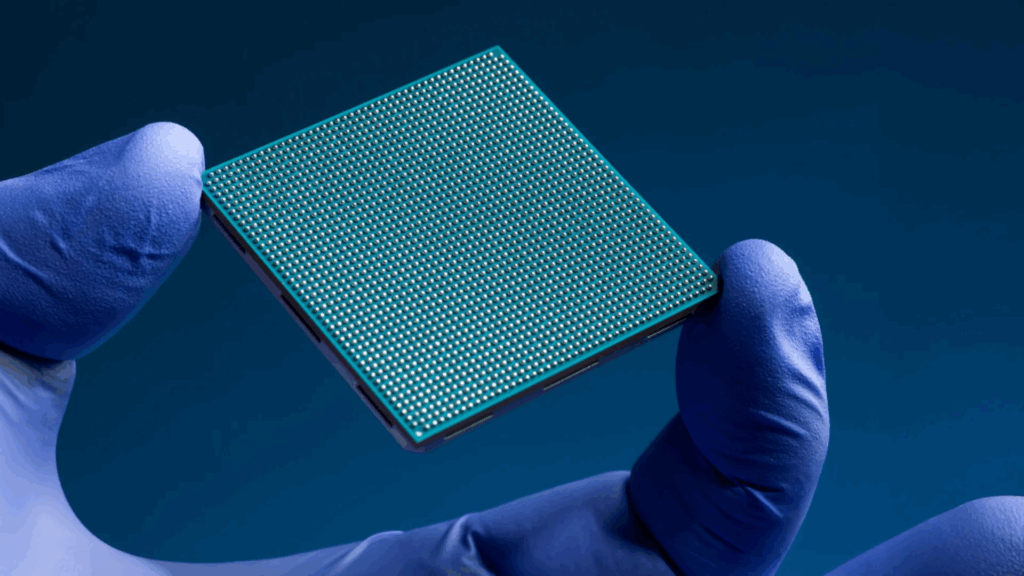
- NASA developed autonomous spacecraft processors with dramatically higher levels of computing performance
- New radiation-hardened chip delivers hundreds of times more processing power
- Deep-space communication delays are driving the demand for autonomous on-board decision-making systems
A famous warning about autonomous machines from the 1968 film 2001: A Space Odyssey seems to have faded from NASA’s memory, if it was taken seriously at all.
The space agency is now developing a powerful new processor that could allow spacecraft to make independent decisions during deep space missions.
As part of the High-Performance Spaceflight Computing (HPSC) project, this technology aims to reduce reliance on ground-based controllers, which currently face long communication delays.

A leap in spatial computing
NASA claims its new radiation-hardened chip delivers up to 100 times more computing power than current space hardware, and early test results have even shown performance levels roughly 500 times higher than existing radiation-shielded processors.
“This new multicore system builds on the legacy of previous space processors and is fault-tolerant, flexible and extremely high-performance,” said Eugene Schwanbeck, program manager at NASA Langley Research Center.
Any processor destined for deep space must withstand extreme electromagnetic radiation and dramatic temperature fluctuations.
High-energy particles from the Sun can easily trigger computer errors that force conventional spacecraft into a protective “safe mode.”
Engineers at NASA’s Jet Propulsion Laboratory subject the prototype to punishing simulations of these conditions.
“We put these new chips through the wringer by performing radiation, thermal and shock tests,” explained Jim Butler, project manager for High Performance Space Computing at JPL.
The chip must also handle the unique challenges of planetary landings without human intervention.
These dramatic improvements raise a legitimate question about whether engineers have considered the potential risks of truly autonomous machines.
Autonomy vs HAL’s ghost
Science fiction enthusiasts reading this may immediately remember 2001: A Space Odysseywhere a thinking computer named HAL tragically fails in a story that serves as a cautionary tale about giving machines too much independent authority over human life.
NASA now envisions spacecraft that can process scientific data instantly and respond to unexpected hazards without waiting for instructions from Earth.
The agency is testing how the chip handles high-fidelity landing scenarios that would normally require power-hungry hardware to process massive amounts of sensor data.
It must be recognized that modern spacecraft already rely on automated systems for many routine functions.
The difference here lies in the extent of autonomy and the use of onboard artificial intelligence for mission-critical decisions.
NASA’s collaboration with Microchip Technology has already produced trial chips for defense and commercial aerospace partners.
The finished processor could eventually support manned missions to the Moon and Mars, where communication delays of several seconds would make real-time human control impractical.
Whether this technological leap invites unforeseen risks remains an open question—after all, HAL’s famous line, “I’m sorry, Dave, I’m afraid I can’t do it,” began with the best of engineering intentions.
Via ScienceDaily

Follow TechRadar on Google News and add us as a preferred source to get our expert news, reviews and opinions in your feeds.


