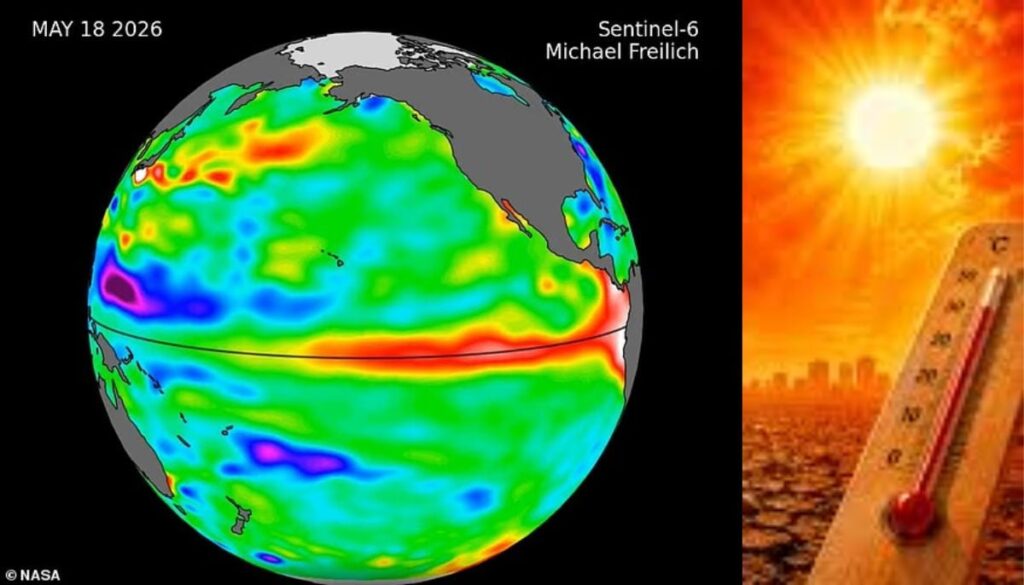
The National Aeronautics and Space Administration (NASA) has warned that a rare weather event is imminent amid fears that Super El Nino is getting closer every day.
The US space agency used satellite data from the Sentinel-6 Michael Freilich satellite, which was launched in 2020, to analyze the water across South America and detected hundreds of miles of warm water arriving in the Pacific Ocean.
NASA said the signs point to a strong possibility that Super El Nino would emerge later this year.
The space agency noted, “Surges of higher, warmer water move eastward across the Pacific a few months before an El Niño emerges. More have shown up in 2026 satellite data.”
For the uninitiated, a Super El Niño is an extreme version of a natural climate event where a massive pool of unusually warm water builds up in the Pacific Ocean, which then acts as a giant heater, pushing global temperatures to record highs and causing extreme, chaotic weather worldwide.
El Nino events have been occurring naturally for thousands of years, their intensity and impact is much stronger this year.
Scientists have predicted an average temperature increase of around 3C globally, which will cause extreme heat almost all over the world.
How to protect yourself from El Nino:
- Monitor official weather forecasts and warnings.
- Prepare for extreme weather in your area, whether it’s heavy rainfall, flooding, heat or drought.
- Keep an emergency supply of food, water, medicine and essentials.
- Have an evacuation plan if you live in a flood or landslide prone area.
- Save water if local authorities warn of drought conditions.
- Protect your home against storms and heavy rain.
- Avoid flooding and follow evacuation orders.
- Stay hydrated and protect yourself from heat in unusually hot weather.
- Protect crops, livestock and water supplies if you live in a rural area.
- Follow the guidance of local emergency authorities.
According to Josh Willis, a sea level scientist at NASA’s Jet Propulsion Laboratory, this year’s El Nino event started later than those that occurred in 1997 and 2015.
However, he warned: “It’s starting to catch up.”