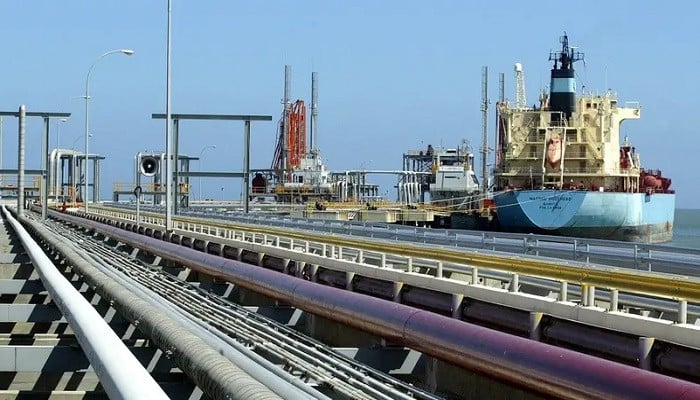
- Analysts warn that inventories could tighten and push prices up.
- Nikkei eases, S&P futures fall ahead of Nvidia results.
- Rising inflation concerns keep bonds on the back burner.
Oil led gains on Monday as fresh attacks in the Gulf heightened fears of supply disruptions, pushing up energy prices and sending ripples through global markets already under pressure from rising bond yields and geopolitical tensions.
Brent crude rose 1.2% to $110.63 a barrel. barrel, while US West Texas Intermediate rose 1.0% to $106.42.
Oil prices rose after a drone attack sparked a fire at a nuclear power plant in the United Arab Emirates and Saudi Arabia said it intercepted three drones. US President Donald Trump warned Iran that it must act “quickly” to reach a deal.
Tensions were further heightened by concerns over the Strait of Hormuz, where shipping has been severely disrupted. Tehran is seeking to formalize tighter control over the waterway, which typically carries about 20% of global oil trade.
“The shutdown is rapidly draining global oil stocks,” said analysts at Capital Economics. “Inventories could reach critical levels by the end of June, setting the stage for Brent at $130-140pb, if not higher.”
“If the strait is closed by the end of the year and oil remains around $150pb into 2027, it will push inflation to almost 10% in the UK and the eurozone, send interest rates back to their recent peaks and lead to global recession.”
Rising energy costs also hit bond markets, with interest rates rising sharply. US 10-year Treasury yields rose to 4.584%, up 23 basis points last week, while 30-year yields stood at 5.109% after a jump of 18 basis points.
G7 finance ministers gather in Paris on Monday to discuss the Strait of Hormuz and critical raw material supply chains as geopolitical divisions threaten to test unity.
In equities, Japan’s Nikkei fell 0.4% after recent record highs, while South Korea’s market fell 2.1% as semiconductor-driven gains cooled. MSCI’s broadest index of Asia-Pacific shares outside Japan lost 0.6 percent.
Chinese shares hovered near four-year highs ahead of data on retail sales and industrial production.
In the US, stock futures fell in early trade.
Citi analysts said earnings strength has been tight, driven by a small group of large companies.
“We identify 20 stocks that contributed the majority of the index earnings upside,” analyst Scott Chronert wrote. “Increases in forward guidance also show a similar narrow focus.”
“Expansion is a necessary condition for meaningful index upside from here. This will require a better outlook on the resolution of the Iran conflict.”
The focus this week is on Nvidia, with expectations high as the AI rally continues to dominate the markets. The stock is up 36% since a low in March, while a key semiconductor index is up more than 60%.
Retail earnings, led by Walmart, will also be closely watched for signs of consumer resilience under pressure from higher energy prices.
In currency markets, risk aversion supported the US dollar. The euro was at $1.1620 after a weekly loss of 1.4%, while the pound traded at $1.3318 after falling 2.3% amid political and bond market pressure.
The dollar held steady against the yen, with fears of intervention keeping traders wary of further moves.
Gold was steady at $4,540 an ounce, with limited safe havens despite heightened geopolitical risks.