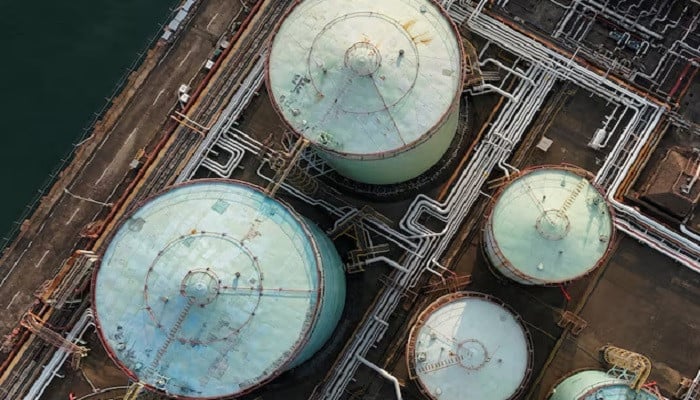
- Analysts warn that sharper moves are possible if Hormuz remains blocked.
- Dollar firms as investors seek liquidity amid geopolitical uncertainty.
- Equity futures ease ahead of corporate earnings week in the US markets.
Oil prices rose nearly 3% in early trade on Monday as deadlocked talks between the United States and Iran heightened fears over the Strait of Hormuz, while stock futures eased and the dollar strengthened in Asia.
Brent crude rose 2.8% to $104.06 a barrel. barrel, while U.S. crude rose 2.7% to $97.97 a barrel.
US President Donald Trump on Sunday rejected Iran’s response to a US proposal for peace talks, calling Tehran’s demands “totally unacceptable” as indirect talks remained stalled.
An Iranian proposal sent to the United States reportedly called for an end to hostilities on all fronts and the lifting of sanctions, along with reparations and recognition of Iran’s position on the Strait of Hormuz.
“The conflict in the Middle East is now entering its 11th week,” said Bruce Kasman, global chief economist at JPMorgan. He added that while energy prices had risen, they remained “headwinds rather than obstacles to the end of expansion”.
Kasman warned that the risk of a sharper market move increases the longer the strait remains effectively closed, with commodity teams seeing operational stress build into June.
In currency markets, the dollar strengthened as investors sought liquidity and rose against the Japanese yen, while the euro fell slightly.
Stock futures also softened, with investors cautious ahead of a week filled with earnings from major technology and retail companies.
Attention will also be focused on US President Donald Trump’s visit to China later this week, where he is expected to meet President Xi Jinping for talks on trade, Taiwan, artificial intelligence and nuclear issues.
Gold eased as it failed to attract strong safe-haven demand despite high geopolitical tensions.