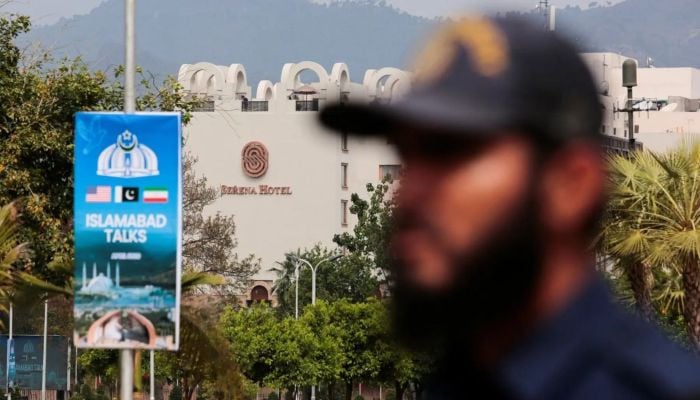
The ongoing confrontation involving Iran, Israel and the United States has once again pushed the Middle East to the brink of a wider conflagration.
Military signalling, proxy engagements and strategic brinkmanship dominate the headlines. Yet beneath this visible layer of escalation is a quieter but strategically significant development unfolding. Pakistan is re-emerging not as a participant in the conflict, but as the main facilitator of dialogue.
In an increasingly polarized global order, where alignment is rigid and trust scarce, Pakistan’s ability to engage across divides is no accident. It is the result of a deeper construction, credibility. And in contemporary geopolitics, credibility has become a currency more valuable than coercive power.
To understand this shift, it is useful to frame credibility not as an analytical abstraction but as a measurable strategic function: C = {A x (I + T) x R}/{S}. Where credibility (C) is driven by actions (A), the combined power of influence (I) and intentions (T) and reputation (R), moderated by self-interest (S). This formulation explains why Pakistan, despite not being a primary belligerent, has gained diplomatic traction in one of the most volatile theaters of global politics.
The first variable – actions – has been central to Pakistan’s repositioning. In contrast to declaratory diplomacy, Pakistan has demonstrated calibrated engagement, facilitated backchannel communication, maintained open diplomatic corridors and enabled dialogue between actors that otherwise operate in silos. In conflict environments, credibility is not built on rhetoric, but on consistency in behavior. Pakistan’s actions signal a shift from reactive posture to proactive facilitation.
The second dimension – the interaction between influence and intentions – defines the effectiveness of diplomacy. Influence without credible intentions generates suspicion; intentions without influence generate irrelevance. Pakistan’s diplomatic architecture spans diverse and often competing actors. It maintains working relations with Iran while maintaining a long-standing strategic relationship with the United States. It enjoys deep economic and political alignment with Saudi Arabia, solid bilateral ties with Turkiye and cooperation with Egypt.
Crucially, this network extends to an “ironclad” strategic partnership with China. This relationship adds a critical layer of geopolitical depth. At a time when global politics is increasingly defined by competition between the US and China, Pakistan’s ability to sustain meaningful engagement with both poles increases its diplomatic utility. It positions Pakistan not simply as a regional bridge, but as a link between great power ecosystems, an attribute that significantly strengthens its influence component in the credibility equation.
However, influence alone does not translate into trust. It is Pakistan’s signal of intent, rooted in de-escalation, restraint and stability, that increases its acceptance. In a region marked by zero-sum calculations, Pakistan’s stance reflects non-opportunistic engagement, allowing it to be perceived as a credible interlocutor rather than a partisan actor.
Reputation – the third pillar in the equation – has seen a significant strengthening in recent years. In addition to its long-standing contributions within platforms such as the UN and the OIC, Pakistan has demonstrated an increased capacity to shape both outcomes and narratives in high-stakes environments.
A key turning point in this regard has been Operation Sindoor. Beyond its operational dimensions, the episode marked a strategic consolidation of Pakistan’s narrative dominance. By effectively aligning military behavior with information strategy, Pakistan managed not only the battlefield but also the perception space, emerging as a state capable of integrating hard power with narrative control. This dual success strengthened Pakistan’s reputation as a coherent and capable actor, reinforcing the ‘R’ variable within the credibility framework.
In contemporary geopolitics, reputation is no longer shaped solely by institutional participation; it is increasingly defined by a state’s ability to deal with crises, both materially and perceptually. Operation Sindoor demonstrated that Pakistan can operate effectively across both domains, reinforcing its status as a force to be reckoned with.
Perhaps the most decisive factor, however, lies in the denominator of the equation, self-interest. In diplomacy, perceived neutrality is often more important than stated neutrality. States with visible interests in a conflict are rarely trusted as mediators. Pakistan’s relative detachment from the direct consequences of the Iran-Israel-US confrontation works in its favor. Its interests are aligned with regional stability rather than specific geopolitical outcomes, reducing the trust deficit that typically undermines mediation efforts.
The lower the perceived self-interest, the higher the credibility. Pakistan’s strategic restraint, remaining engaged but not entangled, has reinforced this advantage. It enables Pakistan to operate within the conflict ecosystem without being subjugated to it.
Taken together, these variables point towards a broader transformation: the emergence of Pakistan as a middle power. Middle powers are not defined by their ability to dominate, but by their ability to influence outcomes through credibility, coalition building, and diplomatic agility. They operate in the space between great power competition and often act as stabilizers in moments of crisis.
Pakistan’s current trajectory reflects this very development. It leverages its multi-vector relationships, bolsters its reputation through demonstrated capability, and projects an attitude of principled commitment. The integration of operational success, as seen in Operation Sindoor, with diplomatic outreach further reinforces this positioning, linking hard-power credibility with soft-power acceptance.
The consequences of this shift are significant. First, Pakistan extends its geopolitical relevance beyond South Asia to West Asian diplomacy. This repositioning increases its strategic visibility and opens up new opportunities for engagement.
Second, it contributes to narrative recalibration. For decades, Pakistan’s global image has been shaped by internal and regional security challenges. Its new role as mediator and stabilizer offers an alternative framework rooted in credibility, responsibility and constructive engagement.
Third, it creates an opportunity for institutionalization. Sustained credibility requires structured commitment. Pakistan can build on this momentum by formalizing dialogue platforms, strengthening diplomatic channels and investing in mediation frameworks that strengthen the country’s role as a peace facilitator.
However, credibility is still a fragile asset. Any perception of inconsistency or bias could quickly erode the gains made. Maintaining this position will require continued alignment between actions, intentions and strategic communication.
The Middle East remains a theater of complex and deeply rooted tensions. But even in such environments, the role of credible mediators is indispensable. Dialogue requires trust, and trust requires credibility.
Pakistan’s recent behavior suggests that it is increasingly being seen through that lens, not as a power that imposes outcomes, but as a state that enables talks. This distinction is critical. In modern diplomacy, the ability to meet is as important as the ability to coerce.
Ultimately, Pakistan’s rise as a mediator highlights a fundamental shift in the nature of power. Credibility, built through actions, reinforced by influence and intention, reinforced by reputation and moderated by limited self-interest, has emerged as a crucial strategic asset.
If sustained, this trajectory has the potential to redefine Pakistan’s global positioning and role, not simply as a participant in geopolitical contests, but as a credible architect of peace in an increasingly fragile and fragmented world.
The author is an expert in public policy and heads the Country Partner Institute for the World Economic Forum in Pakistan. He tweets/posts @amirjahangir and can be contacted at: [email protected]
Disclaimer: The views expressed in this piece are the author’s own and do not necessarily reflect Pakinomist.tv’s editorial policy.
Originally published in The News