
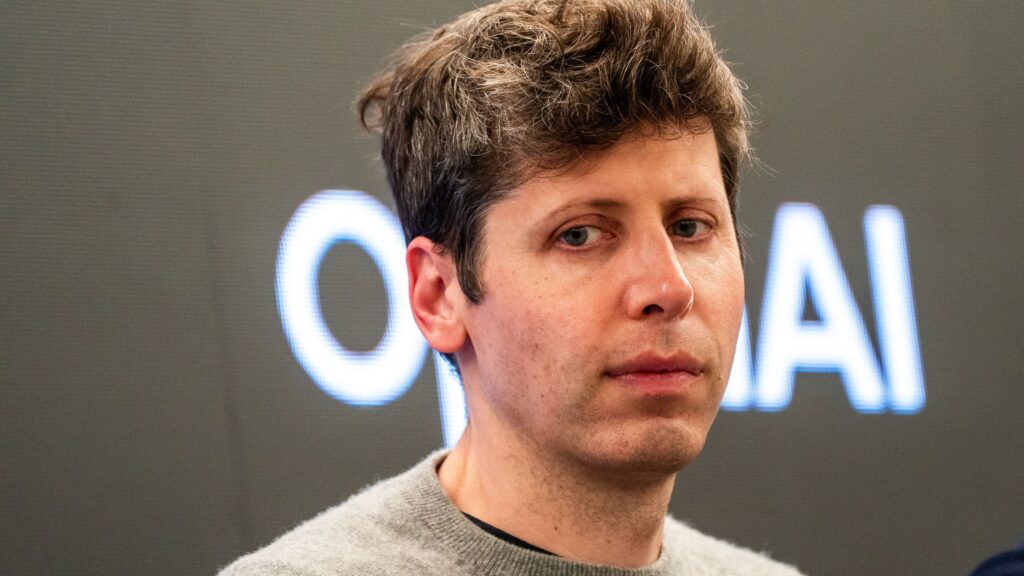
- A critical New Yorker profile reignited longstanding concerns about Sam Altman’s leadership and credibility
- There were two separate attempted attacks at Altman’s home over the weekend
- Altman responded with an intense and personal blog post calling for a de-escalation of the rhetoric surrounding AI
For Sam Altman, the weekend was a chaotic and sometimes dangerous series of crises. The OpenAI chief executive had faced questions after a deep The New Yorker investigation that led to an intense and emotional blog post, all during two attacks on his home in about 48 hours.
The The New Yorker The story drew on over 100 interviews and documents to retrace the events surrounding Altman’s brief ouster from OpenAI in 2023. It cast Altman as a leader surrounded by doubts about his honesty and commitment to safety over power
For Altman, whose public image has long depended on sounding like a calm adult around bickering children, the article threatened something more serious than embarrassment. That sharpened a broader backlash already building around OpenAI, including criticism from AI security advocates, artists, publishers, regulators and rivals who argue the company has become too powerful and too slick.
The article continues below
An attack and angry words
Then, at 4 a.m. Friday, police reported that someone threw a Molotov cocktail at Altman’s home and fled, appearing at OpenAI’s headquarters and threatening to burn the building down. Court documents say he carried writings opposing artificial intelligence and warning of “our impending extinction.”
Altman responded not with a corporate statement, but with a very personal blog post. He posted a family photo and wrote: “Pictures have power, I hope. Usually we try to be pretty private, but in this case I’m sharing a picture in hopes that it might deter the next person from throwing a Molotov cocktail at our house, regardless of what they think of me.” It was a striking move from a CEO who usually prefers polished futurism to raw confession.
He also made it clear that he saw a connection between the surrounding rhetoric and the violence. “Words have power too,” Altman wrote. “There was an inflammatory article about me a few days ago.” He said he had initially rejected the suggestion that the story appeared “at a time of great anxiety about AI” and had made things “more dangerous” for him. “Now I’m awake in the middle of the night and mad,” he wrote, “thinking I’ve underestimated the power of words and stories.”
Apology and Counterpoints
Altman didn’t just strike out. He mixed complaint with confession.
“I am not proud of being confrontational,” he wrote. “I am not proud of handling myself poorly in a conflict with our former board that led to a major mess for the company,” he wrote. “I’ve made many other mistakes through OpenAI’s insane trajectory; I’m a flawed person at the center of an unusually complex situation.” He also wrote, “I’m sorry to people I’ve hurt and I wish I’d learned more sooner.”
He presented himself as both fallible and indispensable. He insisted that “the fear and anxiety about AI is justified” and argued that power over AI “cannot be too concentrated”, although OpenAI remains one of the companies doing the most to concentrate it.
Then on Sunday morning, before the story could cool down, the weekend got worse. San Francisco police responded to reports of possible shots fired near Altman’s home and arrested two people. No injuries were reported, but the symbolism was impossible to miss. A technical manager who claimed that the temperature around AI had become dangerous suddenly had several violent incidents in his home and office.
Backlash all over
Altman is facing angry tirades from several quarters now, though much of it has nothing directly to do with the violence. Questions about trust, accountability and the amount of power now sitting in a handful of AI companies are ripe. Public sentiment around AI is no longer just argumentative or academic.
Altman closed his post with a line that feels almost flat in context. “We should de-escalate the rhetoric and tactics and try to have fewer explosions in fewer homes, figuratively and literally.”
In a matter of days, Sam Altman’s role changed from a familiar kind of lightning rod in the tech world to something more exposed and troubled. The criticism surrounding him is not going away, nor is the broader anxiety about AI that fuels it. What changed over the weekend is how visible and volatile that tension became, spilling over articles and arguments into something harder to contain. Altman may have called for a cooling of the rhetoric, but the moment suggests the conversation around him and the technology he represents is only getting louder, sharper and harder to control.
Follow TechRadar on Google News and add us as a preferred source to get our expert news, reviews and opinions in your feeds. Be sure to click the Follow button!
And of course you can too follow TechRadar on TikTok for news, reviews, video unboxings, and get regular updates from us on WhatsApp also.


