
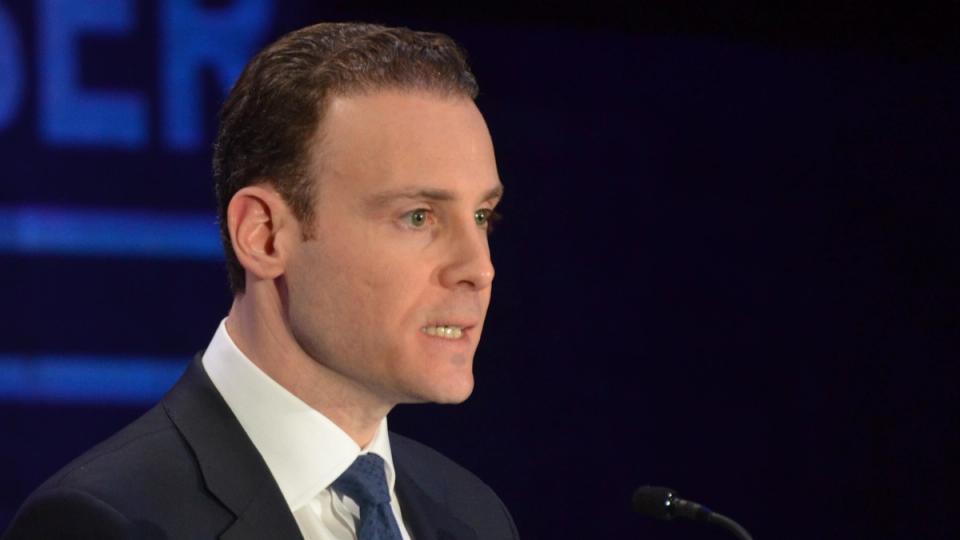
Already known for embracing digital assets, the US Commodity Futures Trading Commission is also leaning into artificial intelligence to take hold after cutting more than a fifth of its workforce, Chairman Mike Selig said in an interview with CoinDesk.
Selig, who is scheduled to appear at Consensus 2026 in Miami next week, said artificial intelligence and automation could offset the staffing cuts under President Donald Trump’s campaign to reduce federal staff. He said the agency — on track to become a leading U.S. regulator for the crypto sector — is pushing to use the technology to review registration applications and even help with market surveillance.
The CFTC registration process currently relies on manual submission of documents, Selig said, so “we’re building systems to automate that, to make it much more efficient.” “AI tools can be used to review the applications, flag certain things for the staff, make their job easier, make it much faster for them to provide feedback and also reject certain things that are not materially complete,” he said. “We can see something come in with blank space or inadequate descriptions or things that are clearly wrong picked up by the AI and that can reject them or put them at the back of the queue.”
Selig said his staff is currently being trained to use Microsoft’s Copilot for the first time, but the agency is also building some “in-house” tools for “reviewing exchange data, reviewing for market surveillance purposes; we have tools now that can help us reach conclusions about certain trades and all that. So we’re embracing technology.”
The chairman has been at the helm of the US derivatives regulator for four months, and it has jumped into the fray of new technologies, including oversight of both the crypto and prediction markets.
Crypto taxonomy
Even in the absence — so far — of a new crypto bill from Congress, one of Selig’s big initiatives has been to embrace oversight of the industry. To that end, he said the most important action taken to date was the joint guidance with the Securities and Exchange Commission to lay out a “taxonomy” for digital assets – a system of definitions for how each subset of crypto will fit into the range of regulatory jurisdictions.
“It’s a massive development that will allow market participants, software developers and consumers to engage with cryptosystems and cryptoassets with confidence that they will not fall under securities laws,” he said, although the interpretive guidance has yet to take full effect in permanent policy. “Now we have clarity,” he said. “We understand what our responsibilities are at the CFTC, and we will crack down on police fraud, manipulation, insider trading in crypto markets, and we believe that will have a huge impact, in addition to clarity for consumers and users of the asset class.”
Prediction markets
But his prediction of markets involving companies such as Kalshi, Polymarket, Crypto.com, Coinbase and Gemini has been the most controversial. Selig’s adamant stance that the CFTC is the only relevant regulator of these firms has put him at odds with the states that have challenged the companies for running afoul of state gaming laws — particularly in the sports betting space. He has sued several states, most recently including New York, to defend the agency’s “exclusive jurisdiction.”
Late last week, the CFTC joined a Justice Department case against a US Army Special Forces soldier accused of placing predictive market bets on the military action in Venezuela in which he participated. Gannon Ken Van Dyke, a master sergeant among the Army’s notorious Green Berets, was arrested and charged with complaining about his own confidential information and the CFTC for using confidential government information. trade.
“We are on the case and continue to monitor news,” Selig said of his agency’s enforcement stance on prediction markets. “We will crack down on bad actors in our markets and we take this very seriously. This is not lip service and market participants should be aware.”
Read more: US CFTC’s Selig says AI has helped offset staff cuts at key crypto watchdog


