
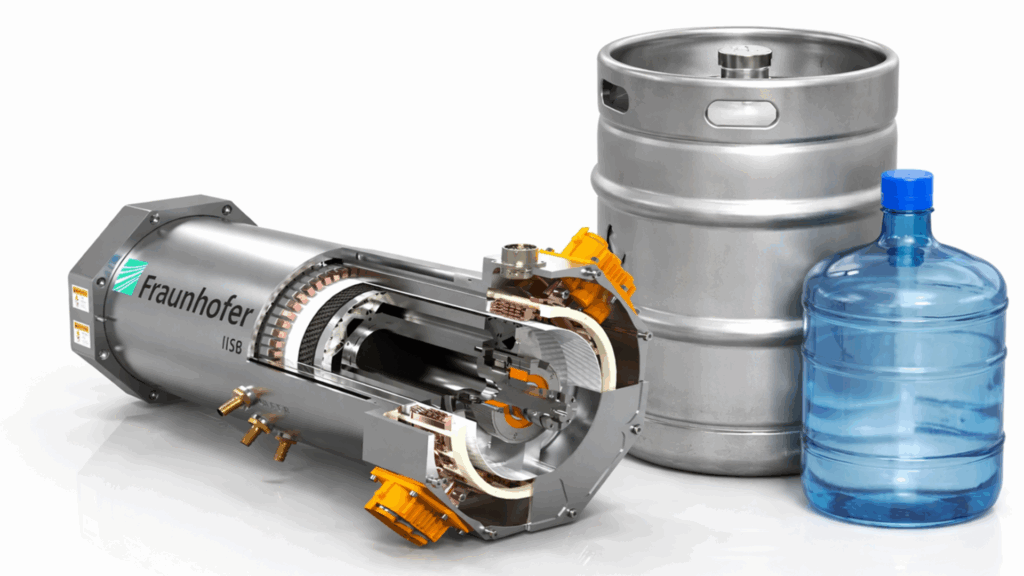
- The Fraunhofer IISB engine delivers 1,000 horsepower from a 94 kg package
- The power density reaches 8 kW per kg, which beats typical EV motors
- A single motor matches three Tesla Plaid motors for total output
A new electric motor developed by the Fraunhofer Institute for Integrated Systems and Device Technology delivers 1,000 horsepower from a unit roughly the size of a 12.5 kg gas cylinder and weighing just 94 kg.
The motor achieves a power density of 8 kW per kilogram, which exceeds typical EV motors that range between 2 and 4 kW per kilogram.
Even advanced aero engines usually top out at 5 to 6 kW per kilograms, making this unit a significant leap forward.
The article continues below
How hairpin windings and oil cooling deliver 1,000bhp from a 94kg package
The motor uses 4 x 3-phase hairpin windings instead of conventional copper wire, allowing more copper to be packed into the same space.
This configuration produces higher current and more power, while providing better cooling and mechanical strength.
Direct oil spray cooling removes heat faster than traditional air cooling, enabling higher performance without overheating.
The combination of these techniques allows the engine to remain compact, which is critical for aircraft applications where space and weight are at a premium.
For context, the Tesla Model S Plaid uses three motors to reach approximately 1,020 horsepower, while this single motor achieves nearly the same output on its own.
Another major innovation is the motor’s use of NO15 steel, which is only 0.15 millimeters thick – about half the thickness used in most electric motors, and thinner steel produces fewer eddy currents.
Fewer eddies mean less heat and greater efficiency, especially at higher speeds. The new engine can run at approximately 21,000 rpm.
It is also built with four independent sections, each with its own winding, inverter and control system – so if one section fails, the other three will continue to run, which is critical to flight safety.
This engine was developed as part of Project AMBER, a European Union Clean Aviation program aimed at hydrogen fuel cell hybrid electric propulsion for regional aircraft.
The project aims to reduce aviation carbon dioxide emissions by at least 30% compared to regional aircraft in the 2020 era.
Avio Aero’s Catalyst advanced turboprop engine pairs with the engine, and GE Aerospace also joins the consortium.
However, Fraunhofer IISB developed the engine from concept to validation, following aviation standards.
A 94 kg engine producing 1,000 horsepower is objectively impressive, but the gap between a lab-validated prototype and certified aviation hardware is still significant.
Project AMBER’s timeline is also ambitious, but whether hydrogen fuel cells can provide reliable power for regional routes remains unproven.
Still, for an industry that measures progress for decades, this engine represents a true engineering achievement.
Follow TechRadar on Google News and add us as a preferred source to get our expert news, reviews and opinions in your feeds. Be sure to click the Follow button!
And of course you can too follow TechRadar on TikTok for news, reviews, video unboxings, and get regular updates from us on WhatsApp also.


