A year to the May 2025 war between India and Pakistan, the remarkable air war has proven to be a defining event that will continue to shape future global policy towards South Asia.
The failure of the Indian narrative in the face of Pakistan’s globally recognized air dominance has shifted the global attitude in favor of Pakistan. On the diplomatic front, states expressed caution against the escalation in the nuclear-armed region. During the escalating period, Turkiye expressed support for Pakistan and China condemned Indian aggression. Israel was the only state to show explicit support for Indian aggression. Russia, Japan, Iran, the UAE, Qatar, France, Britain and the United States called for restraint. In the longer term, the air war has changed the military, strategic and economic policies of regional and global actors towards the region and the strategic status of India and Pakistan.
Militarily, the peculiar dynamics of the conflict attracted considerable global attention. Military strategists learned from the conflict over air doctrine. The Indian Air Force (IAF) had a two-pronged advantage: first, it shaped the course of escalation to its own advantage as an offensive actor, and second, it had a numerical advantage. However, despite being drawn into the conflict, the stunning retaliation by the Pakistan Air Force (PAF) neutralized the Indian advantage. Both states also resorted to drone technology for the first time in the decades-long rivalry. Military strategists have highlighted the significant role that counter-drone technologies play in the future of aerial warfare.
On the strategic front, the May 2025 air war depicted the nature of conflict that has evolved under the nuclear umbrella. India’s propensity to escalate on the air front has raised questions about nuclear deterrence, whereas the appropriate response by the PAF has highlighted the relevance of conventional deterrence even under the nuclear umbrella. In addition to the conventional fronts, narrative proliferation has further complicated the strategic calculus, as the role of successful narrative projection during the conflict has also attracted strategic attention in the aftermath.
While Indian media went out of its way to propagate the false narrative, in line with BJP’s anti-Pakistan jingoism, Pakistan’s ISPR provided credible media coverage as well as evidence-based reports on the status of the conflict. Overall, independent sources confirmed the facts presented by Pakistan and determined that narrative warfare based on misinformation cannot stand up to fact-based, transparent official narratives.
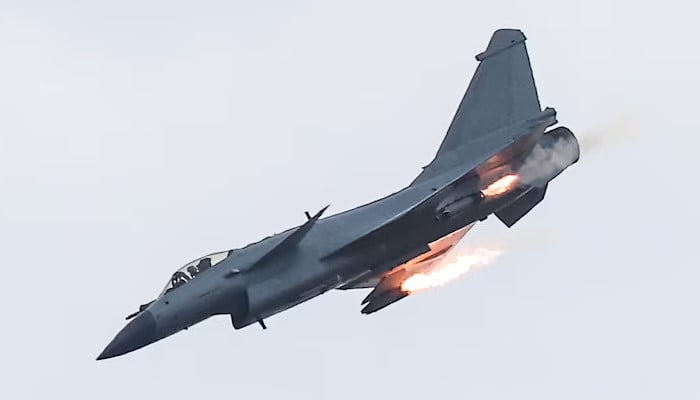
Several layers of the conflict have attracted strategic calculations in the aftermath. First, the conflict has also been framed in the matrix of great power politics between the US and China. Victory in the air war has brought relative strategic autonomy to Pakistan in its aftermath, allowing Pakistan to balance its regional and global foreign policy rather than resorting to camp politics. Second, the success or failure of the technologies in the conflict attracted considerable attention. The PAF’s seamless performance highlighted the effectiveness of Chinese J-10 C jets, whereas the IAF’s mishaps raised concerns about French Rafale jets.
Military and strategic calculations have also affected the economics of defense procurement. The PAF’s seamless performance marked the successful debut of Chinese fighters in a combat situation. The trend subsequently shifted in China’s favor as Chengdu Aircraft Corporation recorded $7.6 billion in sales due to increases in sales of J-10C fighter jets. Demand for drones, stealth aircraft and electronic warfare systems has also increased.
In a nutshell, Pakistan has emerged as the victor from the Indian mishap in the region. The lingering reverberations of the air clash between India and Pakistan have shifted the regional strategic balance in Pakistan’s favour.
Over the past decade, India has developed a pattern of leveraging nationalist military escalation as a tool for domestic election campaigns. But the political cost imposed by the May 2025 air war, in addition to the economic cost, is likely to require a thorough recalibration on the part of India to delineate domestic politics from future military mishaps.
The author is a research assistant at the Center for Aerospace & Security Studies (CASS), Islamabad. She can be reached at: [email protected]
Disclaimer: The views expressed in this piece are the author’s own and do not necessarily reflect Pakinomist.tv’s editorial policy.
Originally published in The News