
Countries in Asia are suffering from shortages of naphtha, an oil derivative used in a dizzying array of products, from household plastics to industrial inks and medical devices.
Early global alarm over the war in the Middle East centered on skyrocketing crude oil prices and gasoline spikes at the pump. But in East Asia, naphtha has emerged as the first major industrial disruption.
Japan and South Korea are heavily dependent on naphtha imported from Qatar and Kuwait, which are unable to export due to the more than two-month blockade of the Strait of Hormuz. Even the naphtha processed by Asian refineries often comes from crude oil shipped through the strait.
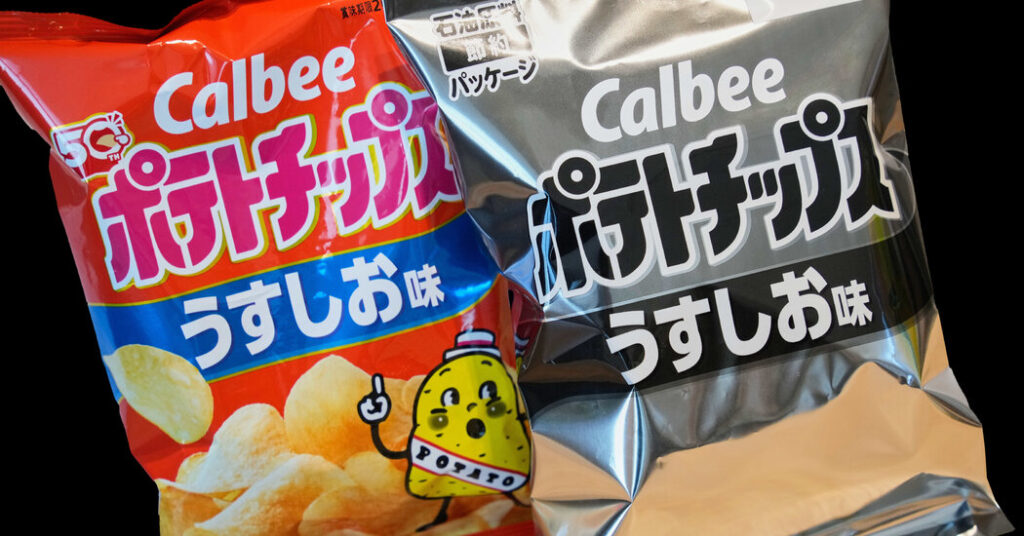
The economic consequences are already visible. In Japan, consumer goods companies unable to secure a steady supply of naphtha are removing colors from food packaging to save ink. Both Japan and South Korea are scrambling to secure alternative supplies before June, with some industry experts warning that shortages could begin to affect production more broadly.
In East Asia, naphtha is “the main mechanism through which supply shocks from the Middle East are already being transmitted throughout the economy,” said Toby Whittington, a senior economist at consultancy Oxford Economics. “It feeds into everything,” he said. “That’s why it’s starting to hit economies so hard.”
What is naphtha and why is it in short supply?
Naphtha is a crude oil product refined from crude oil, which is boiled and separated into different liquid layers. When blasted with extreme heat, naphtha breaks down into the basic petrochemicals used in everything from plastics and synthetic rubber to specialty inks and solvents.
Because it serves as a building block for so many chemical products, naphtha is often called the “flour” or “rice” of industry.
In Asia, naphtha supply chains have long been dependent on the Middle East. Japan imports most of its naphtha, and three-quarters of these imports come from Middle Eastern producers. The naphtha that Japan produces domestically is derived from crude oil, more than 90 percent of which comes from the Middle East.
This means that since the war choked shipping routes through the Persian Gulf and halted exports from key regional ports, more than 80 percent of Japan’s traditional supply lines for finished naphtha products have been abruptly cut off. This leaves Japan and South Korea as the countries most exposed to the current supply disruptions, according to Oxford Economics.
What problems does the deficiency cause?
In Japan, companies are doing everything they can to ration supplies, which they warn could dwindle in the coming months. Major food conglomerates, including snack maker Calbee and ketchup maker Kagome, have begun redesigning their packaging to use less ink, resulting in new, noticeably subdued designs.
Some supermarkets report shortages of everyday items such as plastic wrap. Diaper manufacturers are raising prices and some construction projects are being delayed because builders can’t source home furnishings and construction materials, such as naphtha-derived resins.
In South Korea, petrochemical giants have been forced to cut operating rates. Unable to meet supply obligations without naphtha feedstock, some chemical producers have declared force majeure on shipments to major auto and electronics manufacturers. There have also been reports of consumers hoarding everyday items such as plastic bags.
The deeper concern is that the shortage will bleed into more sensitive industries, such as medical devices. Unlike consumer packaging, medical grade plastics cannot be easily replaced or scaled down. In Japan last month, several patient and doctor groups submitted a joint request to the country’s health ministry, urging officials to identify which medical equipment supply lines are most at risk.
What are countries doing to cope?
Faced with growing anxiety, governments in Asia have sought to project stability as they scramble to establish alternative shipping routes outside the Middle East.
South Korea has increased imports of naphtha from Russia, while Japan has turned to the United States. At the same time, Japanese officials maintain that the necessary volumes are secured and that reported supply disruptions merely reflect bottlenecks in the domestic distribution network.
But with a growing number of companies warning of impending shortages, the public seems unconvinced. In Japan, approval ratings for Prime Minister Sanae Takaichi’s cabinet fell sharply in a recent Kyodo News poll, with 70 percent of respondents expressing concern about the impact of disrupted naphtha supplies on daily life.
Haruhiko Sakaino, an adviser to Japan’s Natural Resources and Energy Agency, said there is little evidence so far that Japan has secured sufficient alternative supplies of naphtha amid an intensifying global bidding war. In April, Japan’s naphtha imports fell 79 percent from a year earlier, according to data released by the Japanese Finance Ministry on Thursday.
If current conditions continue, the number of companies entering the “red zone” of production disruptions is likely to increase in June, Mr. Sakaino, a former oil refining official. For now, he said, “I see no other way to recover from Japan’s present situation except by securing safe passage through the Strait of Hormuz.”


