
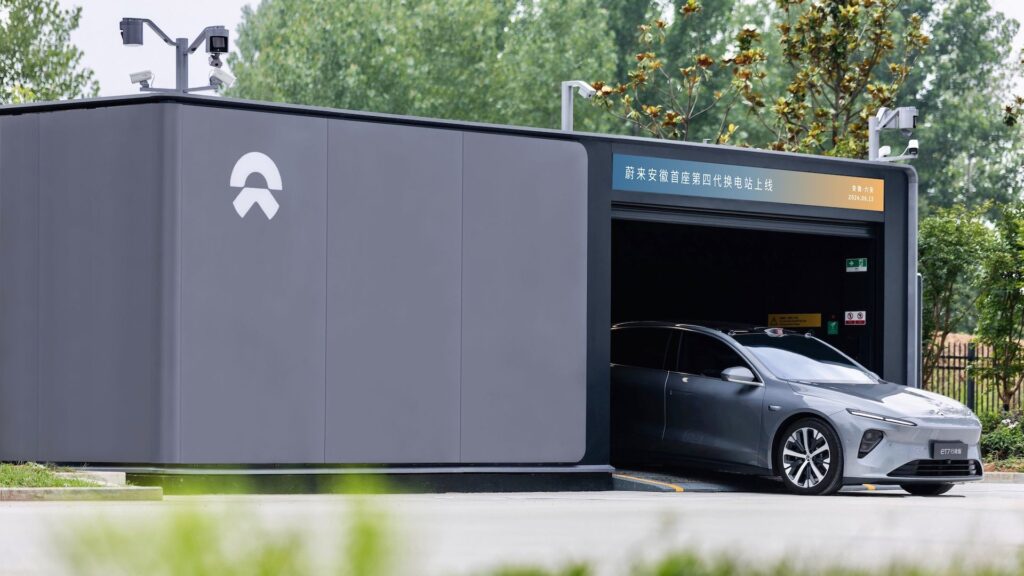
- Nio says it has performed more than 100 million battery changes since 2018
- The technology is praised for its lightness and speed
- Slower on-site charging also reduces the load on the grid
The history of EV battery replacement technology is as long and as complicated as the electric vehicle itself, with numerous manufacturers trying to create networks that would allow owners to drive in and have a new battery installed in minutes.
Renault worked with the Better Place network with its early Fluence ZE model back in 2011 to push battery-swapping technology, and even Tesla had a stab at it, eventually scrapping the idea due to lack of interest.
But Chinese manufacturer Nio has continued to push forward with battery swap technology, stating that during China’s recent May Day, its Power Swap business completed over 1 million battery swaps in a single week, according to Inside EVs.

Nio’s all-electric sub-brand Onvo currently operates 2,491 stations across China, but aims for more than 3,300 by the end of the year. This comes in addition to Nio’s own 3,843 Power Swap stations.
Nio said that on its busiest day, May 1, the company replaced 170,585 batteries across its entire network. On average, each site replaces about 40 batteries a day, slowly recharging the used cells and replacing them in another vehicle when fully charged.
From May 1 to May 5, Nio says it supplied 15.4 gigawatt-hours of energy, which it claims was about 16.3% of all energy supplied to electric vehicles in China during the same period, according to Inside EVs.
Analysis: A standardized system is needed
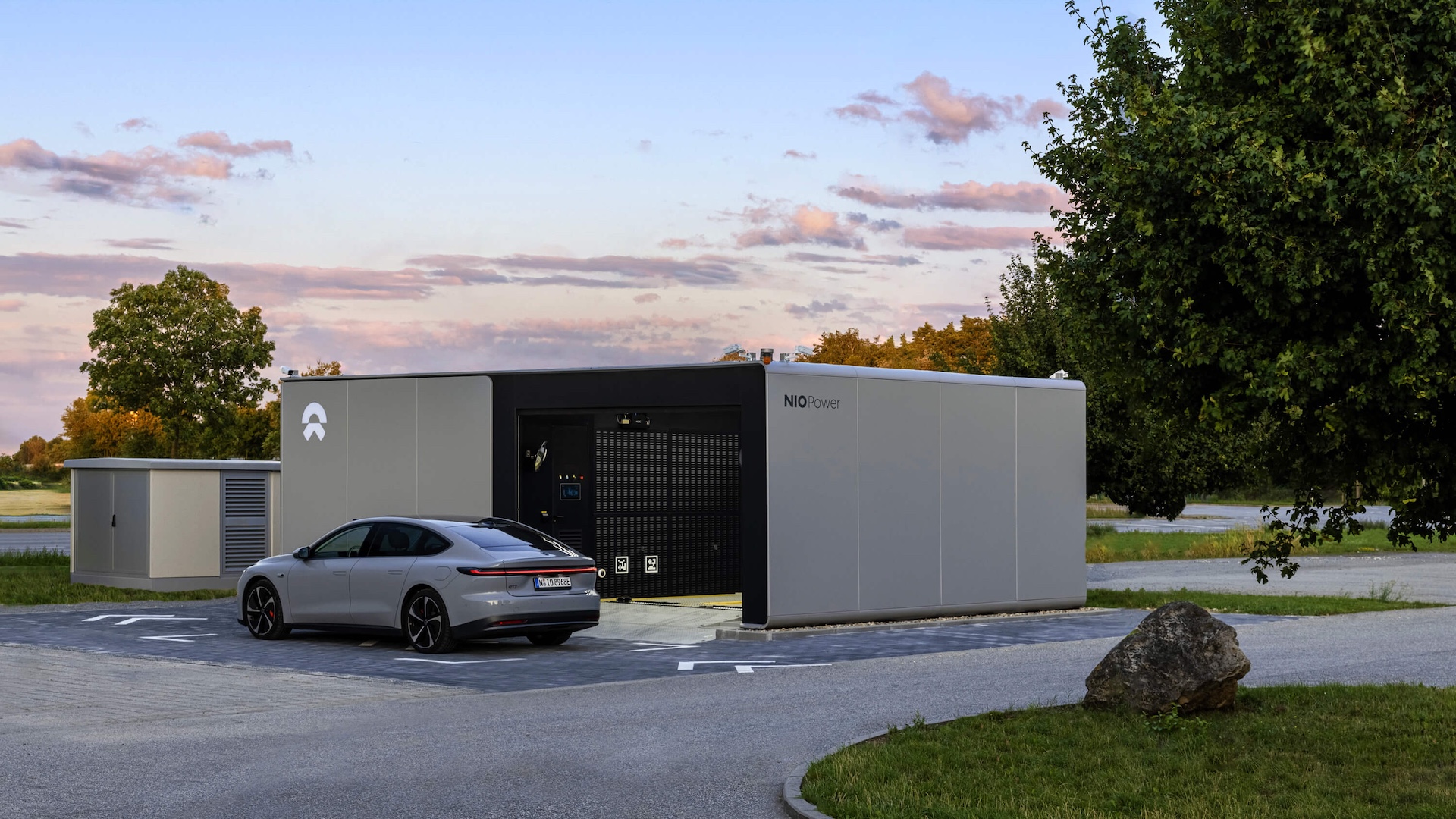
There are so many advantages to battery swapping technology, the most obvious being speed. It takes about three minutes to replace a battery pack, while even the fastest chargers on the planet still take about ten minutes.
For most, the public EV charging experience takes at least 20 minutes, if not 45 or more.
Another plus point is that the used battery cells are charged at a much slower rate on site, meaning there is far less demand on local grids than a whole bank of ultra-fast charging plugs supplying 1.5MW of power to several cars.
That said, battery swapping technology is also very expensive, with a huge investment required from a manufacturer or provider to not only build the sites, but also ensure that enough battery packs are available to service an entire fleet.
That’s why Nio’s Power Swap technology is limited outside of China, with a handful of stations operating in Europe. Although the number is steadily increasing.
On top of this, there is a distinct lack of standardization in the car battery industry, meaning that the Nio’s battery replacement technology only works with the Nio or its Onvo models.
However, the Chinese brand has worked with the country’s leading battery supplier, CATL, to both standardize and implement battery replacement technology that could see it open to rival manufacturers such as Chery and Geely.
This will likely make Chinese car design even more homogenous as vehicles have to be built around the battery replacement hardware, but it’s a great way to make EV charging more convenient and lower the cost of EV ownership.
In most cases, customers simply lease the battery pack (one of the most expensive parts of an electric car) on a month-to-month basis, which means manufacturers can lower the sticker price and encourage budget-savvy consumers to switch.

Follow TechRadar on Google News and add us as a preferred source to get our expert news, reviews and opinions in your feeds.


