
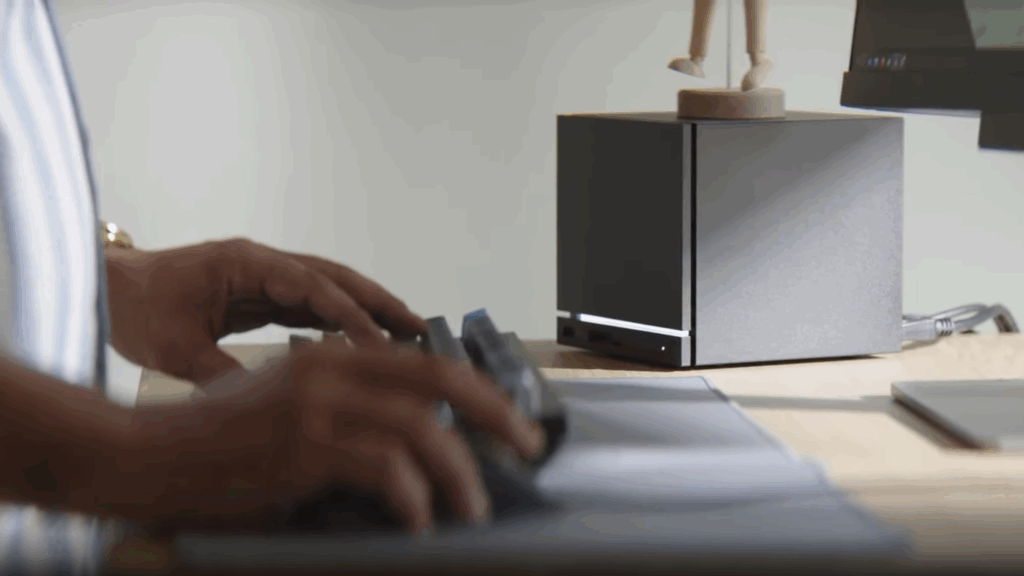
- Valve shares open source files for an e-paper display for the Steam Machine
- Anyone can download, edit and share the files
- The screen can be attached to the body of the Steam Machine and display useful information
I have to admit that after Valve announced the $1,049 / £879 (around AU$1,500) price for the Steam Machine, my enthusiasm for the compact gaming PC waned – but a recent move by the company has gone some way to restoring my faith.
As Brad Lynch pointed out on Twitter, Valve has shared the instructions, 3D print files, software, and list of materials needed so people can build their own e-paper display that can be attached to the body of the Steam Machine, which can then be used to display information such as temperatures and performance of the PC’s components.
Valve uploaded the full parts list, 3D print files and instructions for those looking to build their own E-Ink faceplate for the Steam Machine “Inkterface” first appeared alongside the initial Steam Hardware announcements last year pic.twitter.com/MirrJP34Ll2 July 2026
This second screen, called the ‘inkpad’, turns the Steam machine into a retro-looking PC, and it’s a good reminder of why PC gaming can be so much fun, as well as why Valve, despite its own problems, remains one of the most interesting companies in the gaming industry.

This is what Valve suggests you need:
Do it yourself
The fact that Valve shares these files and instructions as open source is very commendable, as it means that anyone can use them and modify, update and improve them without paying a penny – as long as you have the appropriate tools and materials.
Being able to build your own rig, tweak and mod your PC is one of the things I love most about PC gaming, so it’s great to see that Valve hasn’t completely abandoned its PC roots. Offering ways to add weird, quirky, but also useful parts to the Steam Machine suddenly makes it a lot more interesting.
Of course, I still think building your own compact gaming PC and installing SteamOS to make your own Steam Machine is a better (and more fun) way to do things, and again, it’s a testament to how open PC gaming can be.
Even if you don’t have the time, materials or inclination to build your own ‘inkpad’ screen for your Steam machine, you’ll still be able to benefit as other builders, and even retailers, will be able to make their own and sell them.
The Steam Machine’s future success may therefore depend on its hackability, which may also be the key to extending its lifespan. While I’m not completely sold on it yet, this does a bit to make the high price a little easier to swallow.

Follow TechRadar on Google News and add us as a preferred source to get our expert news, reviews and opinions in your feeds.

The best PC controllers


