- Tens of thousands remain missing across earthquake-hit areas.
- Rescuers pull 33 survivors from collapsed buildings.
- International aid arrives with supplies, dogs and rescuers.
A man and his teenage son were found alive Sunday under rubble in Venezuela, four days after powerful twin earthquakes rocked the country as the death toll hit 1,450 and hope for such rescues faded.
AFP reporters saw French and American rescue teams carry the son and his father down from a mountain of debris on stretchers, both visibly exhausted and in shock, in the devastated coastal town of Caraballeda, about 40 kilometers north of Caracas.
Tens of thousands of people were still reported missing in a South American country already reeling from economic crisis and political limbo after US forces captured former President Nicolas Maduro in January.
Millions more people were feared to lack sanitation and other basic needs after one of Latin America’s most devastating earthquake disasters.
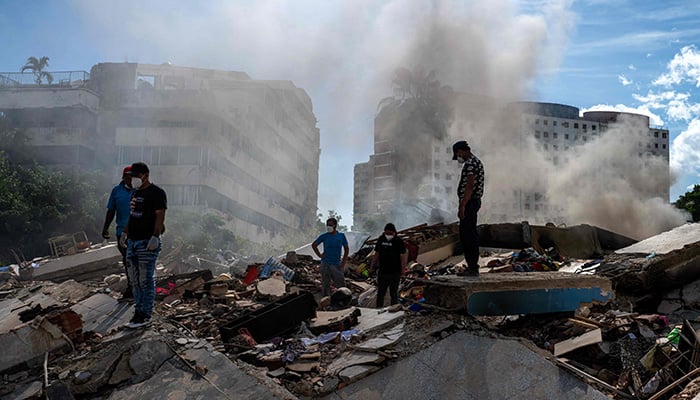
Rescue teams from the United States, Mexico and elsewhere scrambled to save people as desperate residents dug by hand for relatives trapped in the pancaked layers and rubble of collapsed apartments.
Some 774 buildings were badly damaged in back-to-back earthquakes of magnitude 7.2 and 7.5 that struck Wednesday night, including 189 buildings that have completely collapsed, National Assembly President Jorge Rodriguez said Sunday.
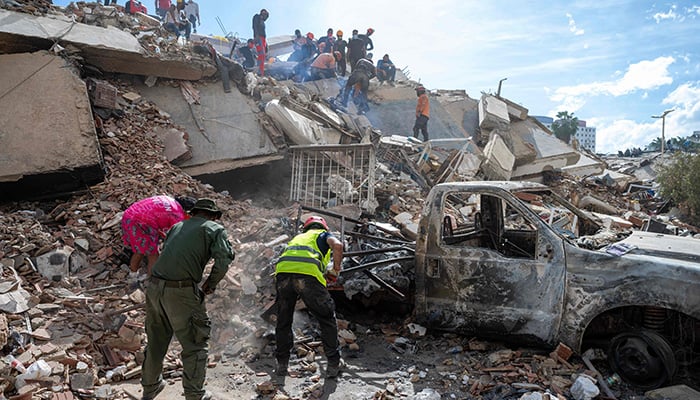
In one of the worst affected areas, the coastal town of La Guaira, Hector Aguilera came to look for four family members buried in the rubble. Two other relatives were rescued.
“We don’t have the support to get our family out – we can’t do it alone. They’re buried there: we know they’re dead, but here we are,” he said.
“We have no hope left; all I have are memories.”
Experts say the first 72 hours after natural disasters – a period that has now passed in Venezuela – is the narrow window for finding the living. After that, the search usually becomes one of healing bodies.
In the San Bernardino neighborhood of Caracas, volunteer rescue workers climbed over a collapsed building, using drills to break up concrete and form lines to remove the rubble by hand.
In Chacao, another area of the capital, large electronic screens on a building normally used for advertising showed the faces of missing people in an effort to help find them.
On Sunday, Rodriguez reported 1,450 dead – a figure expected to rise – with 3,150 people injured.
‘Source of hope’
Venezuela’s interim president Delcy Rodriguez said on Saturday that rescuers had pulled 33 people from the rubble.
American helicopters flew in to help, but hope was running out for more people to be pulled out alive.
A Salvadoran rescue worker, who declined to give his name, put it this way: “At this point, they’re probably dead bodies. Thanks to God, maybe we can find people who are still alive.”
An 11-year-old boy was rescued from the rubble Saturday in Caraballeda, north of Caracas, Rodriguez said.
“Every life is a source of hope for Venezuela,” she said in an X post accompanied by a video of the rescue.
Facing public outrage over the response of local officials, Rodriguez thanked other countries for the outpouring of aid.
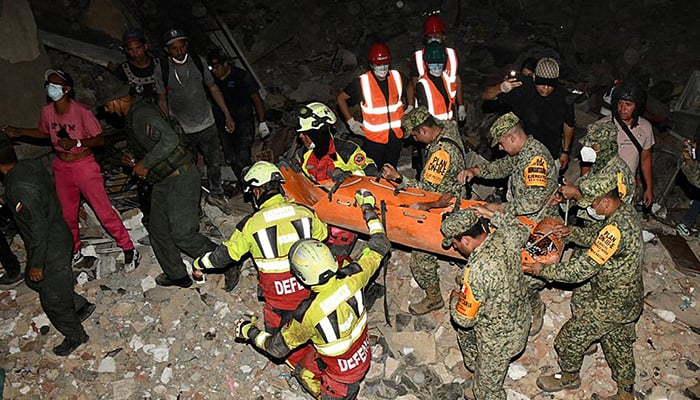
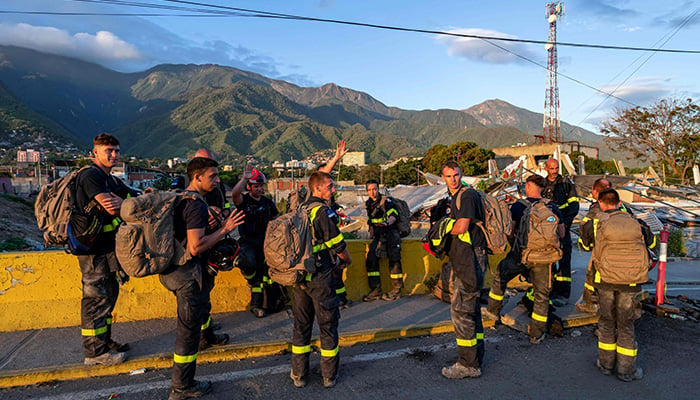
Twenty-four nations have sent 521 tons of supplies, 86 units of dogs trained to locate people trapped under the rubble and more than 2,700 search and rescue personnel, she said.
The United States said on Saturday that a runway at Simon Bolivar International Airport, which serves the capital, was partially functioning to receive US military aircraft while a naval ship had arrived off the coast. The US has also sent a 250-man disaster response team.
Economic impact
The UN migration agency said that based on population and damage data, up to 6.76 million people may be affected and will require shelter, water, sanitation, health care and essential relief items.
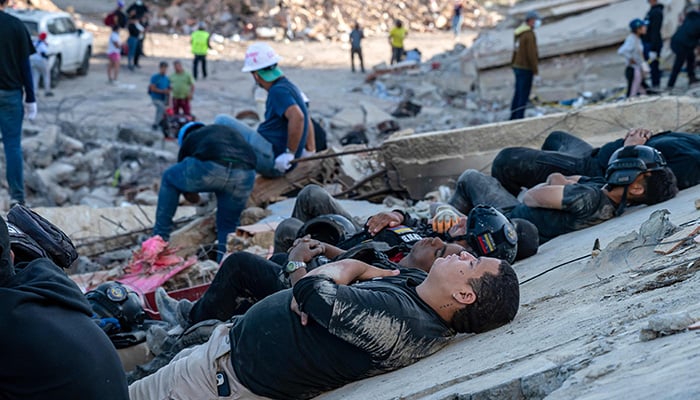
Venezuela’s worst earthquake in more than a century comes after the oil-rich country endured more than a decade of economic collapse.
The crisis has eroded hospitals and public services and driven millions to leave the country.
The UN estimated $6.7 billion in physical damage from Wednesday’s earthquake – equivalent to 6% of Venezuela’s GDP.
The government has restricted access to La Guaira state, deployed the military to the area and required volunteers to obtain an access card.
Anger among those impatiently waiting to volunteer grew as they stood outside a concert hall in Caracas.
“You need a permit to save lives – just imagine,” complained Carlos Itriago, 27.