NEWYou can now listen to Pakinomist articles!
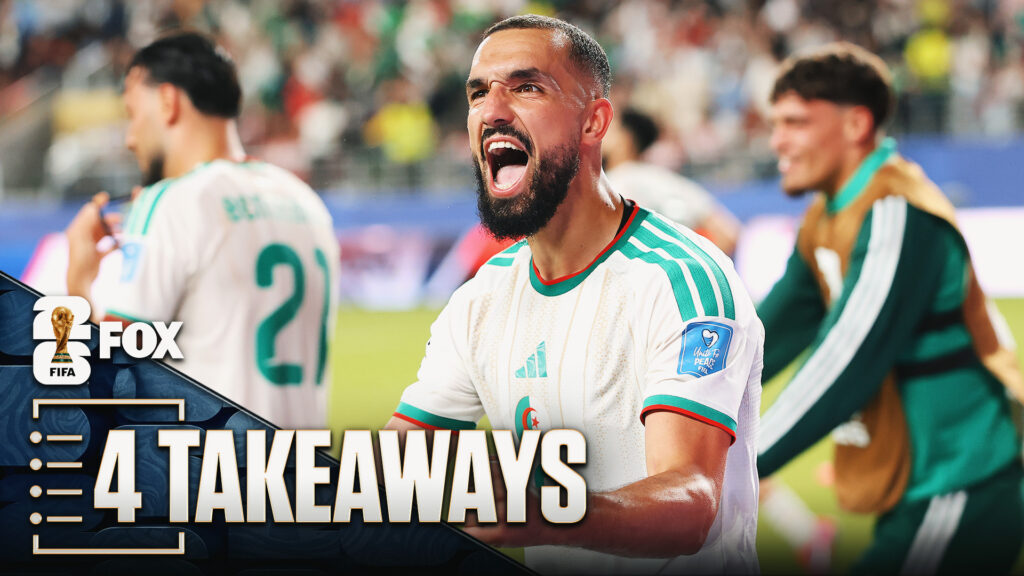
In a tense match between two teams that lost their respective Group J openers, Algeria won 2-1 over Jordan after conceding the opening goal but scoring twice from set-pieces to earn a victory that kept alive their hopes of advancing to the 2026 FIFA Men’s World Cup.
With the result, Jordan cannot advance to the knockouts, but will face Argentina in its final. While Algeria and Austria meet in a match to decide second place in the group and guarantee promotion.
1. This was a tight and tactical game
This was an interesting tactical battle from the start. It was clear that Algeria wanted to control possession in a 3-4-3 formation, but still seemed to play at a fast pace.
Jordan should sit out of possession in a conservative 4-2-3-1 formation and look to aggressively enter the attack, force turnovers and catch Algeria out of possession. Jordan was the heavy underdog in this game and had never won a World Cup match in its history.
Algeria had a couple of very important performances. Playmaker Ibrahim Maza from Bayer Leverkusen helped apply pressure for the full 90 minutes. But immediately Algeria looked to attack from the outside through left winger Farès Chaïbi and captain Riyad Mahrez on the right side, but neither was effective until the second half.
In its opening game, Jordan lost to Austria 3–1, but was in the game until the 76th minute. It was an inspired performance as Jordan put Austria on their heels for many moments.
In this game, Jordan continued with the same tactics and was initially effective, but in the end, Jordan could not keep up with Algeria’s adjustments. Midway through the first half, Algeria were more successful in their attempt to play balls over the Jordanian back line and find Marseille striker Amine Gouiri. So in the second half, Algeria simply had too much quality.
2. Algeria won the chess match
(Photo by Elysia Su/ISI Photos via Getty Images)
Algeria manager Vladimir Petkovic made several key decisions in the second half that gave his team a good chance to make a comeback. To start the second half, Petkovic made two key substitutions as he removed the two deeper holding midfielders and brought in more attacking options with pace. It also changed the team’s formation to a two-forward setup with full-backs pushed far up front to combine with the wingers and overload the wide areas.
Around the 60th minute, Algeria were taking complete control of the game and Jordan was completely overwhelmed. Algeria’s substitutions were the difference, with Nadir Benbouali finding an equaliser.
For Jordan, manager Jamal Sellami made a big mistake by waiting too long to make his first substitutions. Algeria increased the tempo and pressure. Jordan desperately needed to make a substitution to slow the game down and let everyone regroup. Sellami appeared to wait until the hydration break to make the move, but by then it was too late.
Jordan defended hard and aggressively, but its inability to defend set pieces was its downfall.
3. Costly mistakes played a big factor
In this match, the first two goals came from errors.
Jordan was not bothered by Algeria’s huge possession and instead looked to force mistakes by pressing Algeria in their own half. Jordan’s tactical approach paid off in the 36th minute as they took their first ever lead in a World Cup.
The game began with a very poor decision from the Algerian midfielder Ramiz Zerrouki, who had the ball on the right side deep in his own half. He then tried to hit a long looping ball back across the middle of the field. It was a decision where afterwards you could hear the groans of the large contingent of Algerian fans inside the stadium.
Jordan striker Mousa Tamari then took the ball down the right and sent a ball to Nizar Al Rashdan, who then beat Luca Zidane with a clever shot from the side of his foot.
But the goal was completely avoided from Algeria’s perspective. All that possession only increased the chances that the African team would eventually make a mistake. But this was even more painful as it stemmed from a reckless decision that yielded very little upside even if the pass was completed.
In the 69th minute, it was Jordan who conceded an avoidable goal. Algeria were in full command and enjoyed a strong run as they pushed for the equaliser. On a corner kick, Jordan goalkeeper Yazeed Abulaila took a few steps as he looked to try to clear the ball away. Realizing he couldn’t get to the ball, he tried to pull back and was instead caught in no man’s land as Benbouali headed home.
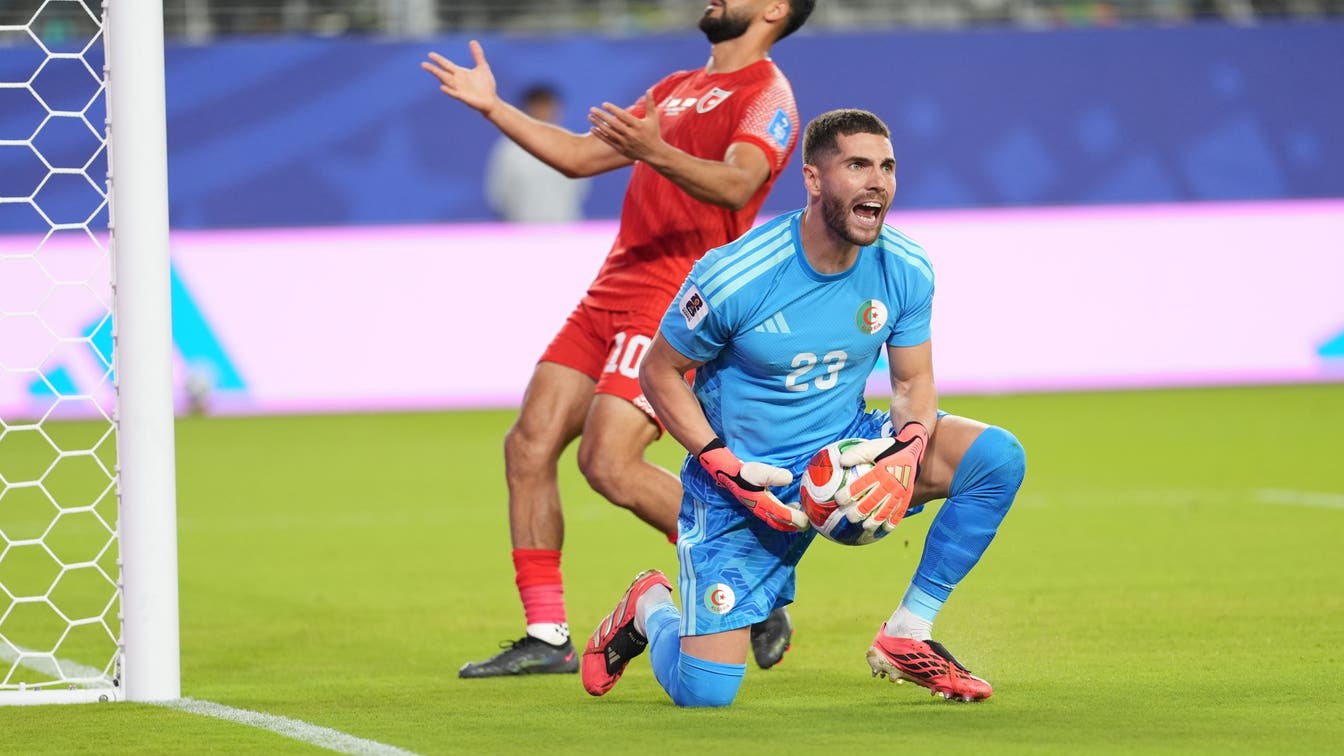
4. Not a memorable World Cup for Zidane
(Photo by Tayfun Coskun/Anadolu via Getty Images)
In Algeria’s 3–0 loss to Argentina in the opening game, Zidane was criticized for his performance. On one goal, he made a save, but couldn’t hang on to the ball. Instead, he let a rebound drop into the center of the box, which Lionel Messi could put away with ease.
In this match, Zidane will once again face scrutiny from the Algerian fans and media because – on the goal from Al Rashdan – Zidane was able to get a hand on the shot, but he was unable to push it away from the goal. It wasn’t nearly as egregious a mistake as he made against Algeria, but it was a shot that could have been saved. When Algeria’s World Cup hopes required a big save, Zidane was unable to deliver.
In this game, Zidane’s mistakes did not cost his team a victory. It remains a very big concern for Algeria because it remains to be seen if his teammates trust his ability to make big saves in important matches.
It is a tough situation for Zidane, whose father is one of the greatest players of all time, but this tournament has not gone well for him.