
ISLAMABAD:
Three weeks into its existence, the newly minted Federal Constitutional Court (FCC) is struggling to find its bearings and has yet to leave a visible imprint on the country’s judicial landscape.
Despite deciding 99 cases, it has not issued a single reported judgment, leaving lawyers and observers waiting to see what kind of jurisprudence the new Supreme Court intends to craft.
So far, it has decided 99 cases, although just 11 new cases have been filed by the country’s former Supreme Court.
Perhaps most tellingly, the FCC has yet to put its stamp on any reported ruling on its website, leaving lawyers in suspense, eager to see what form its law will take.
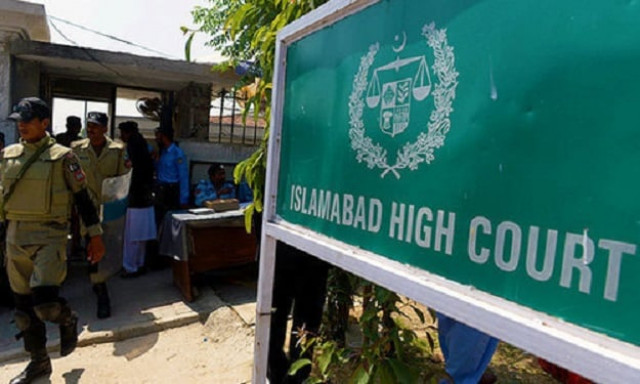
The court is still finding its footing, weighed down by several challenges, starting with the search for a permanent home. For now, FCC benches are working from Islamabad High Court (IHC) premises, while whispers suggest that court records are being shuffled to the Federal Sharia Court.
With seven justices currently on board, the FCC is expected to take more than 22,000 cases from the Supreme Court. However, the SC website still shows 55,747 pending cases, indicating that the handover is still ongoing and the wheels of justice are turning slowly.
Meanwhile, several lawyers are urging the government to allow the FCC, now the country’s highest court, to operate from the SC building. They argue that to deliver speedy and cheap justice, SC benches should sit in multiple registers.
Following the passage of the 27th Constitutional Amendment, the SC has become an appellate court, while the FCC now serves as the highest court. Its decisions, under Article 189 of the Constitution, are binding on all courts, including the SC.
Sources told The Express Pakinomist that additional judges will be appointed to the FCC once logistical issues are resolved.
Senior lawyers are also pushing the court to prioritize cases involving interpretation of the law and the constitution rather than immediately plunging into issues of public interest linked to maladministration or bad governance.
They insist that the FCC must first define clear parameters for public interest litigation.
The FCC judges also face what many describe as a “battle of perception,” given that they were appointed by the federal government, an entity expected to be the primary plaintiff before the court. Observers stress that the challenge now is to demonstrate that the judges are not “executive minded” and will dispense justice “without fear or favour”.
A former senior attorney said he has yet to see a single order issued by the FCC. He lamented that “the goal was not to create a constitutional court, it was to destroy the SC. That goal has been achieved,” he added.
Despite their strong opposition, none of the superior bars has so far challenged the 27th Amendment before the FCC, exacerbating a serious crisis of legitimacy.
Five IHC judges had previously challenged the FCC’s constitutionality. However, no one appeared on their behalf before the FCC in their transfer case. The bench, headed by Justice Aminuddin Khan, dismissed their intra-court appeal (ICA) for want of prosecution.
The All Pakistan Lawyers Convention, jointly organized by the Lahore High Court Bar Association and the Lahore Bar Association, passed a resolution declaring the FCC “assassination of the judiciary”.
Notably, the resolution did not say that the 27th Amendment would be challenged.
Historically, the Supreme Bars also did not challenge the November 3, 2007 Provisional Constitutional Order (PCO) and Emergency in the Supreme Court headed by the then Chief Justice Abdul Hameed Dogar.
Earlier, four IHC judges had tried to challenge the 27th Amendment before the SC, but their petition was not received.
A section of the legal community still believes that the SC can examine the 27th Amendment.


