

- Microscopic QR code measures only 50 by 50 nm² and is constructed using single atoms of silver
- Researchers used quantum tunneling techniques and automation to apply individual atoms to a mounting surface with human intervention for fine tuning
- The QR code can still be scanned with a mobile phone despite being 800 times smaller than the current record holder
Researchers at Monash University’s School of Physics and Astronomy and the Czech Academy of Sciences may have just broken the Guinness World Record for the smallest QR code, with their entry almost 800 times smaller than the previous record.
Each pixel in the QR code is constructed using individual silver atoms placed using an ultra-precise scanning tunneling microscope, meaning the entire QR code is 1000 times smaller in width than a human hair.
Amazingly, as you will see below, the QR code is fully functional and can be scanned using a mobile phone.

Quantum tunneling silver atoms
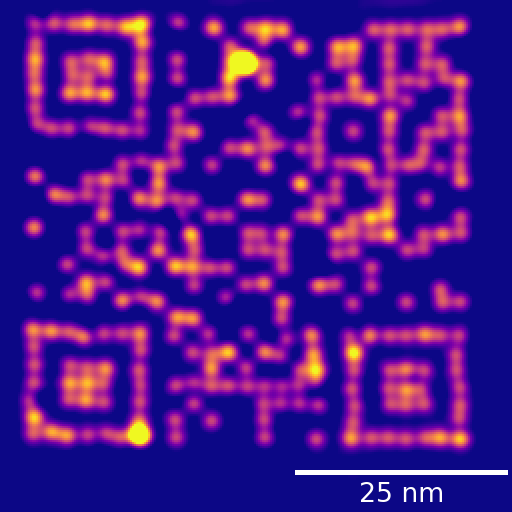
For context, the current world record holder was created in a collaboration between TU Wien and Cerabyte in February this year and used pixels measuring 49nm to construct a QR code measuring 1.98 square micrometers. But the full size of the latest potential record-breaker measures just 50 by 50 nm², meaning the entire QR code is only slightly larger than a single pixel of the current record holder, and about the size of a single COVID-19 virus.
To construct the microscopic marvel, the researchers carefully placed the silver atoms under an ultra-high vacuum and cryogenic temperatures. The silver atoms are moved and positioned using a tiny needle that is only a few atoms wide, allowing the silver atoms to quantum tunnel on the mounting surface.
“We very carefully brought our probe, coated with silver atoms, into contact with a silver surface,” said Dr. Oleksandr Stetsovych from the Czech Academy of Sciences. “With the right conditions, we can leave a single atom exactly where we want it.”
The researchers said the construction required a large amount of fine-tuned automation to form the QR code’s pattern. “Then we manually aligned and adjusted the final atoms to make the QR code fully scannable,” said Dr. Benjamin Lowe of the Czech Academy of Sciences.
The QR code’s primary purpose (besides breaking the previous record) is that when scanned, it directs to “SPM Pro Tips” – an international outreach initiative on all things scanning probe microscopy.
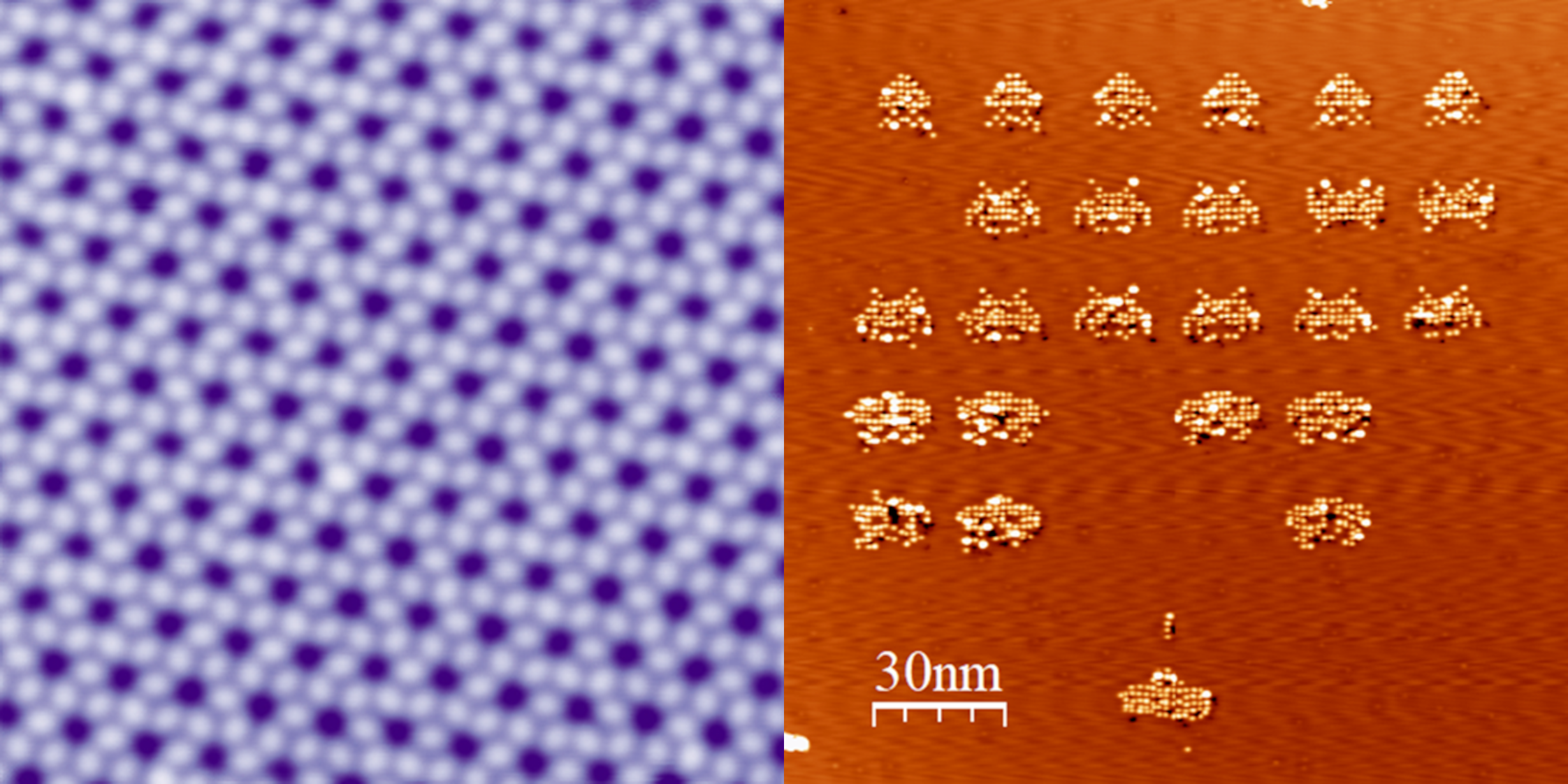
The site also has a gallery where verified researchers can submit their own images of their micro-creations, such as an amazing kagome grid constructed in a 24 × 24 nm² 2D metal-organic framework, or what could be the world’s smallest recreation of Space Invaders.
At this time, Guinness World Records has not formally confirmed the submission from Monash University and the Czech Academy of Sciences as the official record holder, but the team told TechRadar Pro that they have applied for the world record and are waiting to hear back.
There is also the question of how stable the microscopic submission is, especially when taken out of the conditions required to construct it. Cerabyte’s current record holder is said to be the perfect balance of size, stability and durability, allowing it to be scanned repeatedly without microstructure distortion, with the potential for the QR code to be “infinitely” durable if constructed using a thin layer of ceramic, without the energy-intensive need for a vacuum or super-cooling.

Follow TechRadar on Google News and add us as a preferred source to get our expert news, reviews and opinions in your feeds.


