
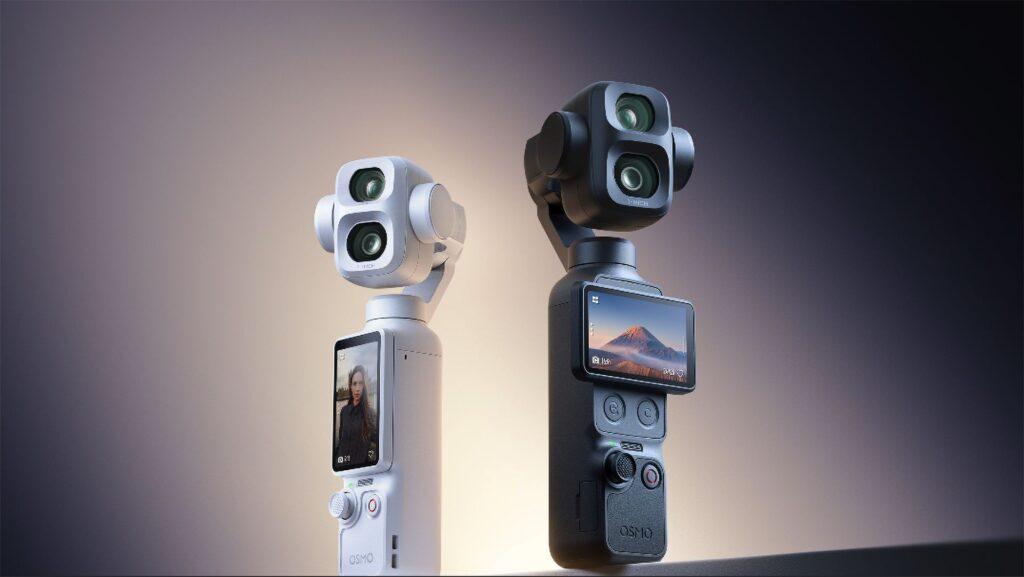
- DJI’s Pocket 4P has been revealed in full on the China page of DJI’s website
- It shares the core features of the Pocket 4, but adds a 3x telephoto camera
- There is no official word yet on global availability or pricing
We knew it was coming after a soft reveal at the Cannes Film Festival last month, but now DJI has fully revealed its first compact dual-lens vlogging camera, the Osmo Pocket 4P.
You’ll have to dig for the details, mind you – the Pocket 4P has only been announced in China, and so far the full specs and features can only be found on the China page of the DJI site. You’ll need to select the China region (中国世界) to learn about the camera’s core features, or you can stick with me here for the highlights and how it compares to the Osmo Pocket 4 and the Insta360 Luna Ultra dual-lens rival.
There’s no official word yet on global pricing and availability, but based on recent DJI launches, I’d expect a two-week wait for wider availability. Let’s see how the Pocket 4P compares to the Pocket 4 and the Insta360 Luna Ultra. So far, DJI has confirmed a starting price of CNY 3,799 for the Pocket 4P, which is around $562 / £420.

1. Lentils
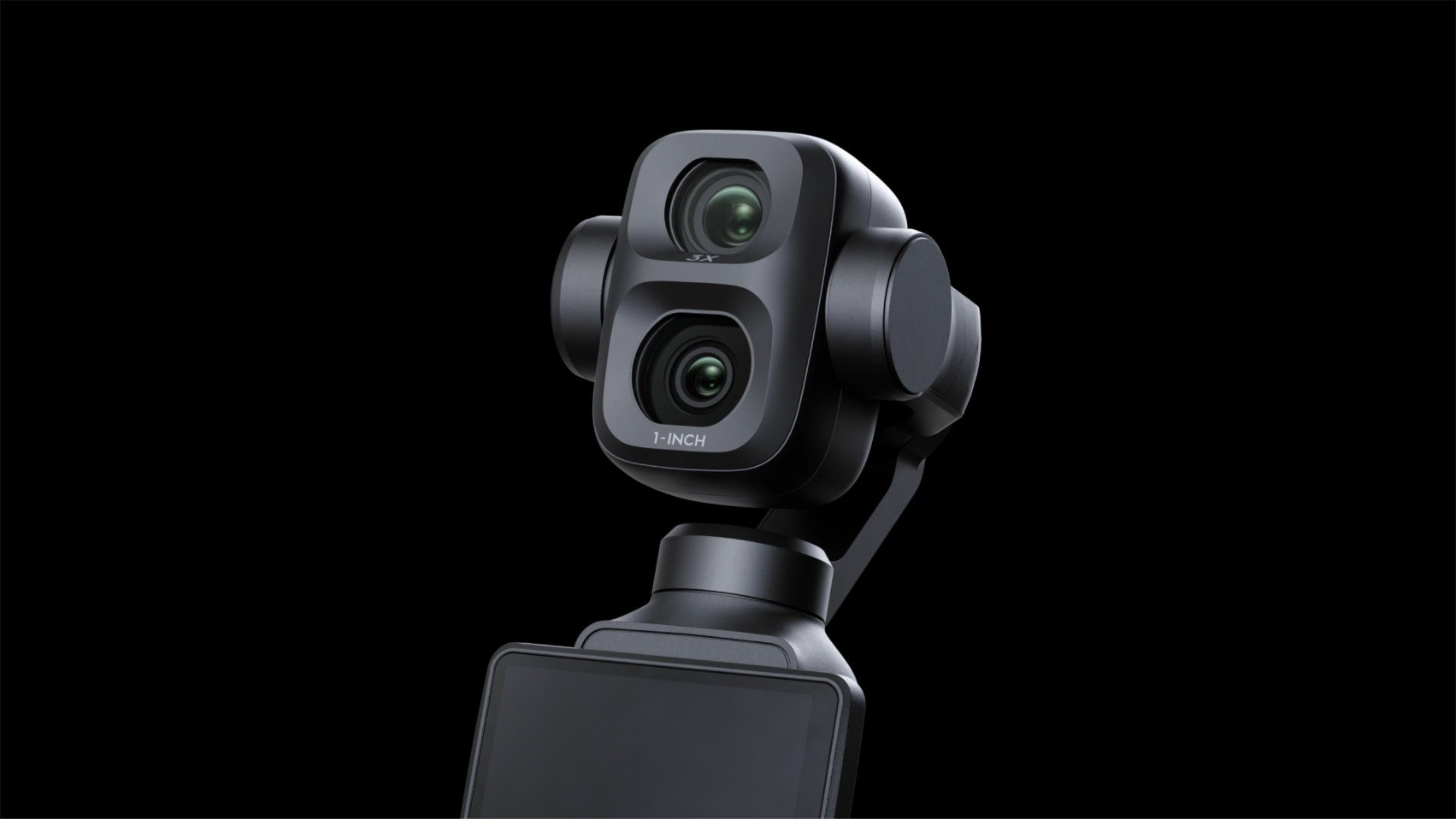
The Pocket 4P’s core design is the same as the Pocket 4, but with one big difference: the lenses. Where the Pocket 4 has a single ultra-wide 20mm f/2.0 lens, the Pocket 4P adds another 3x telephoto lens.
The 3x lens is a 60mm f/1.8 optic, and it shoots on a separate 1/1.28-inch sensor to the ultra-wide’s refined 1-inch sensor. This is truly a dual-camera device with two different perspectives, and it’s a design approach we’ve seen in the latest Insta360 Luna Ultra, which I’m still testing in depth as I write this article.
At first glance, the Pocket 4P and Luna Ultra’s lenses are designed differently; The Pocket 4P’s twin-lens array is vertically arranged, the Luna Ultra’s is horizontal. I’m not sure the rationale for that, or what practical advantages each array has over the other.
Both the Pocket 4P and Luna Ultra offer a ‘lossless’ 6x zoom from their telephoto cameras plus a 12x digital zoom. I will soon compare the DJI Osmo Pocket 4P and the Insta360 Luna Ultra in real-world tests, but the specs look pretty similar:
| Row 0 – Cell 0 |
Ultra wide |
3x telephoto |
|
DJI Osmo Pocket 4 |
20mm f/2.0, 1-inch sensor |
REACH |
|
DJI Osmo Pocket 4P |
20mm f/2.0, (revised) 1-inch sensor |
60mm f/1.8, 1/1.28″ sensor |
|
Insta360 Luna Ultra |
20mm f/1.8, 1-inch sensor |
60mm f/2.0, 1/1.3 inch sensor |
2. Dynamic range and color
Almost all of the Osmo Pocket 4 and Pocket 4P specs are identical, but there is one area where DJI pushes the more expensive dual-lens model: dynamic range and color profiles.
The Pocket 4’s dynamic range is rated at up to 14 stops, whereas the Pocket 4P is billed as having a ridiculous-sounding 17 stops, which would beat the performance of high-end professional cameras. I don’t have details on how the dynamic range is achieved or if you need a specific state to get it, but we’ll find out soon enough.
One way could be DJI’s new D-Log 2 color profile, which it says is an upgrade from the D-Log profile used in the Pocket 4.
And as for the Luna Ultra, it reportedly has a dynamic range of 14 stops and an I-Log color profile. I-Log is Insta360’s first Log profile, whereas DJI has iterated log profiles over several versions.
As for which camera delivers the best shots, we’ll have to wait and see, but the photos on the Pocket 4P product page look amazing!
3. Design
Picture 1 of 2
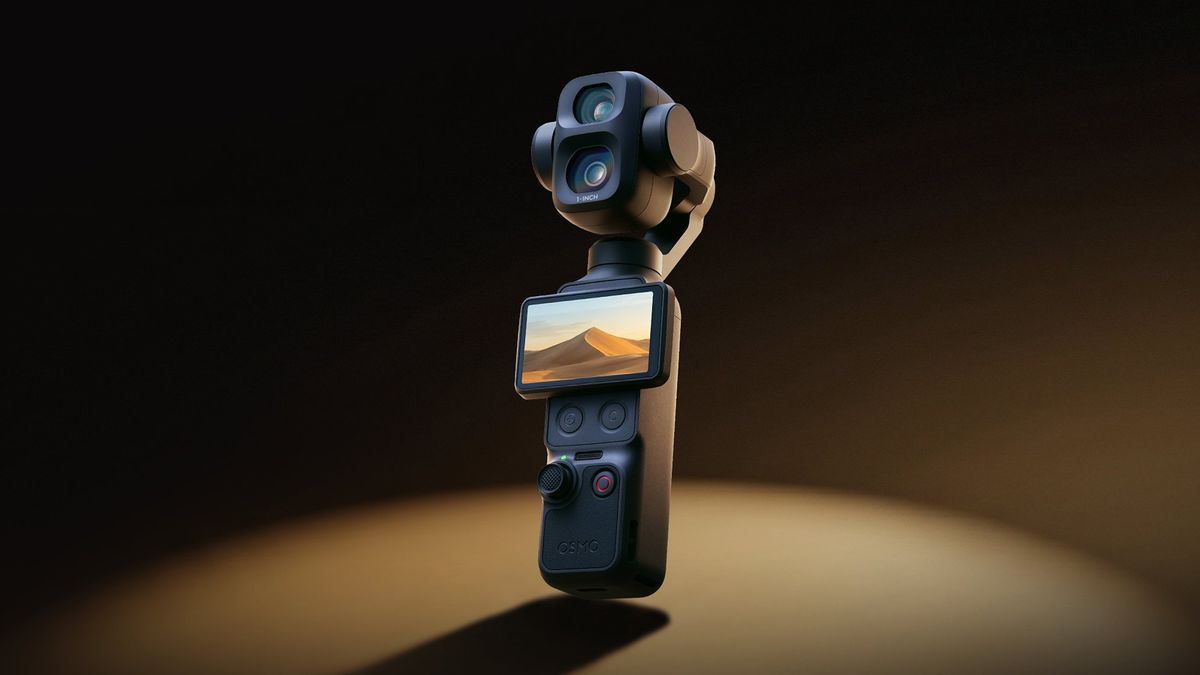
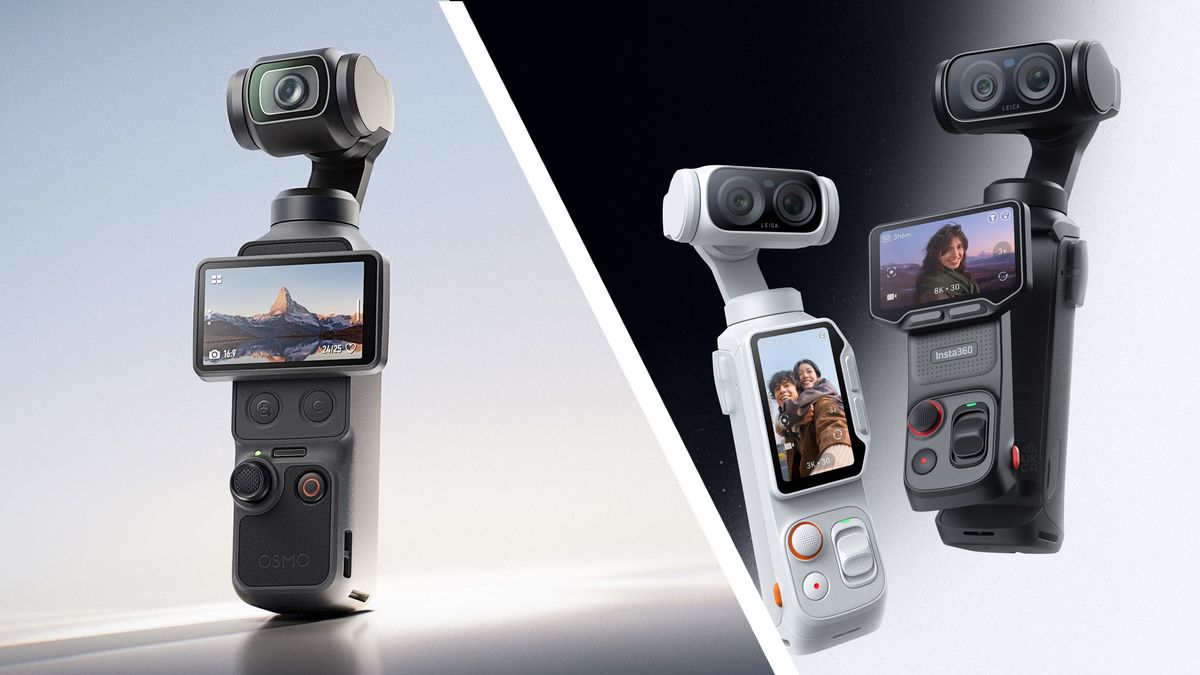
You can think of the Pocket 4P as a Pocket 4 but with an extra camera, because otherwise the design of the two cameras is basically the same; they both have a compact design, a rotating 2-inch touchscreen, which reveals two extra buttons when placed horizontally.
They both use a 3-axis gimbal camera unit, which has a magnetic arm and contact points that a neat LED light clicks on and which are powered by the camera. I like the new slim gimbal guard on the Pocket 4 models – it’s much more compact than the hard case that came with the Pocket 3.
Of course, there are several design differences between the Pocket 4P and the Luna Ultra. The Pocket 4P is the slimmer and slimmer of the two, and it has extra buttons and the gimbal function.
The Luna Ultra comes in a larger hard case and is generally bulkier, but it has a smart and well-implemented detachable controller with a 20m transmission range that has won much praise and is being touted as a reason to choose Insta360 over DJI. The controls feature the rotating 2-inch OLED touchscreen, key camera controls and a built-in microphone.
I’ll be back soon with my in-depth Luna Ultra review and no doubt comparisons with the Pocket 4P once I get the two cameras side by side.
After using the Luna Ultra for about a month, I can safely say that I would struggle to go back to a single-lens vlogging camera like the Pocket 4; these dual-lens models are so much more versatile, so stay tuned for more.
4. Pricing
- Pocket 4P standard kit costs CNY 3,799 (approx. $562 / £420)
- Pocket 4P Vlog Kit costs CNY 4,299 (approx. $636 / £475)
If these price conversions are remotely accurate to the actual price, then the Pocket 4P will be much cheaper than the Insta360 Luna Ultra. I think the actual price will be higher.
But of course DJI is banned in the US, so the Pocket 4P won’t be available there for the foreseeable future, and so US pricing is a moot point.
Luna Ultra costs; $769.99 / £649 / AU$1,229.99 for the standard set, while a Creator Bundle costs $969.99 / £829 / AU$1,549.99. The Pocket 4 starts at £429 / AU$749 or £549 / AU$959 for the Creator Combo.

Follow TechRadar on Google News and add us as a preferred source to get our expert news, reviews and opinions in your feeds.


