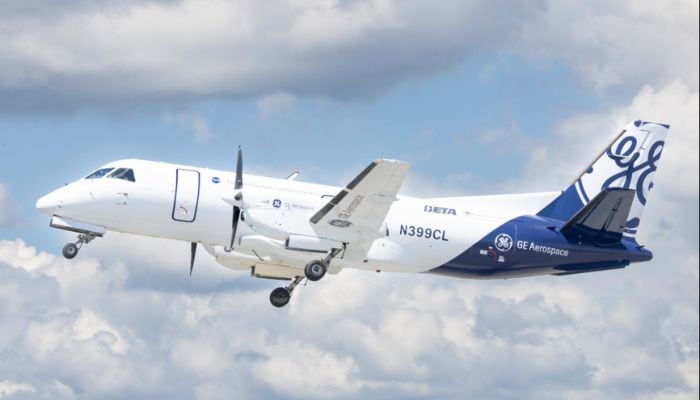
GE Aerospace has accomplished something no one else in aviation has done yet by keeping a hybrid-electric plane flying above 30,000 feet, the same altitude as commercial jets.
The company announced the milestone on Monday, July 20 at the Farnborough International Airshow in England, working with the National Aeronautics and Space Administration (NASA), Boeing and BETA Technologies to make it happen.
The test aircraft, a modified Saab 340B, carried GE’s hybrid-electric propulsion system built into one of the engine nacelles. At one point during the test, the plane remained in hybrid-electric mode for more than two hours straight, including part of its transatlantic flight over to the air show.
Getting an airplane to run partially on electric power at that altitude has been one of aviation’s more difficult problems to crack. Regular hybrid or electric cars have been around for years now, but doing the same thing thousands of feet in the air, where the air is thin and the stakes are much higher, is a completely different challenge.
GE Chairman and CEO H. Lawrence Culp Jr. didn’t hold back on how big a deal this is for the company, calling it one for the history books.
The system packed into the aircraft includes GE-built motor generators, power converters, controllers, gearboxes from its Avio Aero unit and propellers from Dowty, on top of a CT7 engine that does the traditional work. BAE Systems supplied the batteries and the nacelle itself came from Aurora Flight Sciences, a Boeing subsidiary.
This isn’t GE’s first foray into hybrid-electric flight, either. The company has left the issue for close to a decade, starting with a basic ground test of an electric motor back in 2016. In 2022, it completed a megawatt-class hybrid-electric test at simulated altitudes up to 45,000 feet. Just in January 2007, GE ran a ground test of a narrow-body hybrid-electric engine that didn’t even need battery storage to operate, a design detail it says is critical to making the technology practical on commercial aircraft along the line.
The bigger goal behind all of this is fuel savings. GE is folding what it learned from those tests into its CFM International RISE engine program, which the company says aims for more than 20% better fuel efficiency compared to today’s engines.
Indeed, visitors to the Farnborough Airshow this week will also get to see the technology in person. GE has scheduled public demonstration flights of the modified aircraft throughout the event, along with a static display for anyone wanting a closer look on the ground.