
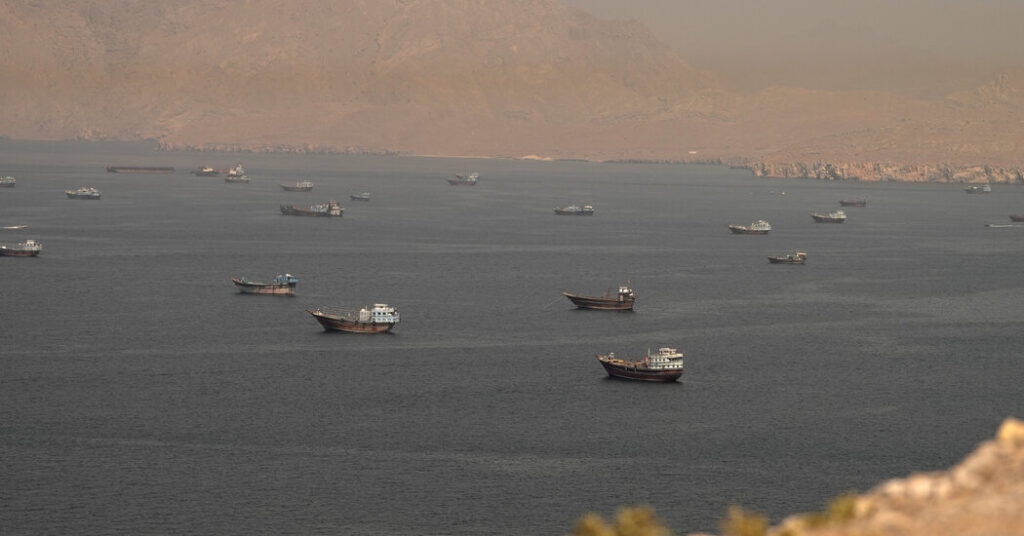
Ships are moving through the Strait of Hormuz, although traffic is still well below typical pre-war levels. Some shipments of oil reach their destinations.
On Friday, at the end of a week of head-spinning developments in the war in Iran, ship owners and operators prepared for what they hoped would be a window for them to leave the Persian Gulf after being stranded for more than three months.
A tentative agreement signed by President Trump and President Masoud Pezeshkian of Iran began a 60-day period of negotiations between the countries. Critically, Iran promised to reopen the strait and on Thursday the US military said it had lifted a blockade it has imposed on Iranian ships since April.
The deal was thrown into doubt on Friday after Switzerland said the next phase of talks had been postponed and Israel launched new attacks in Lebanon. After a sharp decline this week, oil prices rallied.
For shipping companies, and the thousands of seafarers still stuck on ships, a meaningful resumption of traffic in the Persian Gulf remained contingent on the resolution of a number of critical issues.
With naval mines littered in the central part of the strait, some leaders said they were waiting for clear instructions on the route ships should take, the rules for getting in line and a process for getting out to avoid navigational hazards, including collision, especially amid interference with GPS and satellite navigation systems.
At least 17 ships, including 13 tankers, passed through the strait on Thursday. It was far below the number of ships sailing before the war, but higher than the number in recent days. The move was a sign that tanker operators were feeling more confident, according to Kpler, a global maritime data company.


