
- China has successfully tested a new submarine cable-cutting vessel
- The vessel uses an independent electro-hydrostatic actuator
- Although designed for civilian purposes, the vessel has military applications
China has conducted the first successful test of a new deep-sea vessel capable of cutting undersea cables at a depth of 3,500 meters (11,483 feet).
A report from SCMP claims that the new “Haiyang Dizhi 2” research vessel has reportedly completed sea trials with a new ‘deep-sea electro-hydrostatic actuator’.
The test “bridged the ‘last mile’ from deep-sea equipment development to engineering application,” the official China Science Daily reported.
The article continues below
Deep sea cable cutters can cut through steel
Instead of relying on a connection with a surface vessel to supply the external oil pipe used by hydraulic mechanisms, the deep-sea electro-hydrostatic actuator is a self-contained unit that houses the hydraulic system, electric motor and controls.
The vessel is touted as being designed for deep-sea engineering purposes. But like many technologies designed for civilian use, the craft also has the potential to be used to sabotage undersea cables from nations China considers hostile — such as the United States.
Submarine cables are the arteries of modern digital life, carrying over 95% of all international internet traffic – and with it much of the data our businesses and economies depend on. They are typically buried just below the ocean floor at a depth of about 2,000 meters (6,561 ft), but can be laid deeper, especially across large stretches of sea.
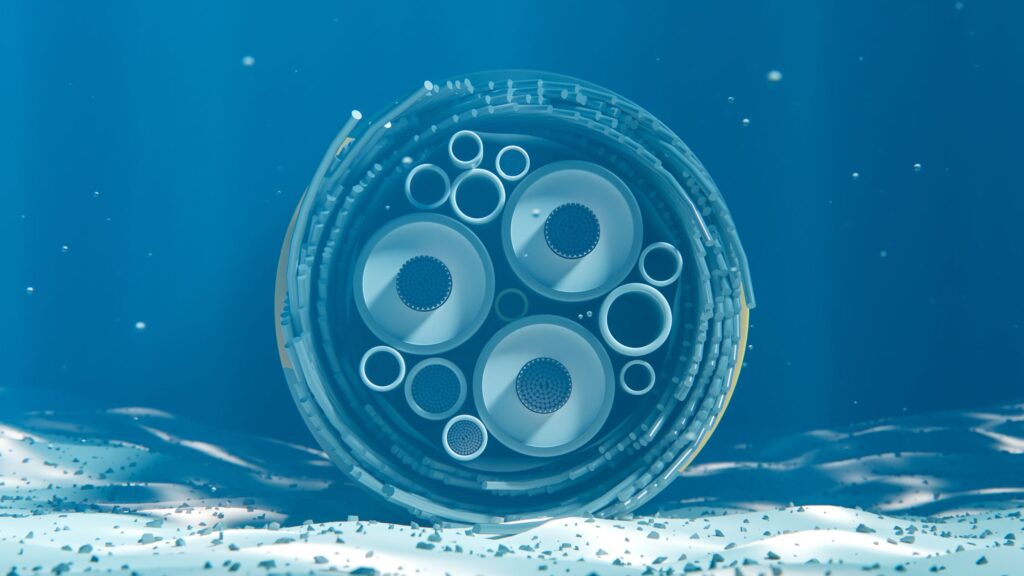
Most submarine cables use a layered protective sheath of steel, rubber and polymer arranged to provide protection not only from the crushing pressures of the seabed, but also from ship anchors, bottom trawlers and subsea vessels such as these.
This is not the first deep-sea cable cutter that China has unveiled. The China Ship Scientific Research Center (CSSRC) and the State Key Laboratory of Deep-sea Manned Vehicles have also developed a vessel that uses a diamond-coated grinding wheel to cut through submarine cables at depths of 4,000 meters (13,123 feet).
Undersea cables have become lucrative targets for espionage and disruption. In late 2024, two undersea cables in the Baltic Sea were damaged, with Finnish authorities seizing a ship believed to belong to the Russian ‘shadow fleet’ as the responsible party. The British government recently revealed that Russia launched submarine sabotage vessels in British waters with the intention of targeting undersea cables in the North Sea.
Plans to lay cables in the Red Sea as part of projects such as Meta’s 2Africa Pearls project have been delayed or canceled due to hostilities between the US and Iran.
Follow TechRadar on Google News and add us as a preferred source to get our expert news, reviews and opinions in your feeds.


