
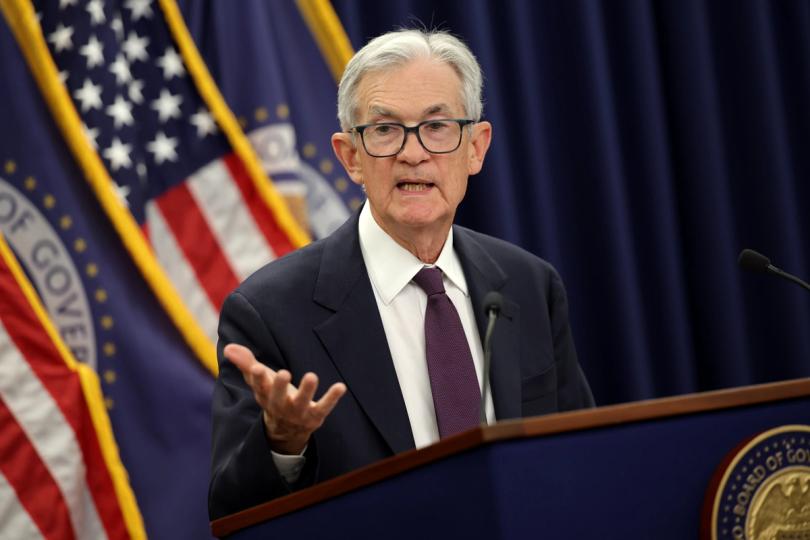
As fully expected by markets, the U.S. central bank kept its benchmark fed funds rate range steady at 3.50%-3.75% on Wednesday, marking the fourth straight meeting unchanged as officials weigh persistent inflation risks against signs of slowing economic growth.
“In considering the extent and timing of further adjustments to the target range for the federal funds rate, the Committee will carefully assess incoming data, the evolving outlook and the balance of risks,” the Fed said in its policy statement.
There were four dissenting views on the tariff decision, one dovish and three hawkish. Fed Governor Stephen Mirran favored trimming rates by 25 basis points, while Beth Hammack, Neel Kashkari and Lorie Logan wanted to keep rates steady while removing any easing bias.
Under pressure ahead of the news, bitcoin remained about 0.5% lower over the past 24 hours, trading just below $76,000. US shares continued with modest declines, the Nasdaq fell 0.35 per cent. Interest rates shoot higher, with the two-year Treasury up 9 basis points to 3.93% and the 10-year up 5 basis points to 4.40%.
Today’s central bank meeting is likely to be the last chaired by Jerome Powell, whose term as chairman ends on May 15. His replacement, Kevin Warsh, passed a Senate Banking Committee vote earlier Wednesday, putting him on track to take over when Powell steps down. The three hawkish dissents suggest that Warsh will have a difficult task in pushing through the rate cuts, even if that is the direction he would like to go.
Attention will next turn to Powell’s post-meeting news conference as traders look for clues on the path forward for monetary policy.
After pulling back sharply earlier this month amid hopes of a lasting peace between the US and Iran, oil prices have returned to near their post-war highs, with WTI crude trading just back from $105 a barrel. barrel.
Higher energy costs obviously contribute to overall inflation figures, but they can also slow down economic activity. This puts the US central bank in a difficult position: Which of its mandates – prices or economic growth – should it prioritize?


