
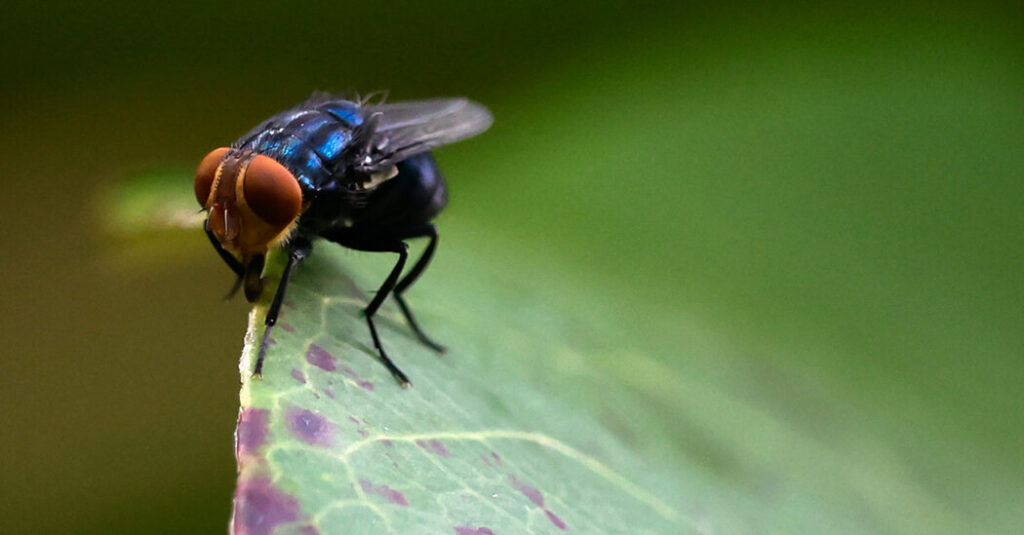
The New World screwworm — a fly whose larvae feed on the tissues of livestock, wildlife and pets — has been discovered in a 3-week-old calf in La Pryor, Texas, the Department of Agriculture confirmed Wednesday night. It is the first case found in cattle in the United States since the insect was eradicated from the country in the 1960s.
“We are taking immediate action this afternoon and evening already to broadcast, to contain and eradicate this case of New World screwworm in South Texas,” Brooke Rollins, the secretary of agriculture, said at a news conference.
If more screwworms are found beyond the single case, the infections, which can kill if left untreated, could devastate the U.S. cattle industry.
For several months, the Ministry of Agriculture has been preparing for the possibility of the screwworm reappearing in the United States. By the mid-2000s, the screwworm had been eradicated from all of North and Central America, but the parasite has moved north and was discovered on Mexico’s border with Guatemala in November 2024.
Screwworm flies do not travel very far, but they are spread with the movement of unknowingly infected animals, especially if they are trucked to a new location. More than 20,000 cases have been detected in Mexico, according to the Department of Agriculture, and Mexican cattle have been barred from entering the United States for more than a year.
Snail flies do not attack fruit or vegetables, and the agriculture department says its Food Safety and Inspection Service will ensure all beef, poultry and eggs are safe to eat.
The Ministry of Agriculture has declared a 20 kilometer long “infested zone” quarantine where the infected calf was found, increasing surveillance and restricting the movement of all warm-blooded animals out of this zone. The department has also dispatched veterinarians and animal health officials to the area, as has the Texas Animal Health Commission.
Officials are also spreading millions of sterile New World screwworm flies, by air and by truck, in the area. Releasing sterile flies, which mate with wild females and drive the population towards extinction, is currently the only way to control the spread of the fly.
Only one facility, in Panama, produces sterile flies – about 100 million a week. The US Army Corps of Engineers recently broke ground on a $750 million manufacturing facility at Moore Air Base in Edinburg, Texas. The plant is expected to start producing 100 million sterile flies per week in late 2027 and later up to 300 million per week.


