
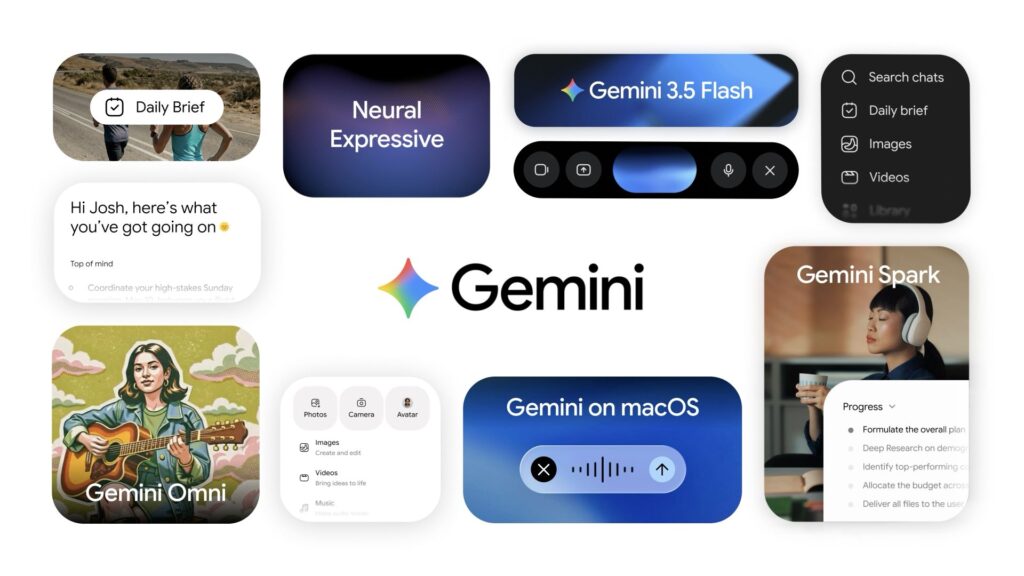
- Google used I/O 2026 to unveil a sweeping expansion of Gemini.
- Gemini is expanding across search, Android, shopping, productivity and AI agents.
- New features like Gemini Spark, Omni and AI-powered search show that Google is pushing hard towards always-on AI assistants.
Google spent years insisting that AI would quietly improve its products in the background. At Google I/O 2026, the company finally stopped pretending that subtlety was still the plan. Google is trying to make Gemini the connective tissue for almost everything people do online.
Google clearly has no intention of letting that future happen anywhere outside of its own products. The difference is that Google already owns the digital spaces where people spend most of their day. Instead of asking users to switch platforms, it can simply inject Gemini into the tools they already open constantly.
Faster brains, bigger ambitions
Google’s biggest tech announcements centered on the new Gemini 3.5 family and Gemini Omni, which the company pitched as a big step toward AI “world models” capable of understanding and generating information across multiple modalities simultaneously.

Gemini 3.5 Flash is Google’s workhorse model. The company repeatedly emphasized speed, lower costs and efficiency, claiming that Flash outperforms Gemini 3.1 Pro on most benchmarks while running four times faster than competing models.
Google also emphasized that the model is dramatically cheaper than many competing premium AI systems. This pricing narrative matters because AI is slowly becoming very expensive to operate at scale. OpenAI, Anthropic, and other companies continue to raise the bar on reasoning, but they also continually train users to accept increasingly expensive subscriptions.
The Gemini Omni was the more futuristic reveal. Instead of separate systems handling images, video, audio and text independently, Omni combines them into one multimodal model designed to reason across everything at once. Google demonstrated the system by editing uploaded videos, changing visual styles, generating AI avatars and reasoning about multimedia content in ways that blur the line between traditional AI assistants and creative production tools.
The company framed Omni as the evolution beyond standalone video generators like Veo, but the broader industry context makes the strategy clear. There is a clear parallel here with OpenAI’s own increasingly multimodal direction for ChatGPT. The entire industry is racing towards AI systems that can fluidly move between voice, images, reasoning and action with no obvious boundaries between them. Google now seems determined to build the same kind of unified AI layer, only on a Google scale.
Gemini’s non-stop Spark
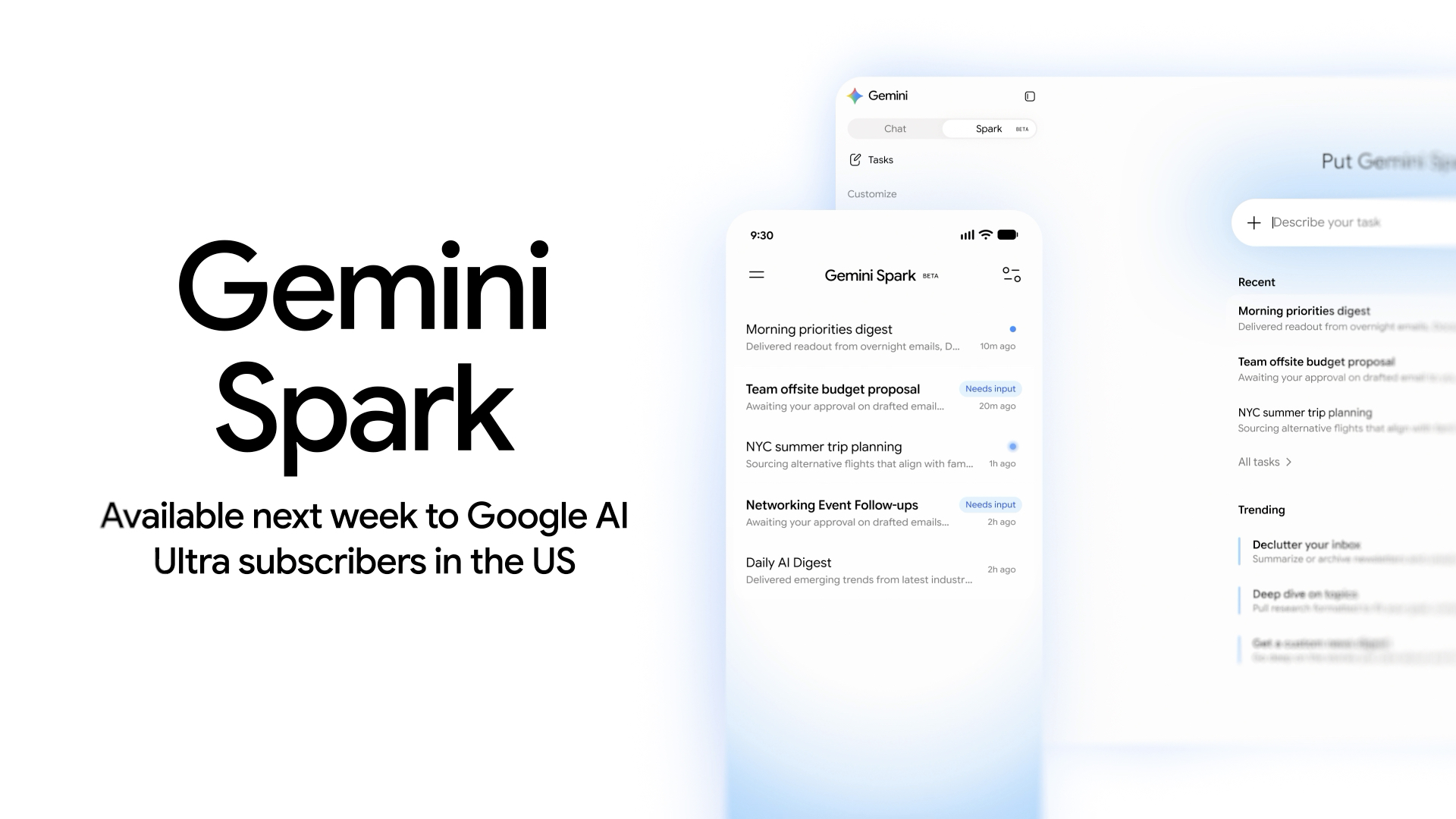
If Gemini 3.5 showed off Google’s technical muscle, Gemini Spark revealed what the company actually wants people to do with it.
Spark is essentially a cloud-based AI agent that continues to work after users close their laptops or lock their phones. It can organize inboxes, draft emails, manage calendars and pull information from Workspace apps in the background.
Google suggested it could help with things like organizing a chaotic schedule, building study guides from incoming assignments, or keeping an eye on customer emails.
This is very much where the wider AI industry is headed. OpenAI, Anthropic and others are all racing toward agent systems capable of autonomously performing tasks rather than simply responding to prompts. The difference is that Google already owns much of the surrounding ecosystem that these agents need to function effectively. Spark doesn’t need to ask users to connect separate apps because many of the services are already deeply integrated into the Google accounts people have used for years.
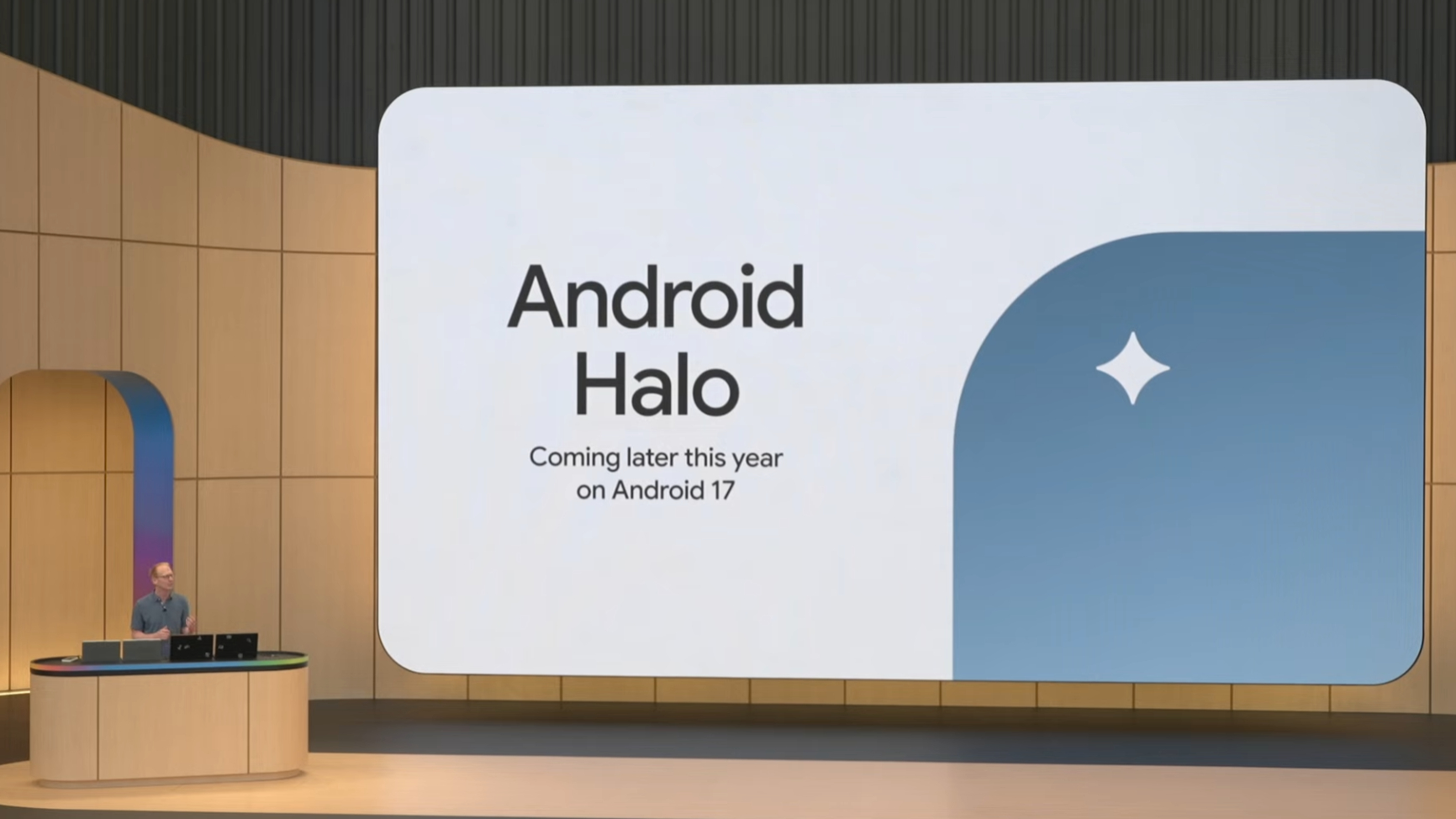
Android Halo, the visual interface designed to show Spark’s ongoing activity, only reinforces the sense that Google wants AI agents to become persistent digital colleagues, constantly humming away in the background. Helpful, definitely. Also a little creepy.
That said, Spark also captures the slightly unsettling direction the industry is headed. Systems like this only work if users provide massive amounts of context. Emails, calendars, documents, habits, contacts, schedules and browsing behavior all become part of the machine’s understanding of your life.
Gemini redefined
Google also redesigned the Gemini app itself. The new “Neural Expressive” interface adds richer visuals, animations, timelines, haptic feedback and conversation layouts designed to make Gemini interactions feel more natural and less like typing in a sterile chatbot box. Gemini Live conversations now start almost instantly.
The broader goal seems to be to reduce the friction between having a thought and acting on it through AI. Docs Live, for example, allows users to verbally brainstorm ideas, while Gemini organizes them into structured documents in real time. Google also plans to expand conversational voice capabilities to Gmail and Keep, further integrating AI into common productivity workflows.
This reflects a wider shift happening across the industry. OpenAI pushed ChatGPT toward natural voice conversations and persistent memory because users increasingly prefer AI that feels conversational rather than mechanical. Google seems to have reached the same conclusion.
All search is AI
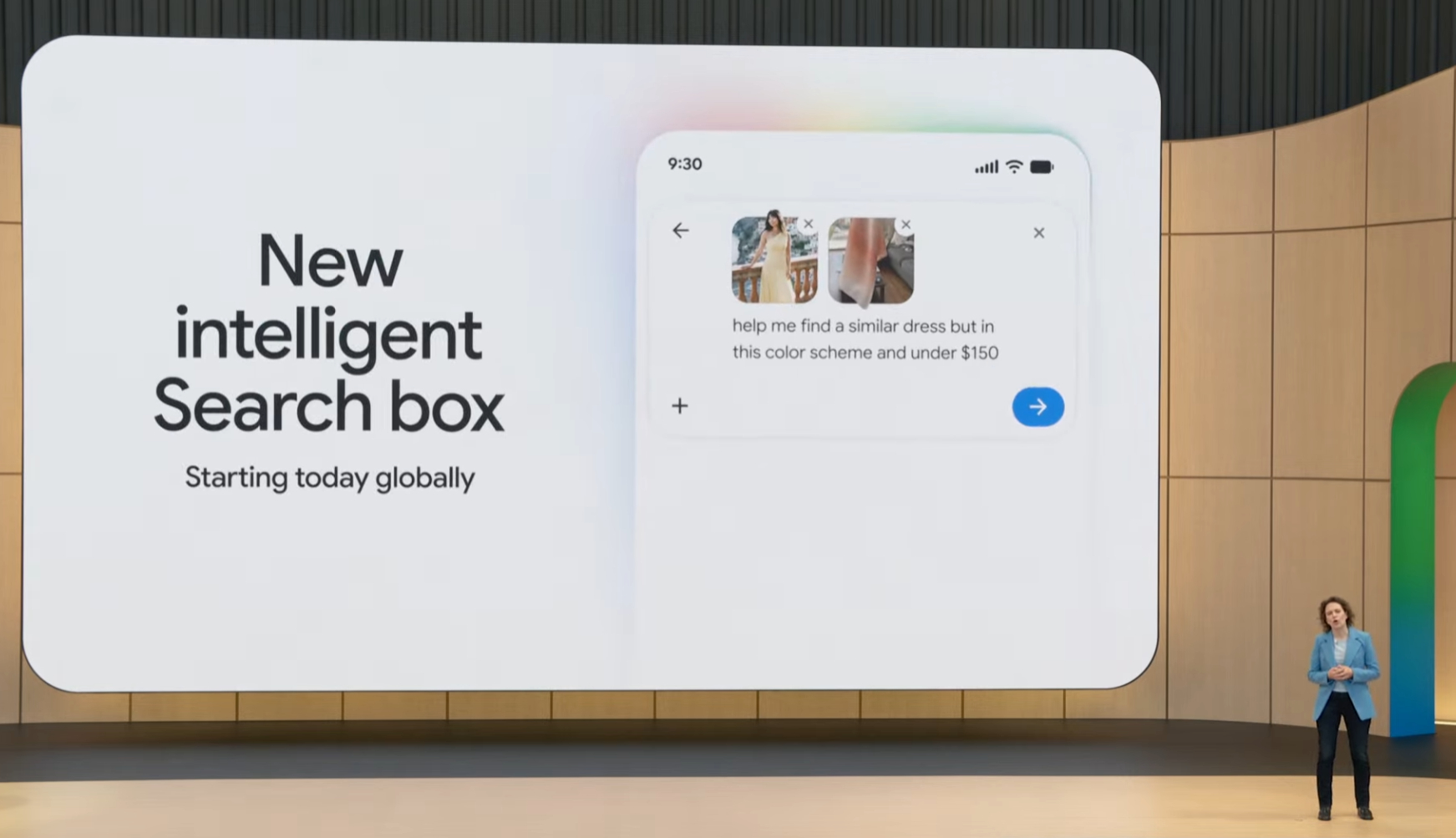
Search may be where Google’s AI transformation will be most consequential.
The new AI search box, upgraded AI mode, information agents and generative interfaces all point to Google rebuilding Search into something more conversational and interactive. Instead of just returning lists of links, Search can now generate custom widgets, visual explanations, and mini-applications right on the results pages.
This feels like a direct response to how ChatGPT and similar AI tools have changed user expectations. People increasingly want direct answers and interactive experiences rather than pages full of blue links. Google understands that if users migrate toward autonomous AI assistants for discovery and planning, Search risks losing its central role in the Internet economy.
It creates an uncomfortable tension. Google’s AI search tools can really improve usability, but they’re also fundamentally reshaping the web ecosystem that Google originally helped build. Publishers, creators and websites are increasingly concerned that conversational AI responses reduce users’ incentives to click through to original sources. Google insists that these systems still support the wider web, although the long-term balance remains uncertain.
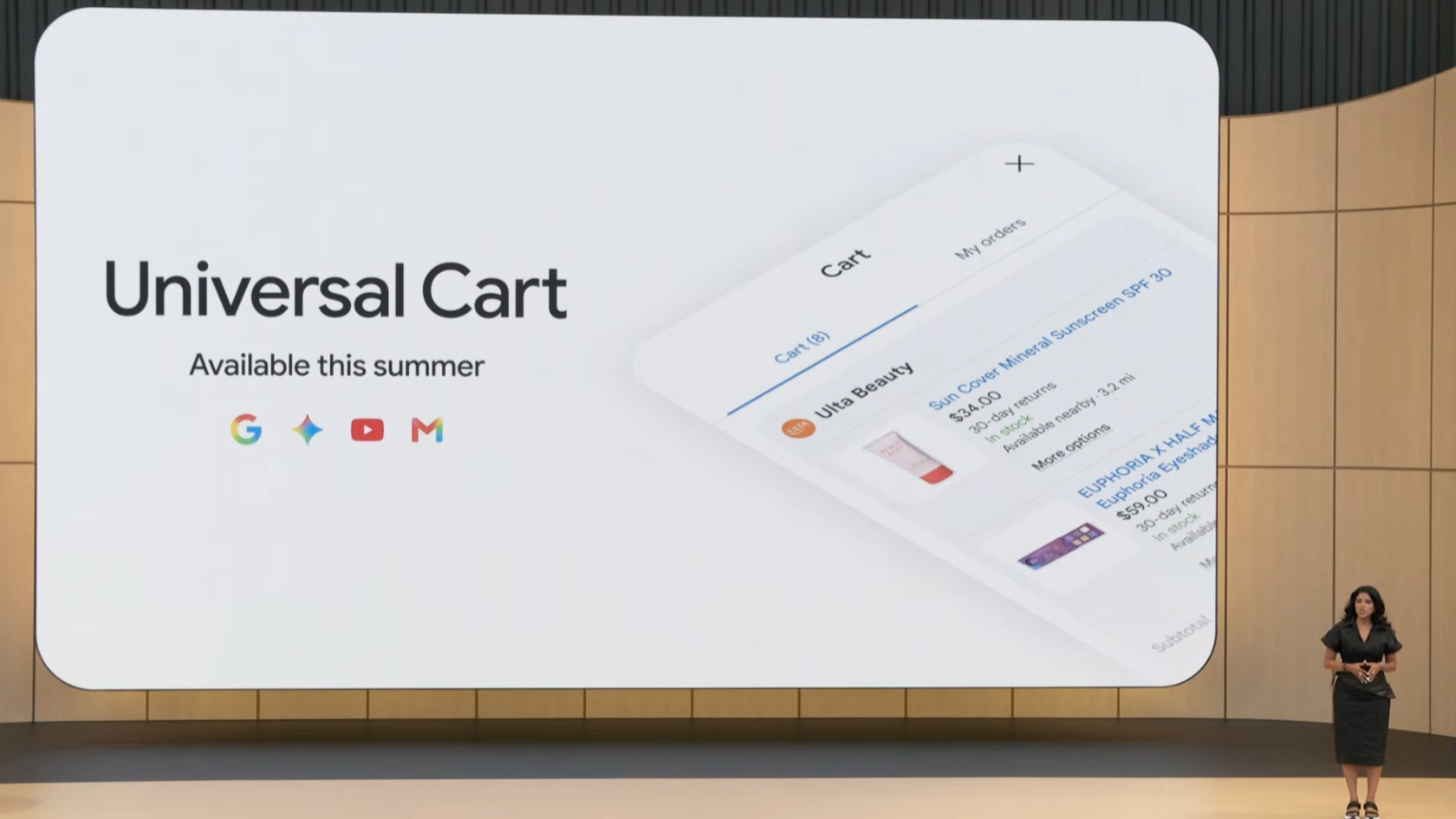
The shopping announcements sounded less dramatic than the Gemini Omni, but they could ultimately mean more to Google’s business.
The Universal Cart, the Universal Commerce Protocol and the Agent Payments Protocol all point to a future where Gemini becomes an active shopping intermediary rather than a passive recommendation engine. Google wants AI systems capable of tracking prices, monitoring deals, detecting compatibility issues, managing carts across retailers and ultimately making purchases on behalf of users.
The company demonstrated examples such as AI that identifies incompatible PC components before checkout, monitors inventory changes, automatically tracks credit card perks and watches for price drops in the background. AP2 adds spending controls, merchant approvals, and transparent transaction records to assure users that AI agents won’t suddenly empty their bank accounts without warning.
Again, this does not happen in isolation. Amazon, OpenAI and other companies are all exploring AI shopping assistants because commerce is one of the clearest paths to turning consumer AI into a sustainable business.
Google’s advantage is obvious. Search already dominates product discovery for large parts of the Internet. Gmail contains receipts and order history. YouTube constantly influences purchasing behavior. Gemini can potentially connect all of these systems together into one giant trading layer.
Google’s I/O announcements revealed how deeply dedicated to Gemini the company is. The company is trying to make AI inseparable from modern computers themselves. Search, Android, shopping, communication and more are now being built around AI.
For Google, the strategy makes perfect sense. If AI becomes the next major computing platform, the company wants Gemini at the center. Whether users will ultimately find it convenient or intrusive is less obvious.

Follow TechRadar on Google News and add us as a preferred source to get our expert news, reviews and opinions in your feeds.

The best business laptops for all budgets


