
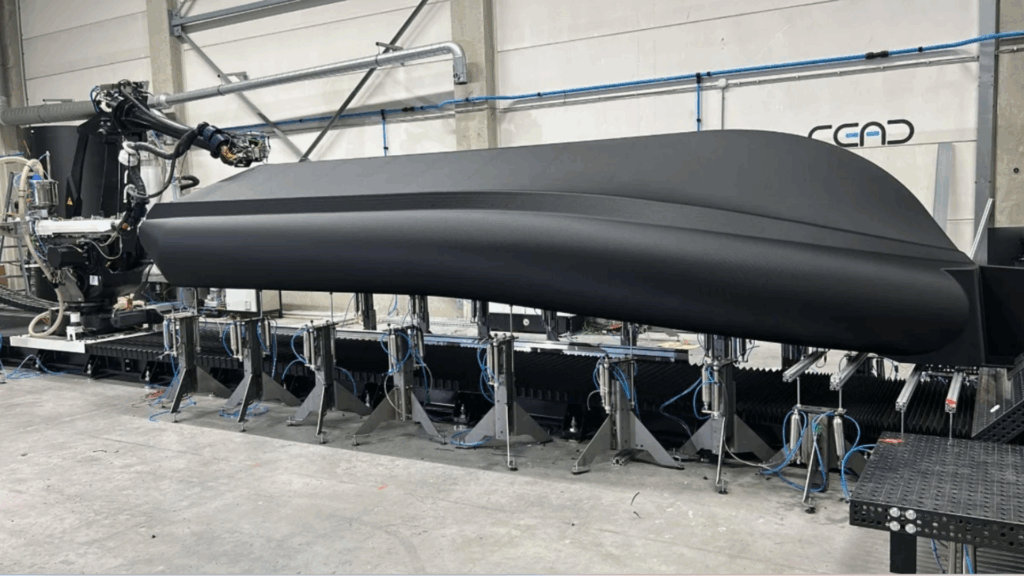
- Excitement vessels test 3D-printed naval boat for defense evaluation program
- Eclipse X9 combines recycled plastic with basalt fiber reinforcement material
- Material shows high tensile strength, validated by University of Maine tests
A small Hawaii company is trying to change naval manufacturing by replacing traditional shipyard construction with large industrial printers and basalt-reinforced thermoplastics.
Excitement Vessels, founded by Sam Young, recently submitted a 6 meter Rigid Hull Inflatable Boat (RHIB) to the US Maritime Defense Evaluation Programs.
The vessel is produced using a Dutch CEAD additive manufacturing system capable of producing full-scale composite marine structures.

3D printing eliminates the old yard
Military RHIB platforms traditionally require fixed manufacturing facilities, extensive fiberglass work, specialized molds, and highly skilled labor operating through long production schedules.
Voltage Vessels claims that these systems create dangerous vulnerabilities during conflicts where damaged vessels require immediate replacement far from continental shipyards.
The company instead proposes distributed manufacturing hubs capable of printing replacement hulls directly from digital files using locally assembled raw materials.
The material driving this approach is called Eclipse X9, a composite that combines recycled polyethylene terephthalate glycol (PETG) thermoplastic with chopped basalt fiber.
Basalt is a volcanic rock that possesses exceptionally high resistance to corrosion, compression, environmental degradation and prolonged exposure to marine conditions.
According to tests validated through the University of Maine’s Advanced Structures and Composites Center, Eclipse X9 demonstrated a tensile strength approaching 108 MPa.
This level of performance corresponds to pressure conditions found near the bottom of the Mariana Trench, the deepest abyss on Earth, at nearly 11 kilometers deep.
The material reportedly retained more than 90% of its structural strength after long-term salt water immersion tests extending beyond 24 months.
Its water absorption remained below 0.4% throughout evaluation periods, an important figure because excessive absorption gradually weakens marine hull materials over time.
Voltage Vessels also claims that Eclipse X9 delivers superior structural performance compared to established benchmark composites already used in additive maritime manufacturing.
Unlike aluminum structures, basalt composites do not significantly interfere with radio frequency transmissions that support navigation systems, radar arrays, or communications equipment aboard unmanned craft.
Distributed manufacturing could reshape Indo-Pacific naval logistics
The Pentagon increasingly favors distributed maritime operations throughout the Indo-Pacific region, where replacement vessels may face severe limitations and contested conditions.
Transporting replacement hulls from mainland US shipyards to Pacific zones takes weeks while relying on vulnerable infrastructure networks.
Voltage Vessels claims that localized additive manufacturing could dramatically reduce turnaround times because production would only require printers, electrical power and regional material supplies.
The company states that its domestic blending infrastructure can eventually scale towards 15,000 tonnes annually through regional partnerships across Pacific territories.
Because PETG thermoplastic can be melted repeatedly without significant degradation, damaged structures can theoretically be reused directly into newly printed replacement components.
Whether tension vessels can truly transform naval shipbuilding remains uncertain until independent defense laboratories validate their long-term operational performance.
Via the Defense blog

Follow TechRadar on Google News and add us as a preferred source to get our expert news, reviews and opinions in your feeds.


