
ISLAMABAD:
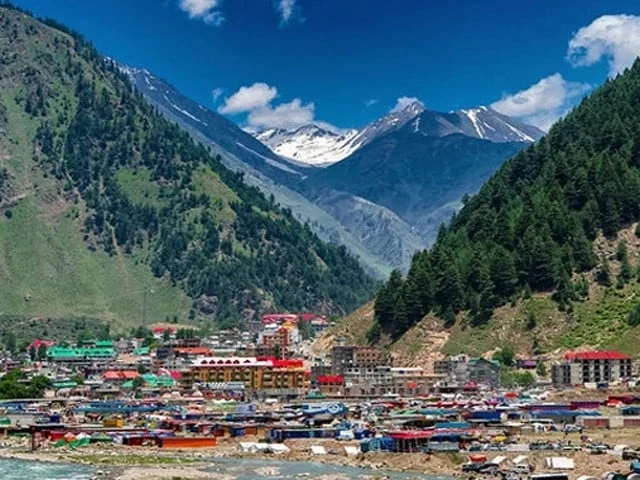
Not long ago, travelers venturing past Naran into Batakundi would find themselves surrounded by slopes of vibrant green, wide open meadows and mountains stretching endlessly into the sky. But that landscape changed, and quickly. Hotels, guesthouses and private villas spread steadily across the valley.
Where green areas once defined the character of the place, concrete now asserted itself. Construction machines rumbled, building materials lay stacked, and new properties, fresh from development, had become a common sight in a region once prized for its quiet, natural beauty.
Hasrat Khan, who serves as assistant commissioner of Balakot, a subdivision of Mansehra district in Khyber-Pakhtunkhwa, said the KDA has recently stepped up enforcement efforts against unauthorized construction and environmentally damaging developments in the Kaghan Valley, particularly Shogran, Naran, Kaghan, Battakundi, Jalkhad, Barwai and Baiser.
Naran continues to attract thousands of visitors every summer and remains one of Pakistan’s most sought-after tourist destinations. The town of Naran had always been the commercial heart of the valley. But Batakundi, a settlement nearby, had until recently retained a quieter, less developed character. Visitors who remembered the area from 2019 spoke of only a handful of hotels operating there. Now, just a few years later, dozens of hotels and guesthouses were completed, with many more still in various stages of construction.
Fukraj, a tourist who had visited Naran in 2023, said she remembered a surprising temperature difference between Naran town and Batakundi. “When we reached Naran town, the weather was surprisingly hot,” she recalled. “However, as we traveled further towards Batakundi, the temperature became noticeably cooler.” She said she had since seen several videos on social media showing the extensive hotel construction in the area. She wondered if such large-scale development could contribute to these environmental changes.
Sajida, a teacher who visited the valley in 2024, noted that environmental concerns extend beyond just construction. “We stayed in a hotel near Jheel Road and our room had a view of the green mountains,” she said. “However, construction debris could be seen scattered in various places, while litter, including used diapers, was visible in several areas.” She believed that the tourists themselves also played a role in environmental degradation when they failed to dispose of waste in a responsible manner.
For some visitors, changing weather patterns and increasing commercialization had begun to diminish the valley’s charm. Tourist Zubaida, who used to travel to Naran with her family every year, explained that they had decided not to visit this year. “Every year we plan a family trip to Naran,” she said, “but this year we’re staying away due to changing weather conditions.” She recalled their enjoyment of Batakundi’s beauty, but noted that recent videos showed a proliferation of hotel construction.
Rising accommodation costs had also become a major concern for tourists. Saman, a student from Haripur, mentioned that her family reconsidered their annual visit because of the skyrocketing hotel rates. “Hotel prices have increased significantly over the years,” she pointed out. “Some three-star hotels charge prices comparable to luxury properties.” She added that many hotels advertised scenic views and charged premium prices, but visitors often found ongoing construction or blocked views instead.
As another tourist season begins, many people wonder how much development the valley can sustain before the natural beauty that has made it one of Pakistan’s most beloved destinations begins to fade. For now, the mountains remained, but many visitors feared that if current trends continued, the green landscapes that defined Naran and Batakundi could gradually give way to concrete and commercial expansion.
With the proposed Mansehra-Kaghan-Naran-Chilas highway expected to improve access to the region, tourism in the valley is likely to grow further in the coming years. However, visitors say development should be balanced with environmental protection to prevent the loss of green landscapes and natural scenery that have long defined the area’s appeal.


