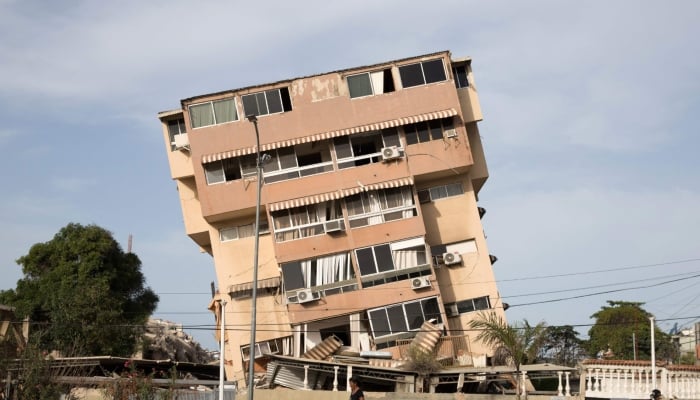
Many social media users in Venezuela have reported receiving alerts on Android smartphones moments before Wednesday’s earthquake that left over 900 confirmed dead.
Google’s Android and Apple’s iOS both include the ability to display government alerts for emergencies such as earthquakes.
But the search giant last year also detailed its system that uses billions of Android smartphones worldwide to detect earthquakes in the first place.
How it works
Almost all smartphones contain an accelerometer, a motion sensor used for tasks such as flipping the screen when users turn it sideways.
The same sensor “can also detect the ground shaking from an earthquake,” Google wrote in a July 2025 blog post.
Accelerometers can spot potential earthquakes’ quick initial “P” wave and send information about the shaking to a Google server.
By quickly cross-referencing many such reports, the system can “confirm that an earthquake is happening and estimate its location and magnitude,” Google said.
“The goal is to warn as many people as possible before the slower, more damaging S-wave of an earthquake reaches them”.
Google offers two phases of warnings.
“BeAware” warns of weaker tremors, while for the strongest earthquakes “TakeAction” takes over the screen and plays a loud sound even when the phone is in silent mode.
How effective is the system?
Google said last year that its systems had already sent 790 million alerts to individual phones, warning of more than 2,000 potentially dangerous earthquakes detected as of April 2021.
Although it gives many more people than before access to early warning information, there have been hiccups.
Android phones failed to provide warnings ahead of devastating earthquakes in February 2023 that killed nearly 60,000 people across Turkey and Syria.
Google said last year that it has since updated its algorithms to avoid a repeat.
The company also apologized in February 2025 for a false alarm sent to some Android users in Brazil.
This week in Venezuela, hundreds of people have posted praise for Google on X, with some including unverified videos of warnings prompting people to evacuate buildings.
What about Apple?
In addition to government alerts, Apple says on its website that users in the US and Taiwan can also receive alerts from other “alert originators” about earthquakes.
The company did not respond to AFP‘s questions about how the system works at the time of publication.
Nor has the iPhone giant enrolled its users’ phones in a distributed detection system like Google’s.
However, the hundreds of millions of iPhones around the globe are able to relay alerts they receive to other nearby Apple devices that don’t have cellular reception or a WiFi connection — potentially helping life-saving alerts get through.