
ISLAMABAD/TEHRAN:
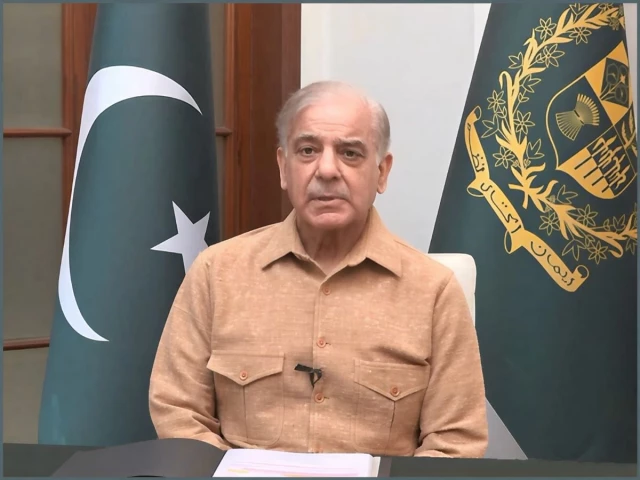
Pakistan on Friday expressed growing optimism for an elusive deal, with Prime Minister Shehbaz Sharif saying the final text of a US-Iran peace deal had been agreed.
“We can confirm that a final, agreed text of the peace agreement has been reached and Pakistan is now working closely with both sides to finalize the next steps,” the prime minister wrote on X.
He tagged both the US and Iranian presidents and other leaders from both countries. Pakistan has been mediating between the two sides for months.
“Peace has never been as close as it is now,” Sharif said.
Iranian Foreign Minister Abbas Araghchi insisted a deal with the United States to end the war in the Middle East had never been closer after US President Donald Trump angrily accused Tehran of negotiating in bad faith.
– In the midst of Pakistan’s ongoing intense mediation efforts, we are fully aware that a relentless campaign of misinformation is being waged by those who wish to sabotage the peace agreement, added the Prime Minister.
Publicly, however, the warring sides’ negotiating positions remain far apart, with Iranian state media publishing a summary of what was allegedly on the table that sharply contradicted Washington’s long-standing red lines.
During weeks of stalled talks – punctuated by threats and exchanges of gunfire despite a cease-fire in April – US President Donald Trump has repeatedly insisted a deal was close to being signed, only for talks to drag on.
The president had repeated that claim on Thursday, but on Friday he lashed out at Tehran, accusing it of negotiating in bad faith, according to Iranian media reports.
In a social media post, Trump dismissed the Iranian accounts as having “NOTHING to do with the terms that were agreed upon in writing.”
“Very dishonorable people to deal with,” he continued. “They better get their act together, and FAST!”
But Iran’s foreign minister, Abbas Araghchi, appeared to downplay the row.
“The Islamabad Memorandum of Understanding has never been closer,” he wrote in a social media post, referring to the Pakistani capital that hosted previous US-Iran talks.
“Pending its completion, the media should refrain from speculating about its contents,” he added.
Trump later posted a screenshot of Araghchi’s message on his own feed.
Foreign Ministry spokesman Esmaeil Baqaei disputed Trump’s charge of “bad faith”, saying an agreement had now been reached with Washington “on most points”.
He added that a meeting was also underway in Iran to finalize a consensus.
“We are in the final stages of reaching a conclusion,” he said.
A senior US official also expressed optimism that the parties would “sign this agreement in the next few days”.
“If I had to give you a confidence that we were going to sign this deal, I would have said maybe 75 percent this morning, it’s probably more like 80-85 percent now, but it’s not 100 percent,” the official told reporters in a call.
The Swiss foreign ministry said on Friday it had been in contact with both the United States and Iran and had “suggested Switzerland as the venue for a possible signing if the parties agree”.
US ally Israel has said Trump had promised it that any deal would see Iran stripped of its enriched nuclear material, but Tehran’s official IRNA news agency said this was not even on the table.
According to the IRNA report, after an initial agreement is signed, Iran and the US will hold another 60 days of talks and “Iran’s right to enrich uranium and retain enriched material… will be emphasized with a view to their inclusion in the final agreement”.
In addition to this, according to IRNA, Iran would insist on controlling traffic through the Strait of Hormuz, the main maritime trade route carrying oil and gas from the Gulf, which Tehran has blocked since the outbreak of the war.
On Friday, Iran’s Mehr news agency, citing a source close to the country’s negotiating team, said the deal would also see the release of $24 billion in frozen Iranian assets.
But those details clashed with a summary offered by a senior White House official, who told AFP that Iran had agreed to dismantle its nuclear program, destroy its enriched uranium stockpile and reopen the strait – and that Tehran would not see any of its frozen funds returned until it had complied with those commitments.
US Vice President JD Vance also said Iran “received no cash and no money is being released just to sign an agreement or attend a meeting”.
But, he added, if “Iran fulfills its obligations, economic benefits will flow to them and to the entire region”.
In Tehran, some ordinary Iranians feared that a deal would entrench the authorities’ rule.
“I’m not sure how I feel,” a 29-year-old cafe worker told AFP on condition of anonymity for fear of retaliation.
“The main objective of this war was for the United States to remove the system, and this did not happen. So what does a deal do?”


