
ISLAMABAD:
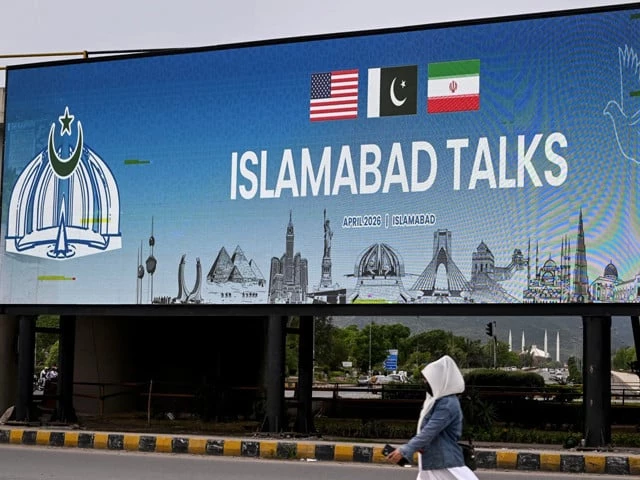
In a diplomatic development that has stunned observers around the world, Pakistan has emerged as a key mediator in the brokering of a peace process between the United States and Iran, moving two long-time adversaries from the brink of a wider regional war to a formal agreement announced on June 14.
Prime Minister Shehbaz Sharif, who announced the breakthrough in the early hours of Monday X, described it as a “new dawn of peace”.
The statement immediately attracted global attention, with several world capitals acknowledging Pakistan’s role in facilitating the process, while Israel and India notably refrained from referring to Islamabad’s involvement.
According to former diplomats and international affairs experts, the achievement was not accidental, but the result of sustained, discreet and strategically placed diplomacy.
At a time when escalating hostilities between Washington and Tehran had sparked fears of a wider conflict, including concerns over disruptions in the Strait of Hormuz, a critical global energy route, Pakistan entered a space that no other actor was able or willing to occupy.
Experts say Pakistan’s credibility stems from its unique diplomatic positioning: simultaneously trusted by Washington and Tehran, maintaining constructive ties with the Gulf states and staying out of direct military entanglements in the conflict zone.
This allowed Islamabad to act as a rare bridge between two deeply polarized sides.
Former Azad Jammu and Kashmir president and senior diplomat Masood Khan called the achievement unprecedented.
“This is a historic success, unparalleled in diplomatic history, when a single country has managed to broker a ceasefire, host two sworn enemies face-to-face talks for the first time in 47 years, and deliver an agreed memorandum of understanding. Today, Pakistan stands at the highest summit of its statehood. This is not hyper-high diplomacy.”
Senator Mushahid Hussain Syed also emphasized the importance of Pakistan’s mediation. “Only because of Pakistan and its mediation, the ceasefire happened on April 7, 2026. Israel was constantly trying to destroy the process. So credit goes to Pakistan for what they did,” he said, adding, “After 47 years, Pakistan was able to put them together in the same city, in the same hotel, in the same room. It was not even possible for any country, or even for the European Union, or for the Arab Union.”
Despite repeated geopolitical pressure points and attempts to disrupt the process, Pakistan maintained its diplomatic channel and ensured continuity of engagement between the two sides.
Analysts remain divided on whether Pakistan’s role fundamentally changed the trajectory of the conflict or merely hastened an inevitable thaw.
However, former UN ambassador Munir Akram claims the intervention was crucial to prevent escalation into a wider regional war.
“It’s a very fair statement that Pakistan helped avert a wider regional war. The US wanted a pre-deal. Iran wanted their assets and stuff. We found a way to solve both of their problems. The Gulf countries were attacked, so it was a wider war. Containing that is a big deal.”
He added that negotiations remain ongoing and require continued engagement over the next 60 days to formalize ceasefire arrangements, resolve asset-related disputes and resolve maritime issues associated with the Strait of Hormuz.
Masood Khan warned of the wider stakes involved. “There was deep mistrust between the United States and Iran. Both had dug in their heels after a long war. And there were many spoilers in the game. But Pakistan soon realized that this war, which had held the whole world hostage, could spill over into more conflicts that would have triggered a third world war. Already three continents, America, Asia and Europe, have become part of the war left from Pakistan.”
The development has also sparked reflection on Pakistan’s evolving diplomatic identity, with analysts noting a shift from earlier periods of strained external relations to renewed relevance in high-level mediation efforts.
Mushahid Hussain Syed said Pakistan was reclaiming its traditional diplomatic role. “Pakistan has always played a big role. We lost weight after the Afghan conflict. So we are getting back what we were good at”.
He added: “Pakistan is now not just any other country, but now a major Muslim power in the most strategic region. Not an intermediary or anything, but a major Muslim power.”
Masood Khan placed the breakthrough within a longer historical continuum of Pakistani diplomacy, referring to past roles in US-China engagement and Middle East peace processes, and called the latest development a “landmark achievement” in that vein.
Mushahid further described it as one of Pakistan’s most consistent diplomatic victories in decades, adding: “I would say this is one of Pakistan’s biggest diplomatic triumphs in decades, just like after the OIC Council hosted in Lahore and the China-US talks in 1971. This is huge. It has historic implications for the region and the world”. He concluded, “Pakistan is now the go-to country for global diplomacy. All roads lead to Islamabad.”
Yet the key question, analysts note, is whether Pakistan can convert this diplomatic momentum into long-term strategic and economic dividends.


