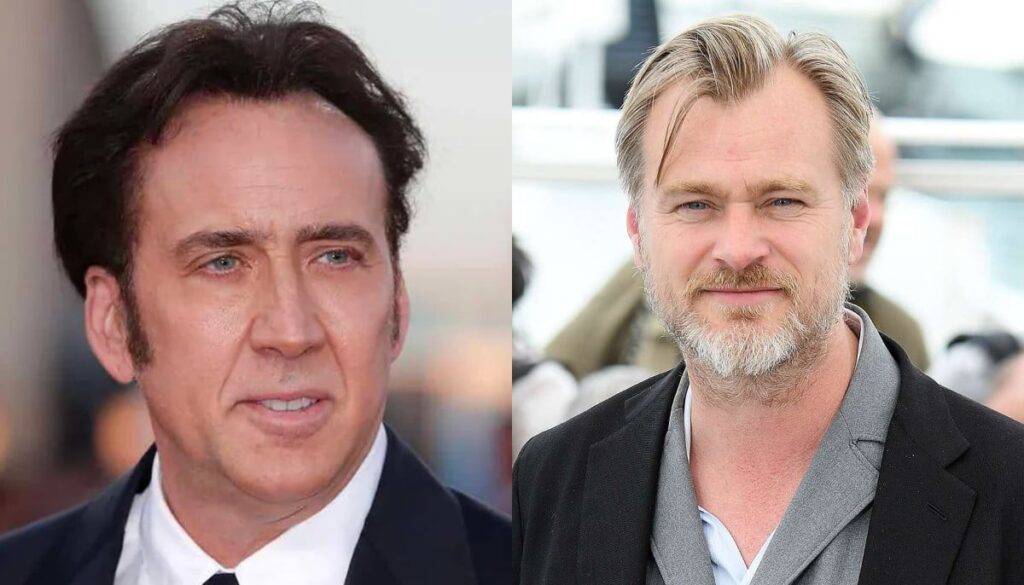
Nicolas Cage has revealed that Christopher Nolan stopped coming back after he turned down a role in the director’s 2002 thriller Insomnia, and says the same thing has happened to several other great filmmakers over the years.
Speaking to The New York Times, the Oscar-winning actor was candid about the professional fallout that can come from saying no in Hollywood.
“Most of them get their feelings hurt and don’t call you back. It’s happened to me a million times. It’s happened to Christopher Nolan, it’s happened to Woody Allen, it’s happened to Paul Thomas Anderson. They don’t call me back,” he said.
On the Paul Thomas Anderson front, Cage recalled being shown an early short with Philip Baker Hall, with a collaboration apparently in the works that ultimately fell apart.
Nolan’s situation was more straightforward, a rejected offer of Insomnia that apparently closed the door forever.
The reason Cage is discussing all of this now is that he has just made a rare exception to what appears to be a pattern of fractured director relationships.
He stars as legendary football coach and commentator John Madden in the upcoming David O. Russell biopic Maddenpremiering November 26 alongside Christian Bale, John Mulaney, Kathryn Hahn, Sienna Miller, Shane Gillis and Joel Murray.
The film traces Madden’s life and his role in creating the iconic Madden NFL video game franchise.
What makes the collaboration remarkable is that Cage had previously also rejected Russell on a project he described as good, but which he nevertheless rejected.
Most directors, he has now made clear, would have moved on permanently.
Russell didn’t.
“He’s the only director I’ve ever turned down who actually came back and offered me another film,” Cage said, adding that the gesture reflected true class.
“I wouldn’t say no to him again because I have a lot of respect for his talent. And it was a beautiful experience. I enjoyed working with David. I enjoyed working with Christian, John Mulaney.”
As for Christopher Nolan, it sounds like that particular collaboration remains firmly in the no-call zone.