
A major investment firm and a Canadian uranium enrichment company bet on nuclear power three years ago by buying Westinghouse, an energy company that had fallen on hard times. Now that bet is proving prescient.
Rising demand for electricity, fueled by data centers, and renewed bipartisan and global interest in nuclear power have made Westinghouse a go-to source for nuclear power technology.
Westinghouse’s prominence in the development of new nuclear power plants gained international attention on Wednesday after the Trump administration announced a broad agreement with Saudi Arabia that may enable the country to enrich its own fuel for nuclear reactors.
Trump administration officials estimated the deal would bring billions of dollars to the U.S. nuclear industry — starting with Westinghouse, which developed the technology used in the only two reactors built in the U.S. in the last decade, both in Georgia. A version of Westinghouse’s AP1000 reactors has also been built in China in recent years, and the AP1000 has been selected for projects in Eastern Europe and elsewhere.
Westinghouse regained its footing after Brookfield Asset Management, a New York investment firm, and Cameco, a uranium enrichment company based in Saskatoon, Saskatchewan, bought it in November 2023. Westinghouse filed for bankruptcy in 2017 after failing to bring a new fleet of nuclear power plants online.
“More than half of the world’s existing nuclear reactors are based on Westinghouse technology, and today the company provides technical products and services across the global nuclear market,” Dan Sumner, chief executive of Westinghouse, said in an interview Wednesday. “The foundation of our turnaround is built on the strength of this operational fleet business.”
After President Trump returned to office last year, his administration began pushing all kinds of nuclear development, including reviving shuttered plants and building Westinghouse’s AP1000 and newer reactor types, as well as some that are much smaller.
Last month, Chris Wright, Mr. Trump’s energy secretary, announced that the government would lend up to $17.5 billion to help companies buy nuclear equipment that would speed development of 10 large commercial nuclear reactors across the country.
Westinghouse welcomed the effort, saying it would help speed up the construction and commercial operation of new reactors by as much as three years. But neither the government nor Westinghouse has said where any of the 10 reactors will be built.
The United States leads the world in terms of the total number of reactors and produces the largest amount of electricity from nuclear power plants. Currently, there are 96 nuclear reactors at 57 facilities, according to the Energy Information Administration. Nuclear power produces about 20 percent of the nation’s electricity, much more than coal, but about half as much as natural gas power plants.
But the US has produced only three new reactors since the 1990s. By contrast, China has rapidly built reactors in recent decades and has plans for many more. It has built reactors based on domestic designs and has more than a dozen AP1000 units online or under construction.
A so-called nuclear renaissance in the early 2000s was expected to produce nearly two dozen new reactors in the United States, but rising costs and delays resulted in only two units, both AP1000 reactors.
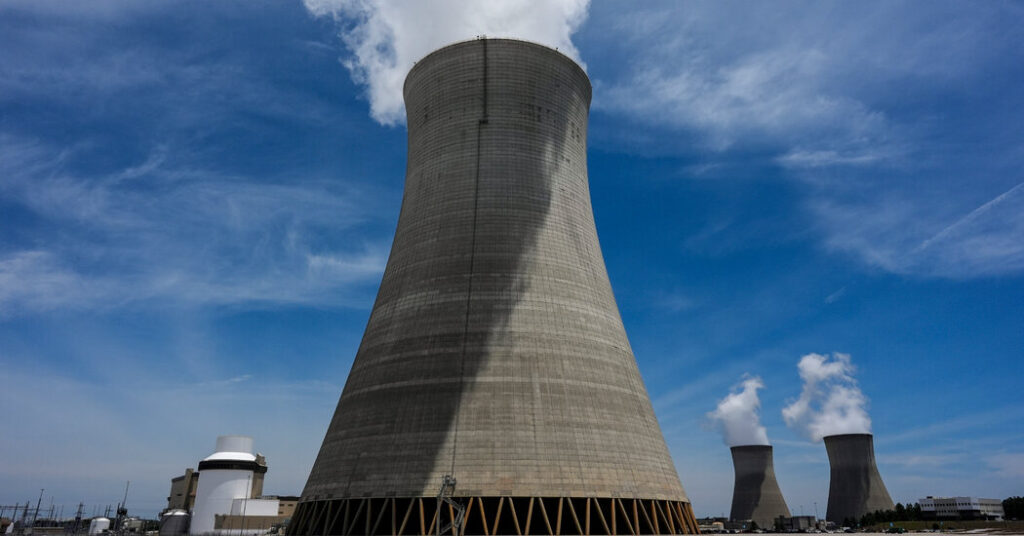
The two units — built alongside existing nuclear reactors at the Alvin W. Vogtle Electric Generating Plant in Waynesboro, Ga., near Augusta — cost its owner, the Southern Company, $35 billion, more than double the original estimates. A large portion of these costs were ultimately borne by individuals and businesses who are customers of Southern’s subsidiary Georgia Power.
The staggering price tag led many energy experts to dismiss the prospect of the US building more large reactors. The focus of the nuclear power industry turned to smaller devices that power plant developers said they could design and produce almost on an assembly line. Such reactors are often referred to as small modular reactors.
The idea for such reactors was inspired by nuclear powered submarines. But these reactors use a more highly enriched form of uranium than the kind used in larger power plants. So nuclear power plant developers, including Westinghouse and GE Vernova Hitachi Nuclear Energy, have been working for years to develop a small reactor design that they could commercialize.
Government support for nuclear power is expected to play a crucial role in getting reactors built in the US and elsewhere. Some power plant developers who already had licenses to build reactors but had not used them are looking to revive their construction plans.
Among them is the VC Summer Nuclear Station near Columbia. SC It was the only other AP1000 project in the US to make significant progress toward construction.
But the effort to build these units prompted utility company SCANA to file for bankruptcy due to rising project costs. Customers of the utility were forced to pay $9 billion in construction costs, although the project was left incomplete.


