
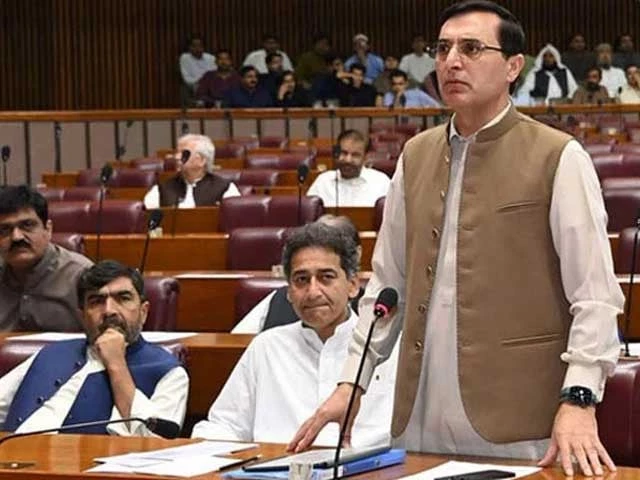
The Pakistan Tehreek-e-Insaf (PTI) launched a blistering broadside against the federal budget in the Senate on Tuesday, with the party’s parliamentary leader Barrister Syed Ali Zafar dismissing the government’s fiscal plan as a "budget for broken promises" filled with what he called "eleven deadly sins" and unable to deliver either public relief or sustainable economic growth. Opening a wide-ranging critique of the FY2026-27 budget, Zafar argued that every budget should serve two basic purposes: to improve the lives of ordinary citizens and lay the foundation for long-term growth and employment. He maintained that the government’s latest financial plan had missed both targets, accusing it of offering neither meaningful relief to struggling households nor a credible strategy to revive the economy.
"Unfortunately, this budget does not meet either goal. It neither provides meaningful relief for the common citizen nor sets out a credible long-term plan for economic development and job creation." he told the Senate. The PTI senator said the government had ignored eleven critical areas that should have formed the backbone of a serious economic agenda. These included a long-term growth strategy, industrialization policy, agricultural reforms despite increasing imports of cotton, wheat and sugar, export promotion, youth employment, expansion of the information technology sector, a solution to circular debt, a coherent energy policy, investment in dams and water conservation amid increasing pressure on the Jhelum and Chenab rivers, managing population growth and climate change, population growth. Regarding the education sector, Zafar said: "Education is the foundation of progress and prosperity, but the government seems to have neglected it completely. It is as if the government does not want to spread the light of knowledge among the people, but instead is content to leave them in the darkness of ignorance," he said. He accused successive governments of relying on short-term solutions rather than tackling structural weaknesses in the economy.


