
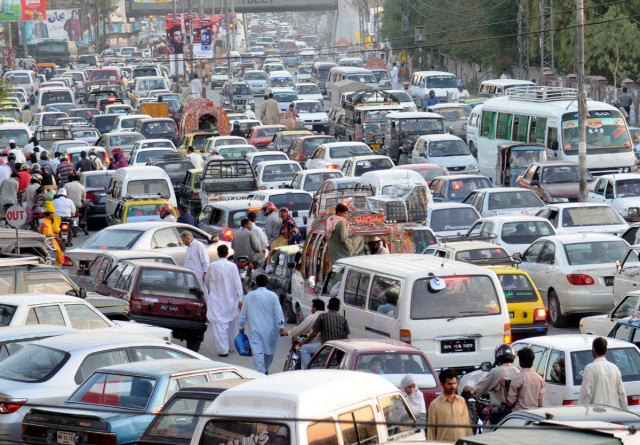
Review finds speeding, poor infrastructure and traffic violations behind rising traffic fatalities across the province
The increasing number of road accidents in Punjab has again raised serious concerns over public safety, road planning and traffic management. Rapid urbanisation, increasing vehicle ownership and inadequate pedestrian infrastructure have contributed to a steady increase in traffic fatalities and injuries.
A study found that despite road development projects and traffic enforcement measures, Punjab continues to record tens of thousands of road accidents every month. Experts cite speeding, traffic violations, the rapid growth of motorcycle use, illegal parking, encroachment and the lack of safe pedestrian facilities as the main causes.
According to Rescue 1122, more than 36,000 road accidents were reported across Punjab in January 2026, resulting in 463 deaths and over 17,000 serious injuries. In May 2026, the province recorded more than 43,000 accidents, leaving 434 people dead and over 23,000 injured.
Read: Lahore plans traffic renewal for Defense Mor
Although the government has yet to publish a district-wise breakdown covering pedestrians, women, children and persons with disabilities in the first seven months of 2026, rescue data and traffic experts indicate that pedestrians, motorcyclists, children and senior citizens remain the most vulnerable road users.
Lahore bears the province’s largest traffic burden due to its population, commercial activity and daily commuter volume. Major roads including Canal Road, Ferozepur Road, Multan Road, Jail Road, GT Road and Main Boulevard continue to witness frequent accidents.
The study showed that the lack of continuous footpaths and safe pedestrian crossings remains one of the city’s biggest safety gaps. In many commercial areas, pedestrians are forced to walk alongside fast-moving traffic, while service roads intended for local access are routinely occupied by vehicles.
Aamir Mahmood, who works on Main Boulevard, Gulberg, said pedestrians face daily danger because there are no proper pavements and vehicles ply at high speed. “Even the service roads are often used by cars and motorcycles, leaving little safe space for people on foot,” Mahmood said.
After Lahore, Faisalabad, Rawalpindi, Gujranwala and Multan also report high accident rates due to growing populations and increasing traffic volumes.
Abdullah Malik, head of a civil society organization, said urban planning should prioritize pedestrians instead of focusing solely on widening roads for vehicles. “Safer footpaths, zebra crossings, signalized crossings and footbridges must become standard features on major roads,” pleaded Malik.
Also read: Traffic chaos as rain floods roads in Punjab
Punjab Emergency Service Rescue 1122 continues to provide quick medical care through its ambulance fleet and trained rescue personnel, but experts argue that emergency response cannot replace accident prevention.
The review found that although the Lahore Development Authority, Metropolitan Corporation and other agencies have built pedestrian bridges and underpasses, existing facilities remain inadequate and many are poorly maintained with damaged staircases, poor lighting and encroachments that discourage public use.
Dilawar Hussain, a resident, said Express Pakinomist that hundreds of residents risk their lives every day while crossing major roads because many footbridges are either inaccessible or in poor condition. The elderly, women and people with disabilities often choose to cross moving traffic rather than use unsafe bridges.
The Punjab government and the traffic police have introduced electronic challenges, Safe City monitoring, public awareness campaigns, improvements to the licensing system and identification of accident-prone spots. However, experts say enforcement alone will not solve the problem and are calling for a comprehensive road safety strategy that combines better road design, stricter enforcement, improved driver education and pedestrian-friendly planning.
Experts have also expressed concern about the growing use of electric scooters by underage riders, many of whom ride them on public roads without licenses or youth permits, increasing safety risks.
According to the World Health Organization, traffic injuries remain among the leading causes of death worldwide, especially in low- and middle-income countries.
The study concludes that Punjab’s challenge is no longer identifying the causes of road accidents, but whether policymakers will invest in safer infrastructure, stronger enforcement and long-term transport planning to reduce the continued loss of life.


