
- Researchers have discovered problems with AI pattern matching in scientific data
- It could mean false flags for signatures of life on other planets
- AI can still be useful, but checks need to be built in
One of the ways in which artificial intelligence can be most useful is by trawling through masses of scientific data that human scientists don’t have time to analyze, looking for patterns – but this use case is now proving problematic when it comes to the search for life outside our planet.
A new study by researchers at Michigan State University suggests that AI systems can be too easily fooled into identifying signatures of life out in the universe where none exists. We need these flags to be accurate to know where to point our telescopes next, so it’s important that the detection processes work.
The researchers create a digital simulation that includes a key signature of life: the ability of molecules to replicate and mutate. Software was used to generate tens of thousands of digital organisms with and without this ability, which were then used to track a neural network to see the difference with an accuracy rating of 99.7%.

When the neural network was pointed at data it hadn’t seen before, the AI’s abilities to detect life fell apart. The researchers started with a digital organism that couldn’t replicate itself, which the AI correctly identified, then started making small edits and asked the AI to check again.
Essentially, when the AI was pushed out of its comfort zone by training data, it began to see life where there was none. “No matter what sequence of commands we started with, we were able to fool the AI 100% of the time,” said Ankit Gupta, one of the researchers.
Space and beyond
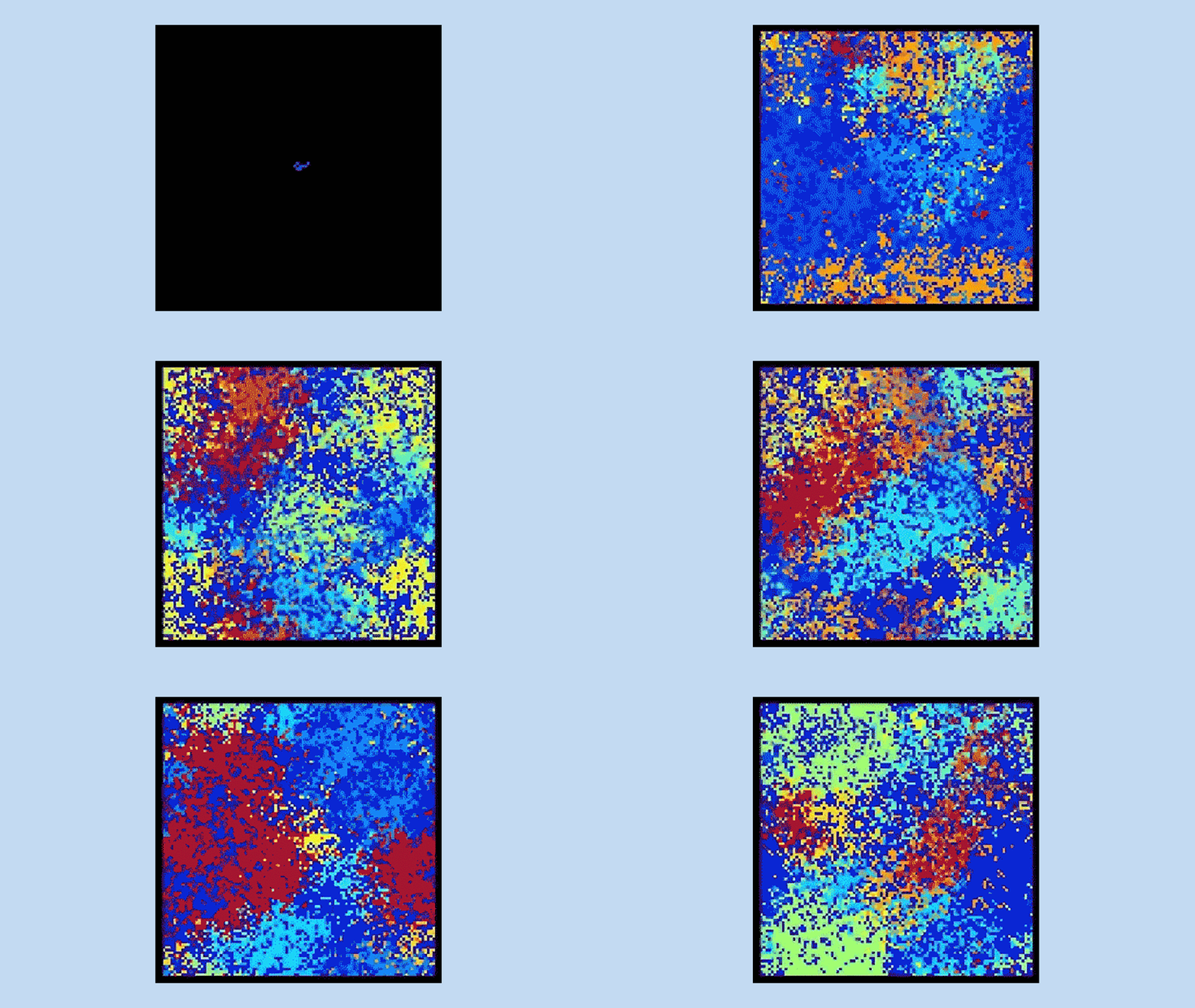
It is worth bearing in mind the limitations of this research: these tests were conducted in an artificial, digital simulation and therefore did not rely on real data. The researchers also deliberately looked for errors rather than letting them happen by chance.
However, the survey methods are solid enough to be of concern. The concern is that a Mars rover or deep space telescope could identify a signature of life with a high degree of confidence without necessarily having a human in the loop to check.
The researchers found that there were a large number of sequences that could also trigger the AI, meaning that the risk of an error is more likely. While the digital organisms misidentified by the neural network were close to what it had been trained to spot, they weren’t exact matches—despite what the AI thought they were.
These issues can also arise outside of space research. The same errors can occur when looking for patterns in medical scans, security camera footage, and anywhere else technology is used.
That said, the researchers are keen to stress that AI can still be useful in these scenarios – it just requires careful control and monitoring. “AI has an Achilles heel: it can see a pattern and completely misclassify it,” said Christoph Adami, one of the team. “There has to be a human being in the loop.”

Follow TechRadar on Google News and add us as a preferred source to get our expert news, reviews and opinions in your feeds.

The best laptops for all budgets


