
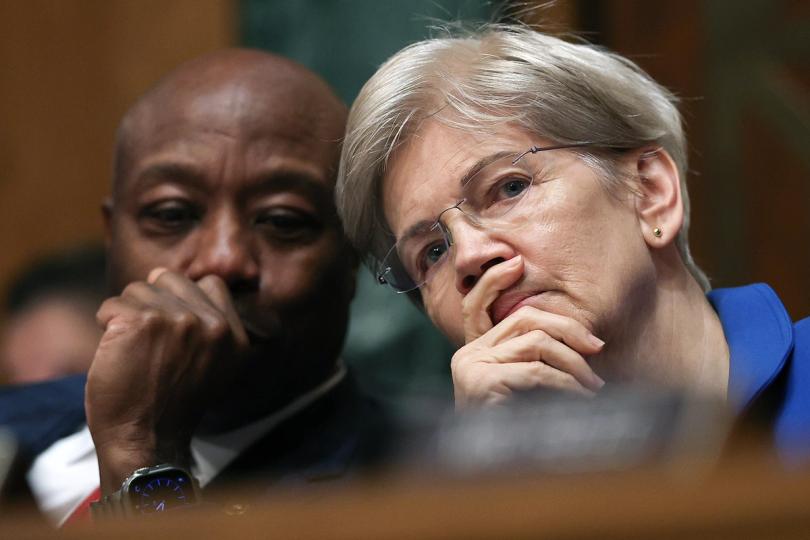
The Senate Banking Committee will hold its markup hearing for the Digital Asset Market Clarity Act — more commonly known as just the Clarity Act — on Thursday, kicking off a key process for the long-awaited market structure bill.
During Thursday’s hearing, the 24 senators on the committee will debate and vote on dozens of amendments to the text released after midnight Tuesday morning. Ultimately, lawmakers will vote on whether to advance the bill to the full Senate.
The bill still has a long journey to become law; if the Banking Committee brings up the bill, it would have to be merged with the Senate Agriculture Committee’s version of the legislation, debated and voted on on the Senate floor, reconciled with the House version of the bill, and voted on in that chamber of Congress before it can go to the president’s desk.
Lawmakers are moving ahead with Thursday’s vote after finding a compromise on the stablecoin dividend they found acceptable. Senators Thom Tillis (RN.C.) and Angela Alsobrooks (D-Md.) negotiated the deal and circulated text at the beginning of the month. Outstanding questions include whether the bill will eventually include an ethics provision that prevents high-ranking government officials from having business ties to the crypto industry. According to a survey commissioned by CoinDesk, 73% of Americans believe that high-ranking officials should not have business ties to the industry, referring to high-ranking officials in general. The impetus for including such a provision in the bill is President Donald Trump and his family’s ties to World Liberty Financial and other cryptocurrency companies.
And while lawmakers have reached a compromise on the stablecoin dividend, the banking industry as a whole maintains that stablecoin dividend regulations are still too tilted against the crypto industry. State banking organizations have filed letters with lawmakers, and bankers themselves have sent about 8,000 letters to senators, a source familiar with the matter said.
CoinDesk will cover the hearing live as lawmakers work through the hearing.


